Facts about Islam reveal a faith centered on belief in one God, compassion, justice, knowledge, and peaceful coexistence. Although Islam is often discussed in the media, many people still have questions about its teachings and values. Therefore, learning authentic facts about Islam helps separate misconceptions from reality while providing a deeper understanding of one of the world’s largest religions.
Today, Islam is followed by nearly two billion people across every continent. Moreover, its teachings guide Muslims in their relationship with God, their families, and society as a whole. As a result, understanding authentic facts about Islam offers valuable insight into its rich spiritual and moral tradition.
Additionally, at Misk Online Quran Academy, students from different backgrounds learn about Islam through qualified teachers. Whether you are exploring Islam for the first time or simply expanding your knowledge, understanding its core beliefs offers valuable insight into its rich spiritual and moral tradition.
Additionally, at Misk Online Quran Academy, students from different backgrounds learn about Islam through qualified teachers who present authentic Islamic knowledge in an engaging and easy-to-understand way.
What Is Islam? Key Facts About Islam?
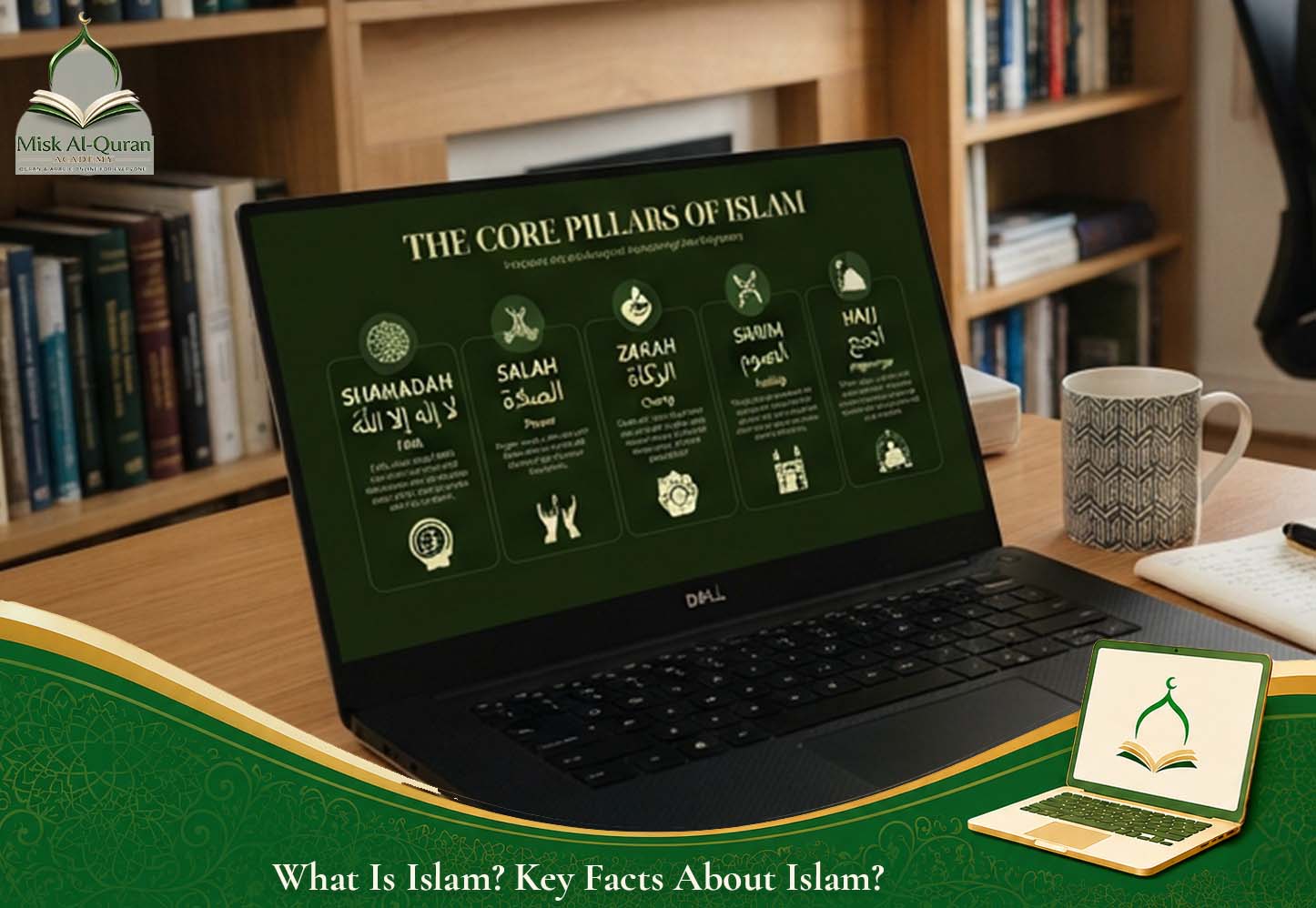
Islam is a monotheistic religion that teaches complete submission to the will of Allah (God). In fact, the Arabic word Islam comes from a root associated with peace and submission. Find reliable online Quran teachers who can provide personalized lessons and help students improve their Quran reading, memorization, and recitation skills.
Therefore, Muslims believe that true peace comes through sincere devotion to Allah. Furthermore, Islam is regarded as the final revelation from Allah, completing the messages delivered by earlier prophets. delivered by earlier prophets, including:
- Adam (peace be upon him)
- Noah (peace be upon him)
- Abraham (peace be upon him)
- Moses (peace be upon him)
- Jesus (peace be upon him)
- Muhammad (peace and blessings be upon him), the final Prophet
Furthermore, Muslims believe that Islam is the final revelation from Allah, completing the message delivered by earlier prophets, including Adam, Noah, Abraham, Moses, Jesus, and finally Prophet Muhammad (peace and blessings be upon him). As a result, Islam is closely connected to the earlier Abrahamic faiths while affirming the continuity of divine guidance throughout history.
Start Your Quran Learning Journey with Misk Online Quran Academy
Begin your Quran learning journey with Misk Online Quran Academy, where students of all ages benefit from structured online Quran classes tailored to their individual level and learning needs.
Whether your goal is to improve Quran recitation, master Tajweed rules, or begin memorizing the Holy Quran, our experienced and qualified teachers provide clear step-by-step guidance through personalized one-to-one lessons. Each session is designed to help learners understand, practice, and improve with confidence and consistency.
With flexible scheduling, interactive teaching methods, and a supportive online environment, Misk Online Quran Academy makes it easier to stay committed and motivated. Students can learn comfortably from home while making steady progress in their Quran studies at their own pace.

25 Fascinating Facts About Islam You Should Know
Learning these fascinating facts about Islam helps readers understand its beliefs, history, values, and daily practices. Islam is one of the largest religions in the world, and millions of people follow its teachings across different countries and cultures.
Therefore, learning accurate facts about Islam is a great way to discover its true message and avoid common misunderstandings. Explore an online Quran academy UK to learn more about flexible Quran education options for students and families living in the UK.
Moreover, Islam teaches important values such as faith, kindness, justice, and respect. In addition, these principles guide Muslims in their relationship with Allah, their families, and their communities.
Whether you are learning about Islam for the first time or simply expanding your knowledge, these facts provide a clear introduction to this meaningful faith. Discover the Benefits of Online Quran Learning and see how online lessons can make Quran education more flexible, accessible, and convenient for different learners.
1. Islam Means Peace and Submission
One of the most important facts about Islam is the meaning of its name. The word Islam means submitting to Allah’s guidance and following His teachings. Furthermore, Islam encourages peace, kindness, fairness, and respect for all people.
Therefore, Muslims are taught to treat others with good manners and compassion, regardless of their culture, nationality, or background.
2. Allah Is the Arabic Word for God
One of the basic facts about Islam is that the word Allah simply means God in Arabic. It does not describe a different God. In fact, Arabic-speaking Christians also use the word Allah when they refer to God. Learn whether is online quran learning safe for kids and what parents should consider when choosing a secure and suitable online learning environment for their children.
Moreover, Islam teaches that Allah is One and has no partners, children, or equals. This belief is known as absolute monotheism.
3. Allah Is Known Through His Beautiful Names
The Quran mentions many beautiful names and qualities of Allah. For example, Ar-Rahman means The Most Merciful, and Ar-Raheem means The Most Compassionate.
These names show Allah’s mercy, forgiveness, wisdom, and care for His creation. Therefore, Muslims often remember these qualities when they worship and pray.
4. The Declaration of Faith Is the Foundation of Islam
Among the essential facts about Islam is the importance of the Shahada, which is the Islamic declaration of faith.
It states:
“There is no deity worthy of worship except Allah, and Muhammad is the Messenger of Allah.”
This simple statement represents the foundation of Islamic belief. Furthermore, it confirms that Muslims worship Allah alone.
5. Worship Has a Greater Purpose
Islam teaches that worship is not only about performing actions. Instead, worship helps believers build a strong connection with Allah.
For example, prayer, fasting, charity, and remembering Allah help Muslims develop patience, gratitude, discipline, and sincerity.
6. Islam Encourages Family and Community Values
Another important fact about Islam is its focus on family and society. Islam encourages marriage, caring for parents, helping relatives, and supporting others.
Moreover, Muslims are taught to balance worship with their responsibilities toward their families and communities.
7. Prophet Muhammad ﷺ Descended from Prophet Abraham
According to Islamic tradition, Prophet Muhammad ﷺ descended from Prophet Abraham through his son Ishmael.
Therefore, Islam shares a connection with earlier prophetic traditions. Furthermore, Muslims believe that all prophets delivered the same message of worshiping one God.
8. Muslims Worship Allah Alone
Although Muslims love and respect Prophet Muhammad ﷺ, they do not worship him.
Instead, Islam teaches that worship belongs only to Allah. Therefore, Muslims believe that prophets are messengers who guide people toward the worship of God.
9. Prophet Muhammad’s Life Is Well Documented
The life of Prophet Muhammad ﷺ is one of the most recorded lives of religious figures in history.
For this reason, many details are available about his character, leadership, kindness, and daily life. As a result, Muslims follow his example in their personal and spiritual lives.
10. Muslims Believe in Previous Prophets and Scriptures
Another important fact about Islam is that Muslims believe in all prophets sent by Allah.
For example, Muslims believe in:
- Noah
- Abraham
- Moses
- David
- Solomon
- Jesus
Additionally, Muslims believe that Allah revealed earlier scriptures before the Quran, including the Torah, Psalms, and Gospel.
11. Islam Encourages Knowledge and Learning
Islam strongly encourages seeking knowledge and thinking about the world. Furthermore, the Quran invites people to reflect on creation and learn from it. Understand how to get ijazah online and learn about the general steps involved in studying with a qualified teacher and completing an online Quran certification pathway.
As a result, Muslim scholars made important contributions to science, medicine, mathematics, astronomy, and philosophy throughout history.
12. Jesus Holds a Special Place in Islam
One important fact about Islam is that Jesus (Isa) holds a special and respected position in Islamic belief. Muslims believe that Jesus was one of the greatest prophets sent by Allah.
Furthermore, Muslims believe that Jesus was born miraculously to Mary (Maryam). In addition, Mary is highly honored in Islam, and an entire chapter of the Quran is named after her.
13. Every Person Is Responsible for Their Own Actions
Islam teaches that every person is responsible for their own choices and actions. Therefore, individuals are accountable for what they do and how they treat others.
Moreover, Islam teaches that people are born with a natural pure state and can seek forgiveness and guidance from Allah through sincere repentance and good deeds.
14. There Is No Compulsion in Religion
One of the well-known facts about Islam is that it does not allow forcing people to accept faith.
The Quran states: “There is no compulsion in religion.”
Therefore, Islam teaches that true belief should come from personal understanding and sincere choice, not from pressure or force.
15. Muslims Can Pray Directly to Allah
Islam teaches that every person can communicate with Allah directly through prayer, supplication, and repentance.
Moreover, Muslims do not need a human intermediary to ask Allah for guidance, forgiveness, or support. As a result, believers can turn to Allah at any time and in any place.
16. Islam Encourages Positive Citizenship
Among the important facts about Islam is its encouragement for Muslims to be active and responsible members of society.
For example, Islam teaches respect for laws, helping others, keeping promises, and contributing positively to the community.
Furthermore, Muslims are encouraged to promote peace, cooperation, and fairness wherever they live.
17. Justice Is a Core Principle in Islam
Justice is one of the main values emphasized in Islamic teachings. Islam encourages people to be fair, honest, and responsible in their dealings with others.
In addition, Islamic teachings promote:
- Justice
- Fairness
- Compassion
- Responsibility
- Protection of human rights
Therefore, justice remains an important principle in Muslim personal and social life.
18. Equality Is Fundamental in Islam
One significant fact about Islam is its emphasis on human equality. Islam teaches that all people are equal before Allah regardless of race, nationality, ethnicity, or wealth.
Furthermore, Islam teaches that true honor comes from faith, good character, and righteous actions rather than social status or personal possessions.
19. Women Have Rights and Responsibilities
Islam recognizes the importance of women and gives them various rights and responsibilities. For example, Islam grants women rights to education, owning property, inheritance, work, and participation in society.
Moreover, Islamic teachings emphasize protecting women’s dignity, respecting their role, and treating them with kindness and fairness.
20. Jihad Means Striving
One of the most misunderstood facts about Islam is the meaning of the word Jihad. The word means striving or making an effort. In many cases, it refers to the personal struggle to improve one’s faith, character, and behavior.
Furthermore, Islam clearly prohibits harming innocent people and does not allow forcing others to accept religion.
21. Islam Encourages Scientific Exploration
Islam encourages people to observe the world, think deeply, and seek knowledge. For this reason, Muslim scholars made valuable contributions throughout history in areas such as:
- Medicine
- Astronomy
- Mathematics
- Engineering
- Chemistry
Additionally, Islamic teachings encourage learning as a way to understand the signs of Allah in creation.
22. Adam Was the First Prophet
According to Islamic belief, Adam (peace be upon him) was the first human and the first prophet chosen by Allah.
Therefore, Muslims believe that the message of worshiping one God began with Adam and continued through many prophets throughout history.
23. Islam Rejects Racial Superiority
Islam teaches that no person or nation is superior because of race, family, or background.
Instead, Islam emphasizes that people are judged by their faith, character, and actions.
Moreover, this teaching encourages respect, equality, and cooperation among all people.
24. Muslims Believe in Angels
Belief in angels is one of the essential beliefs in Islam.
Muslims believe that angels are created by Allah and always follow His commands. For example, Angel Jibreel (Gabriel) delivered the Quran to Prophet Muhammad ﷺ. Therefore, angels have an important place in Islamic belief and spirituality.
25. Islam Is Compatible with Modern Life
The final fact among these facts about Islam is that Islam encourages Muslims to participate positively in modern life while following their faith.
Today, Muslims work in many fields, including education, medicine, engineering, science, business, and community service.
Furthermore, Islam encourages learning, responsibility, and positive contributions to society. As a result, many Muslims combine their religious values with modern education and professional life.
Main Facts About Islam: The Core Beliefs
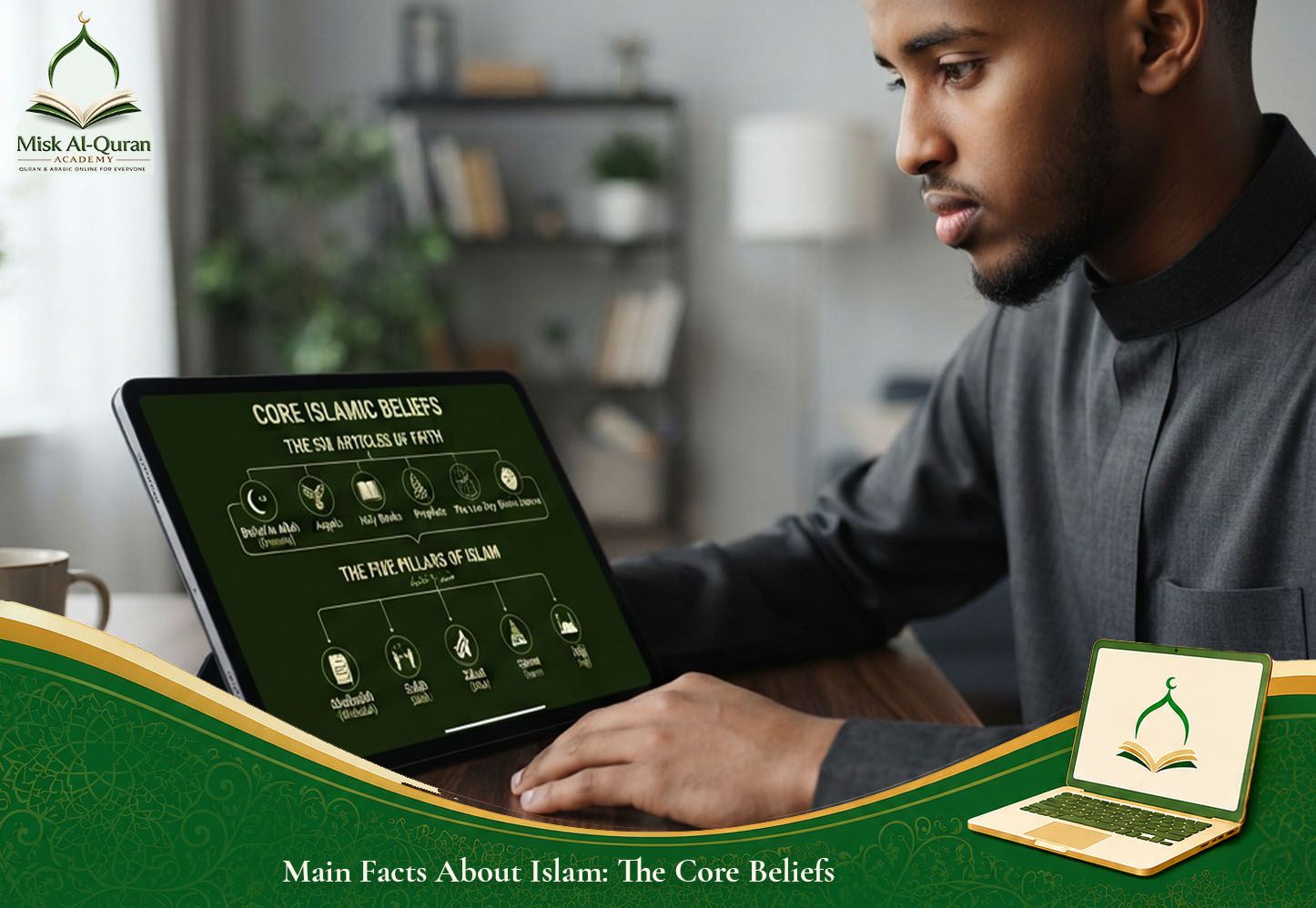
Understanding the central beliefs helps explain many facts about Islam, providing a clear foundation for its teachings, values, practices, and worldview. Discover the benefits of listening to quran and how regular listening can become a meaningful part of a consistent Quran routine.
Facts About Islam: Belief in One God
First, Muslims believe Allah alone deserves worship and possesses perfect knowledge, wisdom, mercy, and power. Belief in one God is the foundation of Islamic faith and influences every aspect of a Muslim’s life. Explore what is qiraat in the quran to understand the concept of Quranic readings and learn more about this important area of Quranic studies.
Facts About Islam: Belief in the Prophets
Moreover, Allah sent prophets throughout history to guide humanity with the same essential message: worship God alone and live righteously. Muslims respect all prophets and believe Prophet Muhammad (peace be upon him) was the final messenger.
Facts About Islam: Belief in the Quran
Likewise, Muslims believe the Quran is the final revelation from Allah and serves as guidance for every aspect of life. Understanding Qirat meaning in Islam helps Muslims appreciate the importance of correct Quran recitation, while following the proper rules to learn Quran allows students to develop accurate pronunciation and a stronger connection with the Holy Book.
Facts About Islam: Belief in the Day of Judgment
Finally, Islam teaches accountability after death, where every person will answer for their actions before Allah. This belief encourages Muslims to live with honesty, kindness, and responsibility. Prepare for Ramadan with how to prepare for Ramadan with quran by creating a practical routine for reading, listening, reflection, and memorization.
Facts About Islam: The Five Pillars of Islam
Shahada is the foundation of the Islamic faith. Next, Muslims establish their daily relationship with Allah through Salah. In addition, Zakat teaches generosity and social responsibility. Likewise, fasting during Ramadan strengthens patience and gratitude. Finally, Hajj symbolizes unity among Muslims worldwide. These pillars represent essential acts of worship that shape Muslim beliefs and daily practices.
Facts About Islam: Shahada
Declaring belief in Allah and His Messenger affirms the foundation of Islamic faith, expressing sincere devotion, monotheism, and acceptance of Prophet Muhammad’s message. The Shahada represents the first step toward understanding and practicing Islam.
Facts About Islam: Salah
Performing the five daily prayers strengthens faith, deepens the connection with Allah, brings spiritual peace, encourages discipline, and provides daily guidance. Understanding the supplication meaning helps believers reflect on the words they recite during their prayers and increase their spiritual awareness.
Facts About Islam: Zakat
Giving obligatory charity to help those in need promotes compassion, reduces poverty, purifies wealth, strengthens communities, and fulfills an essential obligation in Islam. Zakat reminds Muslims of the importance of helping others and sharing blessings.
Facts About Islam: Sawm
Fasting during the month of Ramadan strengthens self-discipline, increases gratitude, purifies the soul, and encourages compassion for those in need. It teaches Muslims patience, self-control, and appreciation for Allah’s blessings. Compare online quran classes vs local madrasa to understand the differences between online Quran education and traditional local learning environments.
Hajj
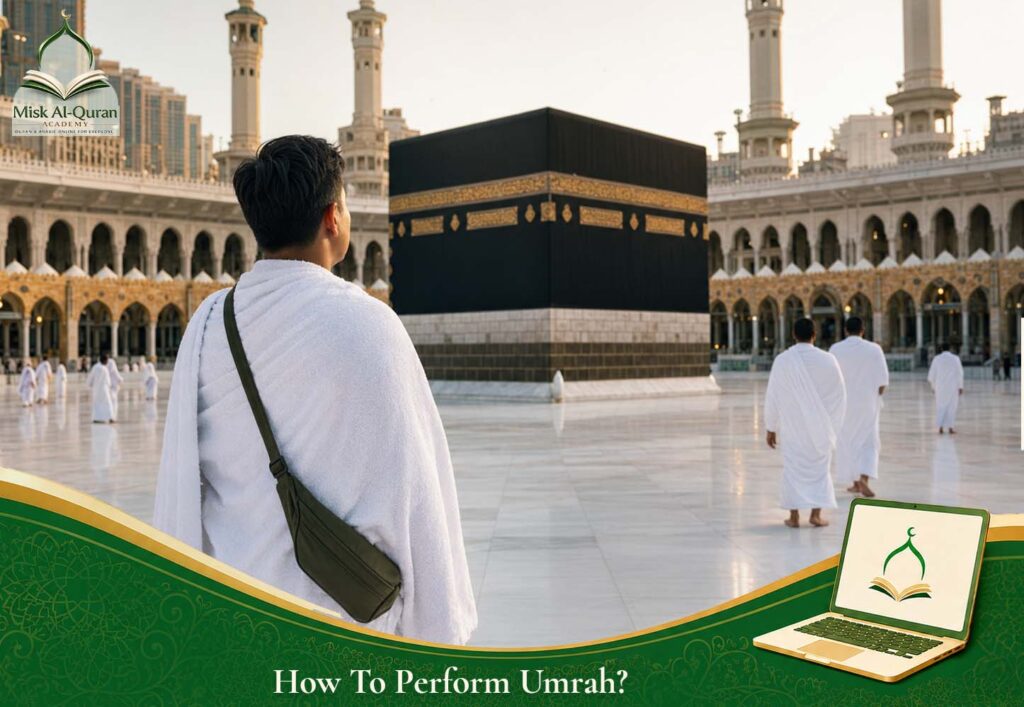
Performing the pilgrimage to Makkah at least once if physically and financially able. These pillars strengthen faith while encouraging compassion, discipline, and responsibility. Hajj also represents unity among Muslims from different backgrounds and cultures.
Learn More Facts About Islam with Misk Online Quran Academy
Learning authentic facts about Islam becomes much easier with qualified teachers and structured lessons. Misk Online Quran Academy provides comprehensive Islamic education for children, teenagers, and adults through interactive online classes with an experienced online Quran tutor. Students benefit from:
- Qualified Quran and Islamic studies teachers.
- Personalized one-to-one lessons.
- Flexible schedules.
- Quran classes for kids suitable for young learners.
- Courses suitable for beginners and advanced learners.
- Interactive learning using modern teaching methods.
Whether your goal is understanding Islamic beliefs, learning Quran recitation, or studying Islamic values, the academy provides supportive guidance for every learner. Understand the difference between hifz and tafseer to distinguish between memorizing the Quran and studying its meanings and interpretation.
Facts About Islam: The Core Beliefs That Shape Muslim Life
Understanding the foundations of faith makes it easier to appreciate many important facts about Islam. Every practicing Muslim builds their life around six essential beliefs.
Belief in Allah
The foundation of Islam is the belief that there is only one God, Allah. He is the Creator of everything, possesses complete knowledge, and deserves worship alone. Muslims believe Allah is infinitely merciful, perfectly just, and always aware of every person’s actions.
Belief in Angels
Muslims believe angels are created from light and faithfully obey Allah. They carry out different responsibilities, including delivering revelation, recording human deeds, and protecting believers according to Allah’s command.
Belief in Divine Books
Islam teaches that Allah revealed guidance through several holy books, including the Torah, the Psalms, the Gospel, and finally the Quran, which Muslims believe is the complete and preserved revelation for all humanity.
- The Torah was revealed to Prophet Musa (Moses).
- The Psalms were revealed to Prophet Dawud (David)
- The Gospel was revealed to Prophet Isa (Jesus).
- The Holy Quran was revealed to Prophet Muhammad (peace be upon him).
Muslims believe the Quran is the final and preserved revelation for humanity. Learn how to choose an online quran teacher for your child by considering teaching experience, communication, lesson structure, and your child’s individual learning needs.
Belief in the Prophets
From Adam to Muhammad (peace be upon them all), Allah sent prophets to teach people how to worship Him and live righteous lives. Muslims respect every prophet without making distinctions in their honor. Discover how long does it take to memorize the quran and the main factors that can influence the time required to complete Quran memorization.
Belief in the Day of Judgment
Islam teaches that every individual will be resurrected after death and judged according to their faith and actions. This belief encourages honesty, kindness, and accountability throughout life.
Belief in Divine Decree
Muslims believe that Allah has complete knowledge of everything that happens. At the same time, people are given free will and remain responsible for the choices they make.
The Quran as the Central Source of Guidance
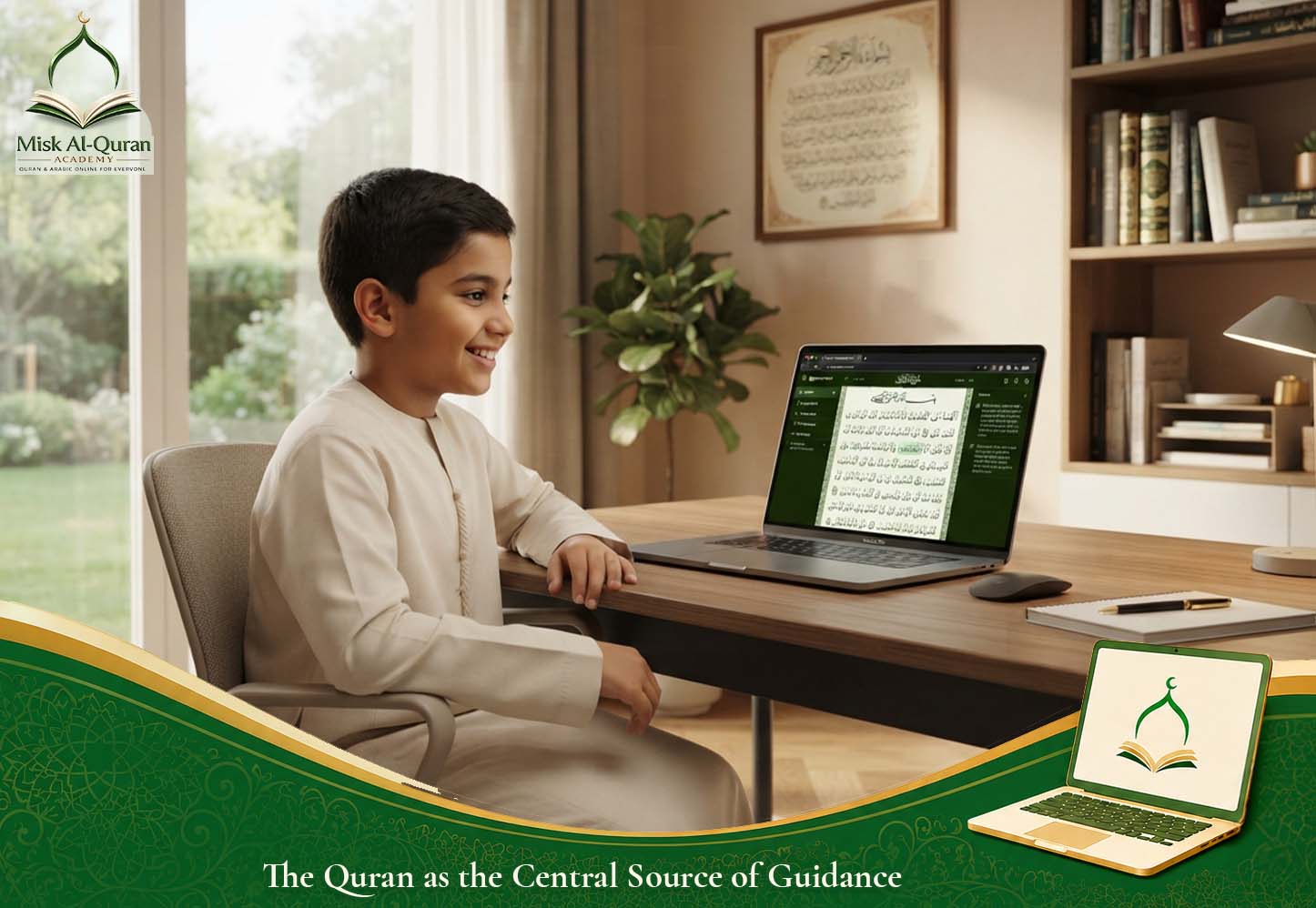
Among the most significant facts about Islam is the role of the Holy Quran. Muslims believe it is the literal word of Allah, revealed over approximately 23 years to Prophet Muhammad (peace be upon him).
Moreover, the Quran covers every aspect of human life. For example, it discusses faith, ethics, family relationships, justice, and compassion. As a result, Muslims regard it as a complete source of guidance.
- Faith and spirituality
- Morality and ethics
- Family relationships
- Justice and social responsibility
- Business ethics
- Compassion and forgiveness
- Personal development
Millions of Muslims around the world have memorized the Quran completely, preserving its original Arabic text across generations.
Facts About Islam: The Importance of Prophet Muhammad
Above all, Prophet Muhammad (peace be upon him) is regarded as the final messenger of Allah. Muslims love and respect him because he demonstrated the Quran through his words, actions, and character. For example, his life offers practical examples of:
- Honesty
- Mercy
- Patience
- Humility
- Leadership
- Forgiveness
- Justice
Instead, Muslims follow his example, Muslims follow his example to strengthen their relationship with Allah and improve their character.
Islam Encourages Good Character
Excellent manners are among the defining characteristics of a Muslim. In fact, many facts about Islam emphasize that worship should lead to positive behavior. For example, Islam encourages believers to:
- Speak truthfully.
- Keep promises.
- Respect parents.
- Honor neighbors.
- Help those in need.
- Control anger.
- Forgive others.
- Show kindness to children and the elderly.
These values create stronger families and healthier communities.
Facts About Islam: The Importance of Education
Seeking knowledge is considered a noble act of worship in Islam. Indeed, the first revelation began with the command “Read.” Consequently, Islamic civilization flourished in science, medicine, mathematics, and many other fields.
“Read.”
This emphasis inspired centuries of scholarship and innovation throughout Islamic civilization. Historically, Muslim scholars made valuable contributions to fields such as:
- Mathematics
- Medicine
- Astronomy
- Geography
- Architecture
- Chemistry
- Literature
Today, institutions like Misk Online Quran Academy continue this tradition by providing accessible Islamic education through modern online learning.
Common Misconceptions and Facts About Islam
Many people encounter misleading information online or through media coverage. Therefore, understanding authentic facts about Islam helps correct these misunderstandings.
Myth: Islam Promotes Violence
Reality: Islam strongly values justice, mercy, and the protection of innocent life. Extremist actions carried out by individuals do not represent Islamic teachings.
Myth: Muslim Women Have No Rights
Reality: Islam granted women rights to education, inheritance, property ownership, financial independence, and dignity long before many societies recognized these rights.
Myth: Muslims Worship Muhammad
Reality: Muslims worship Allah alone. Prophet Muhammad is respected as Allah’s final messenger but is never worshipped.
Myth: Islam Is Only for Arabs
Reality: The overwhelming majority of Muslims are not Arab. Instead, Islam is a global religion followed by people from diverse ethnicities, cultures, and nationalities across every continent, reflecting its universal message and worldwide appeal.
Myth: Islam Is Only for Arabs
Reality: The overwhelming majority of Muslims are not Arab. Instead, people from every race, culture, and nationality follow this global religion, making it one of the most diverse faiths in the world.
Facts About Islam Around the World Today
Today, Muslim communities can be found in nearly every country, contributing to education, healthcare, science, business, and humanitarian work. Moreover, the religion continues to grow across different regions while bringing together people from diverse cultural and ethnic backgrounds. As a result, its global presence demonstrates that Islam transcends language, nationality, and race while preserving its shared beliefs and values.
Nearly every country. Furthermore, they contribute to education, healthcare, science, business, and humanitarian work. As a result, Islam has become a truly global religion. Muslim communities exist in nearly every country, contributing to education, healthcare, science, business, and humanitarian work. Today, Muslims can be found in:
- Asia
- Africa
- Europe
- North America
- South America
- Australia
This global diversity demonstrates that Islam transcends language, ethnicity, and culture while maintaining its shared beliefs and values.
Why Learning Authentic Facts About Islam Matters?
In today’s digital age, information is widely available, but not all of it is accurate. Therefore, studying with qualified teachers helps learners distinguish authentic Islamic teachings from misinformation. Furthermore, Misk Online Quran Academy offers structured courses that enable students to:
- Learn Quran recitation with proper Tajweed.
- Understand Islamic beliefs correctly.
- Study the life of Prophet Muhammad.
- Build strong moral character.
- Strengthen their connection with the Quran.
With experienced instructors and flexible online classes, students of all ages can learn confidently from the comfort of their homes.
Facts About Islam: Frequently Asked Questions
To help readers better understand the religion, here are answers to some of the most frequently asked questions about facts about Islam, based on authentic Islamic teachings and reliable sources.
1. What language is the Quran originally written in?
The Quran was revealed in Classical Arabic. While translations help readers understand its meaning, Muslims believe the original Arabic text is the authentic revelation.
2. Can someone study Islam even if they are not Muslim?
Yes, anyone interested in understanding Islamic beliefs, history, and values can study Islam through trusted educational resources and qualified teachers.
3. Why do Muslims pray five times every day?
In fact, the five daily prayers help Muslims maintain a strong connection with Allah, develop discipline, remember their spiritual purpose, and seek guidance throughout the day.
4. How can beginners learn authentic Islamic teachings online?
Generally, the best approach is to study with qualified instructors who teach directly from the Quran and authentic Sunnah. Online learning platforms such as Misk Online Quran Academy provide structured courses suitable for beginners and advanced learners alike.
In conclusion, learning authentic facts about Islam provides a clearer understanding of a religion built upon faith, mercy, justice, knowledge, and compassion. Moreover, it helps readers distinguish authentic teachings from common misconceptions. For this reason, studying Islam through reliable sources is essential. Additionally, Misk Online Quran Academy offers structured online courses taught by qualified teachers. Ultimately, exploring more facts about Islam enables learners to appreciate Islam’s timeless message of peace, responsibility, and hope for humanity.