Interesting facts about Islam can help anyone gain a clearer understanding of one of the world’s most influential religions. Islam is followed by nearly two billion people across every continent, yet many people know only a small part of its history, beliefs, and traditions. Learning accurate information encourages respect, reduces misconceptions, and highlights the values that Muslims practice in their daily lives.
Whether you are a student, traveler, educator, or simply curious about different cultures, discovering authentic information about Islam provides valuable insight into a faith that has shaped civilizations for more than fourteen centuries.
At Misk Online Quran Academy, we believe that learning about Islam should always begin with authentic sources, thoughtful study, and an open mind. Understanding the foundations of the religion helps people appreciate both its spiritual teachings and its cultural contributions.
What Is Islam?
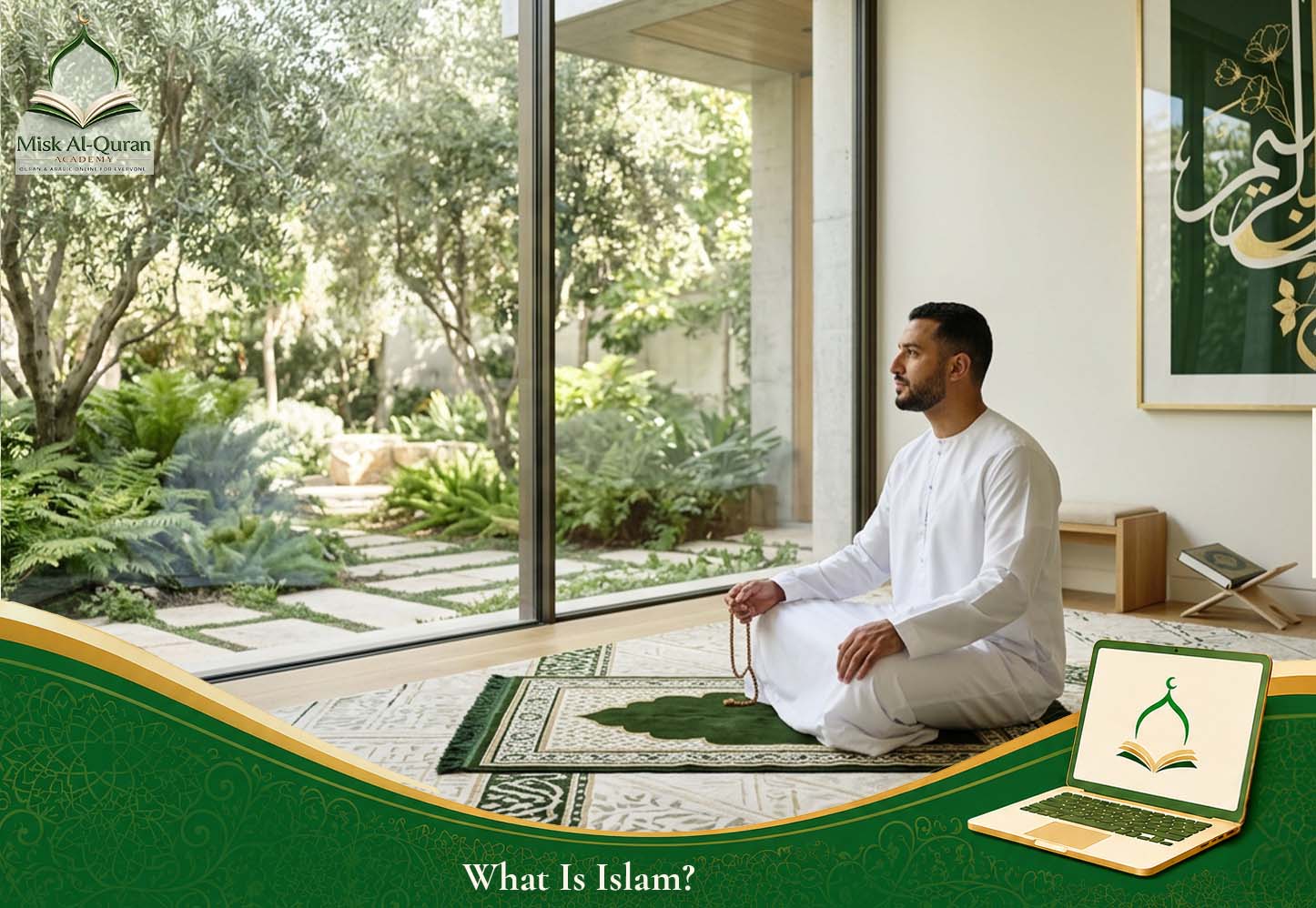
Islam is a monotheistic religion that teaches belief in one God, known in Arabic as Allah. The word “Islam” comes from an Arabic root associated with peace, submission, and devotion to God. A person who follows Islam is called a Muslim, meaning someone who submits to the will of God.
Islam teaches that God sent guidance to humanity through many prophets, including Adam, Noah, Abraham, Moses, and Jesus, with Prophet Muhammad (peace be upon him) regarded as the final messenger. Muslims believe that the Quran is God’s final revelation, preserved in its original Arabic language.
Today, Islam is practiced in nearly every country, making it one of the most diverse religions in the world. Muslims belong to different cultures, speak hundreds of languages, and contribute to societies in countless ways while sharing the same essential beliefs.
Start Your Quran Learning Journey with Misk Online Quran Academy
Begin your Quran learning journey with Misk Online Quran Academy, where students of all ages benefit from structured online Quran classes tailored to their individual level and learning needs.
Whether your goal is to improve Quran recitation, master Tajweed rules, or begin memorizing the Holy Quran, our experienced and qualified teachers provide clear step-by-step guidance through personalized one-to-one lessons. Each session is designed to help learners understand, practice, and improve with confidence and consistency.
With flexible scheduling, interactive teaching methods, and a supportive online environment, Misk Online Quran Academy makes it easier to stay committed and motivated. Students can learn comfortably from home while making steady progress in their Quran studies at their own pace.

Interesting Facts About Islam: The Quran Has Been Preserved
One of the most important aspects of Islam is how Muslims view the preservation of the Quran. Muslims believe that Allah revealed the Quran to the Prophet Muhammad over about twenty-three years through the Angel Gabriel.
Unlike many ancient writings that changed over time or exist in several versions, Muslims believe the Quran has stayed in its original Arabic form since the first revelation. Millions of Muslims memorize the entire Quran, and this practice has continued without interruption from the earliest generations to today.
The Quran serves more than a spiritual role. It guides daily life in areas such as worship, ethics, family relations, justice, compassion, and personal responsibility. Muslims recite it regularly in homes, mosques, and learning centers, which keeps it present in everyday life.
Interesting Facts About Islam: One of the Fastest-Growing Religions
Islam has a wide global presence. Muslims live across all inhabited continents and represent many cultures, languages, and ethnic groups. Following the rules to learn Quran helps students build a strong foundation for accurate recitation and memorization.
Although many people associate Islam with the Middle East, most Muslims actually live in Asia. Countries such as Indonesia, Pakistan, India, and Bangladesh include large Muslim populations.
Muslim communities also continue to grow in Europe, North America, Africa, and Latin America. This shows that Islam does not belong to one race or nationality. Instead, people from many backgrounds choose to follow it around the world.
The Five Pillars Form the Foundation of Muslim Life
One of the most interesting facts about Islam is that Muslim life is built around five main acts of worship called the Five Pillars of Islam. These pillars organize a Muslim’s relationship with God and daily behavior.
1-Interesting Facts About Islam: Shahadah (Declaration of Faith)
The Shahadah states that there is no god except Allah and that Muhammad is His messenger. This belief forms the foundation of Islamic faith.
2. Salah (Daily Prayer)
Muslims perform five daily prayers at specific times based on the position of the sun. These prayers help Muslims stay connected to God throughout the day and build discipline and focus.
Prayer also creates unity. Muslims everywhere perform the same act of worship regardless of language, culture, or nationality.
3. Zakat (Charity)
Islam encourages Muslims who meet certain financial conditions to give a portion of their wealth to those in need. This practice supports social balance and helps reduce poverty.
4. Sawm (Fasting in Ramadan)
During Ramadan, Muslims fast from dawn until sunset. This practice builds self-control, patience, and gratitude. It also helps Muslims understand the struggles of those who have less. Ramadan often strengthens family bonds through shared meals and increased acts of worship and charity.
5. Hajj (Pilgrimage to Makkah)
Muslims who are physically and financially able must perform Hajj at least once in their lifetime. This pilgrimage brings millions of Muslims together in Makkah.
During Hajj, all pilgrims wear simple clothing, which removes signs of social status. Everyone stands equal before God, regardless of wealth or nationality. Understanding supplication meaning encourages Muslims to strengthen their connection with Allah through sincere prayers.
Muslims Pray Five Times Each Day
Muslims pray at five specific times during the day based on the sun’s movement: before sunrise, midday, afternoon, sunset, and night, maintaining a constant spiritual connection.
- Before sunrise
- Around midday
- In the afternoon
- Just after sunset
- At night
These prayers help Muslims stay connected to God throughout daily life. Many Muslims see prayer as a moment of calm that breaks up daily stress and restores focus.
Muslims can pray individually or in groups at the mosque. Friday prayer holds special importance because it includes a sermon that offers guidance and reminders for the community.
Understanding this practice explains why prayer remains a central part of Muslim identity across the world. Discovering the benefits of reciting Quran helps Muslims understand the spiritual rewards, inner peace, and positive impact of regularly reading the Holy Quran.
Islam Welcomes People from Every Background
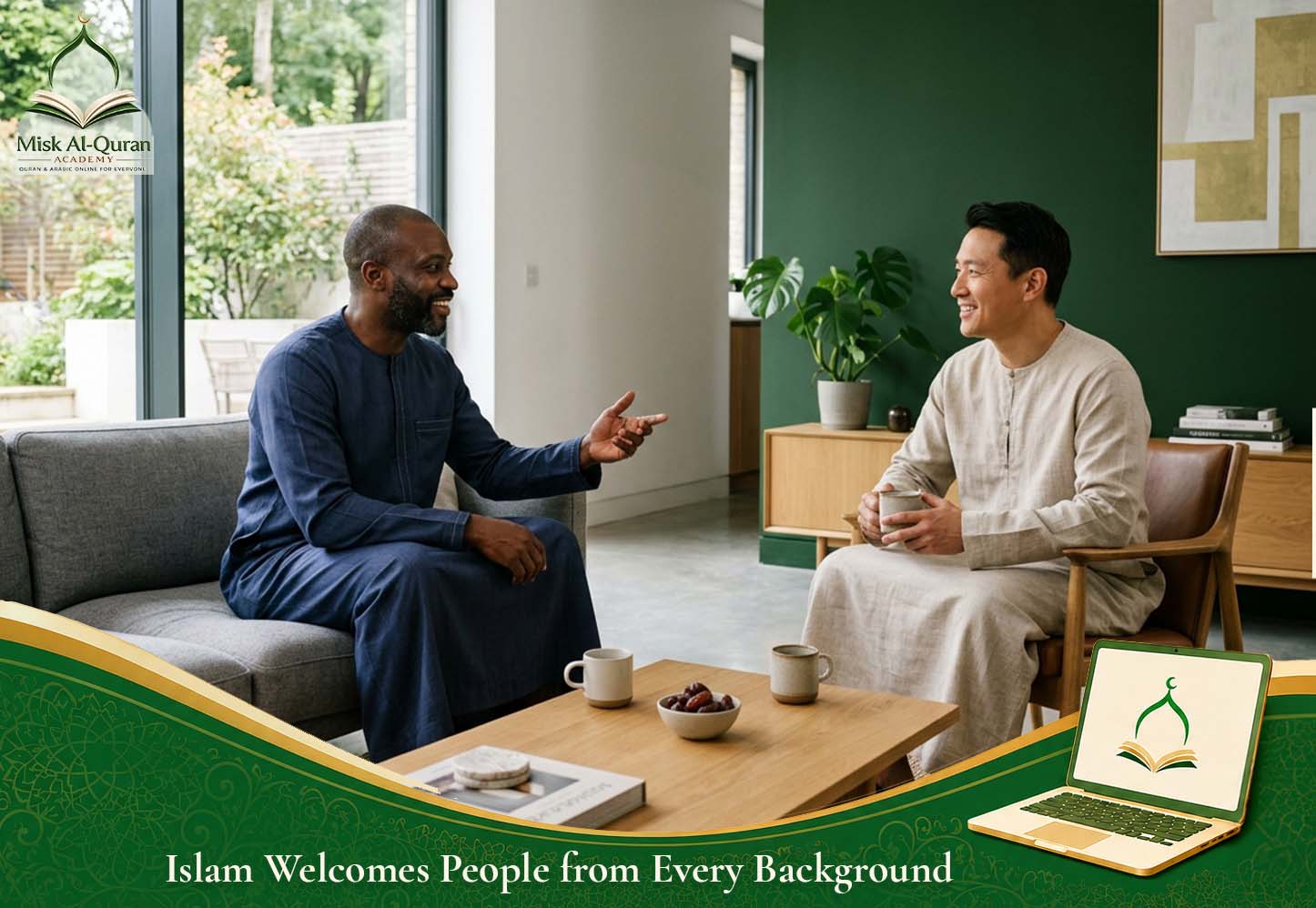
Islam does not belong to one race, country, or culture. It welcomes people from all backgrounds. The Quran teaches that human diversity reflects God’s wisdom and encourages mutual respect among all people.
Muslims live in nearly every country and speak hundreds of languages. While Arabic is the original language of the Quran, Islam itself is practiced in many different cultural settings.
This diversity appears in daily life through clothing, food, traditions, and architecture. Despite these differences, Muslims remain united through shared beliefs and core acts of worship. Learning how to perform Umrah guides pilgrims through the essential steps, rituals, and preparations needed to complete Umrah correctly.
The Islamic Calendar Follows the Lunar Cycle
The Islamic calendar follows the moon rather than the sun. It contains twelve lunar months, making the Islamic year shorter than the Gregorian year.
Because of this difference, Ramadan and Hajj move through different seasons over the years. Muslims therefore experience these important events under different weather conditions during their lifetime.
The Islamic calendar begins with the Hijrah, the migration of Prophet Muhammad (peace be upon him) from Makkah to Madinah. This event marked the beginning of the first Muslim community. Choosing the Best Time to Learn Quran helps students create a consistent study routine and improve their recitation, memorization, and understanding effectively. For learners who want to go further, take a look at our Islamic studies classes.
Interesting Facts About Islam: Knowledge and Learning
Islam strongly values education. The first revelation of the Quran begins with the command to “Read,” which highlights the importance of learning.
Throughout history, Muslim scholars advanced many fields such as mathematics, astronomy, medicine, geography, architecture, chemistry, literature, and philosophy. Their work influenced later scientific development across different civilizations.
Today, many families still value both religious and academic education. Misk Online Quran Academy offers structured learning programs that teach Quran recitation, Tajweed, Arabic, and Islamic studies through online classes with qualified teachers.Joining Quran classes for kids helps children learn the Quran in a structured and enjoyable way.
Makkah Holds a Special Place in Islam
Makkah is the holiest city in Islam and the home of the Kaaba, toward which Muslims direct their prayers every day. This sacred direction represents unity among Muslims worldwide, as everyone turns toward the same point of worship regardless of location.
Muslims do not worship the Kaaba itself; it serves as a symbol of unity and submission to one God. During daily worship, Muslims also improve their understanding of how to recite the Quran correctly, since proper recitation is an essential part of prayer.
Each year, millions of Muslims travel to Makkah to perform Hajj. This journey strengthens their faith and reminds them of equality before God, as all pilgrims wear simple clothing that removes signs of wealth and status. For many, Hajj becomes one of the most meaningful spiritual experiences of their lives.
Charity Is a Core Islamic Value
Charity in Islam is not limited to money alone. Muslims give obligatory charity when they meet certain conditions, and they are also encouraged to give voluntarily throughout their lives. Acts of kindness include helping neighbors, caring for the needy, and supporting community welfare.
At the same time, learning remains a key part of Islamic life. Many students explore online Quran memorization programs to strengthen their connection with the Quran and build consistent study habits from home.
Communities around the world also organize food drives, education projects, and healthcare support initiatives. These efforts show how charity extends into every aspect of social life.
Interesting Facts About Islam: Family Values
Family holds a central place in Islam. Children are taught to respect their parents, show kindness, and care for them throughout their lives. Parents, in return, are responsible for raising children with patience, fairness, and strong moral values.
Marriage is based on cooperation, mercy, and mutual respect. These values help build stable families and stronger societies. Grandparents, relatives, and neighbors also play an important role in maintaining social harmony.
In addition, many learners who want structured guidance in their studies join an Online Quran Hifz Course, which helps them memorize the Quran step by step under qualified supervision while maintaining discipline and consistency.
The Quran Encourages Reflection and Good Character
The Quran encourages people to reflect deeply on life, nature, and history. It guides readers toward wisdom and understanding rather than blind following. This reflection helps strengthen both faith and personal awareness.
Islam also emphasizes good character, including honesty, patience, humility, generosity, justice, and forgiveness. These values shape daily behavior and improve relationships within society.
Students who want to improve both recitation and understanding often study Tafseer Quran, which explains the meanings and context of Quranic verses. This helps learners connect recitation with deeper comprehension.
For beginners, structured programs such as the third pillar of Islam lessons also help build foundational knowledge about worship and Islamic practice in a simple and gradual way.
There Are Different Schools of Thought Within Islam
Islam includes different schools of thought that developed over centuries. These schools focus mainly on how Islamic teachings are interpreted and applied in daily life, rather than on differences in core beliefs.
The two major branches are Sunni and Shia Islam. Despite historical and legal differences, both share a belief in one God, the Quran, the Prophet Muhammad (peace be upon him), the Day of Judgment, and essential acts of worship.
Understanding these differences helps learners gain a more balanced and accurate view of the Muslim world and reduces confusion caused by oversimplified explanations. Understanding the rights of the Quran reminds every Muslim of the importance of reciting, respecting, and applying its guidance in daily life.
Science and Learning Flourished in Islamic Civilization
During the Islamic Golden Age, Muslim scholars made major contributions to science, medicine, mathematics, astronomy, and architecture. They preserved ancient knowledge and expanded it with original discoveries that influenced later civilizations.
Libraries and learning centers became hubs of knowledge where scholars from different cultures exchanged ideas and conducted research. This environment encouraged intellectual growth and innovation.
Even today, many educational programs continue this tradition of learning, including modern Quran study platforms such as Online Quran Hifz Course, which combine traditional knowledge with structured online learning methods. Exploring facts about Islam helps learners gain a deeper understanding of the religion and its teachings.
Common Misconceptions About Islam
Many misunderstandings about Islam come from inaccurate information or media coverage that focuses on extreme cases instead of everyday Muslim life. Here are some important facts:
- Islam does not teach hatred toward people of other faiths.
- Extremist groups do not represent the beliefs of most Muslims.
- Cultural traditions are not always part of Islamic teachings.
- Muslims belong to every race and nationality.
- Islam promotes honesty, justice, mercy, and compassion.
Learning from trusted sources, including interesting facts about Islam, helps people separate facts from common myths and develop a clearer and more accurate understanding of the religion. Understanding the rights of the Quran reminds every Muslim of the importance of reciting, respecting, and applying its guidance in daily life.
Why Learning About Islam Matters?
Frequently Asked Questions about interesting facts about Islam
Frequently Asked Questions about interesting facts about Islam help readers quickly understand common questions and clear up misconceptions about the beliefs, practices, and global diversity of Islam.
What are some interesting facts about Islam that people often don’t know?
Many people are surprised to learn that Islam is followed by nearly two billion people worldwide and is practiced on every continent. It also teaches daily prayer, charity, fasting, and pilgrimage as key parts of life, which shape both spiritual and social behavior.
Why is Islam considered a global religion?
Islam is considered global because its followers come from many different races, cultures, and languages. It is not limited to one region or ethnicity, and this diversity is reflected in Muslim communities across Asia, Africa, Europe, and the Americas.
Do Muslims follow the same beliefs everywhere?
Yes, Muslims share the same core beliefs, such as belief in one God, the Quran, and the Prophet Muhammad. However, cultural traditions and local customs may differ from one country to another, while the main principles of faith remain the same.
In conclusion, Islam is not only a religion of rituals but a complete way of life built on faith in one God, strong moral values, and righteous actions. By understanding its core teachings, readers discover that Islam promotes peace, encourages knowledge, and strengthens justice and cooperation among people.
The diversity of Muslims around the world shows that this faith goes beyond geography and culture, uniting people on shared principles. Learning about Islam with an open mind helps correct common misconceptions and builds bridges of respect and understanding between different societies. Ultimately, continuous learning remains the best way to appreciate the depth of Islam and its profound human values that are reflected in the daily lives of its followers.