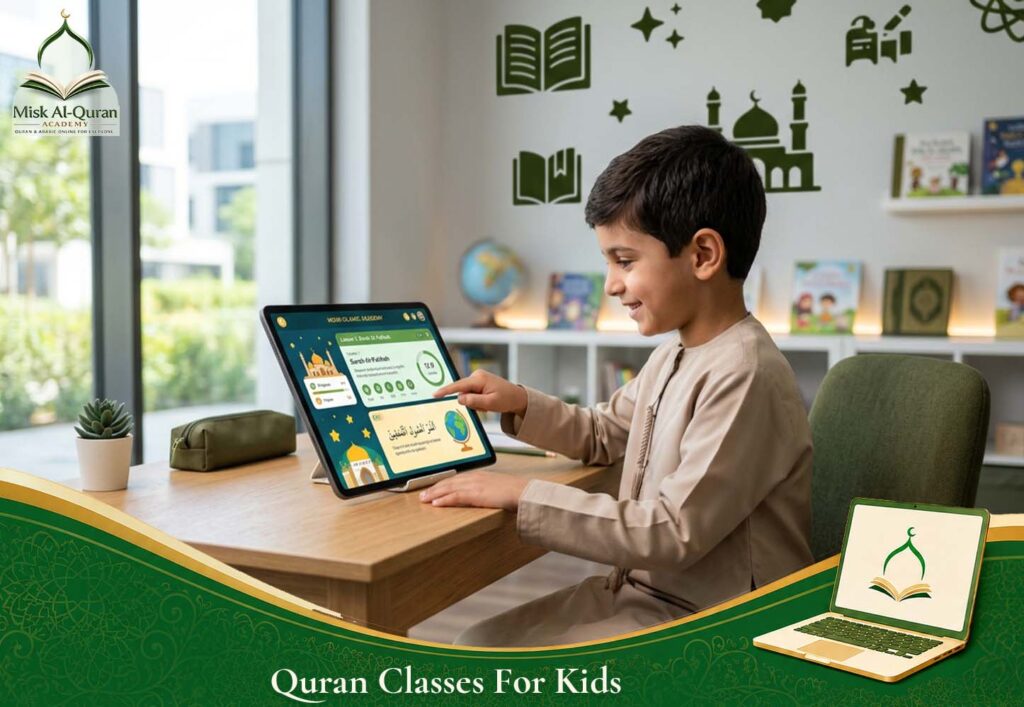
Quran for kids is one of the most valuable gifts parents can give their children because it builds a strong connection with Allah while shaping their character, strengthening their faith, and developing lifelong Islamic values. Many parents want their children to love the Quran from an early age, yet they often wonder when to begin, which teaching method works best, and how to keep young learners motivated throughout the journey.
Fortunately, with qualified teachers, interactive lessons, and consistent encouragement, learning the Quran becomes an enjoyable and rewarding experience instead of a difficult task. Children naturally learn faster than adults, especially during their early developmental years. When Quran education begins at the right age, children absorb pronunciation, memorization, and Tajweed rules more easily while developing confidence in their recitation.
Rather than focusing only on memorization, successful Quran learning helps children understand discipline, patience, respect, and responsibility, making the Quran a meaningful part of their daily lives. At Misk Online Quran Academy, every child follows a personalized learning path designed to match their age, experience, and learning style.
Experienced Quran teachers create engaging lessons that combine Quran reading, Tajweed, memorization, and interactive activities, ensuring that children remain motivated while making steady progress. Parents also receive regular updates, allowing them to support their child’s learning journey with confidence.
In this complete guide, you’ll discover why early Quran education matters, the ideal age to begin, effective teaching methods, the advantages of online learning, and practical strategies that help children enjoy every stage of their Quran journey while building strong Islamic foundations for the future.
Why Is Quran for Kids So Important?
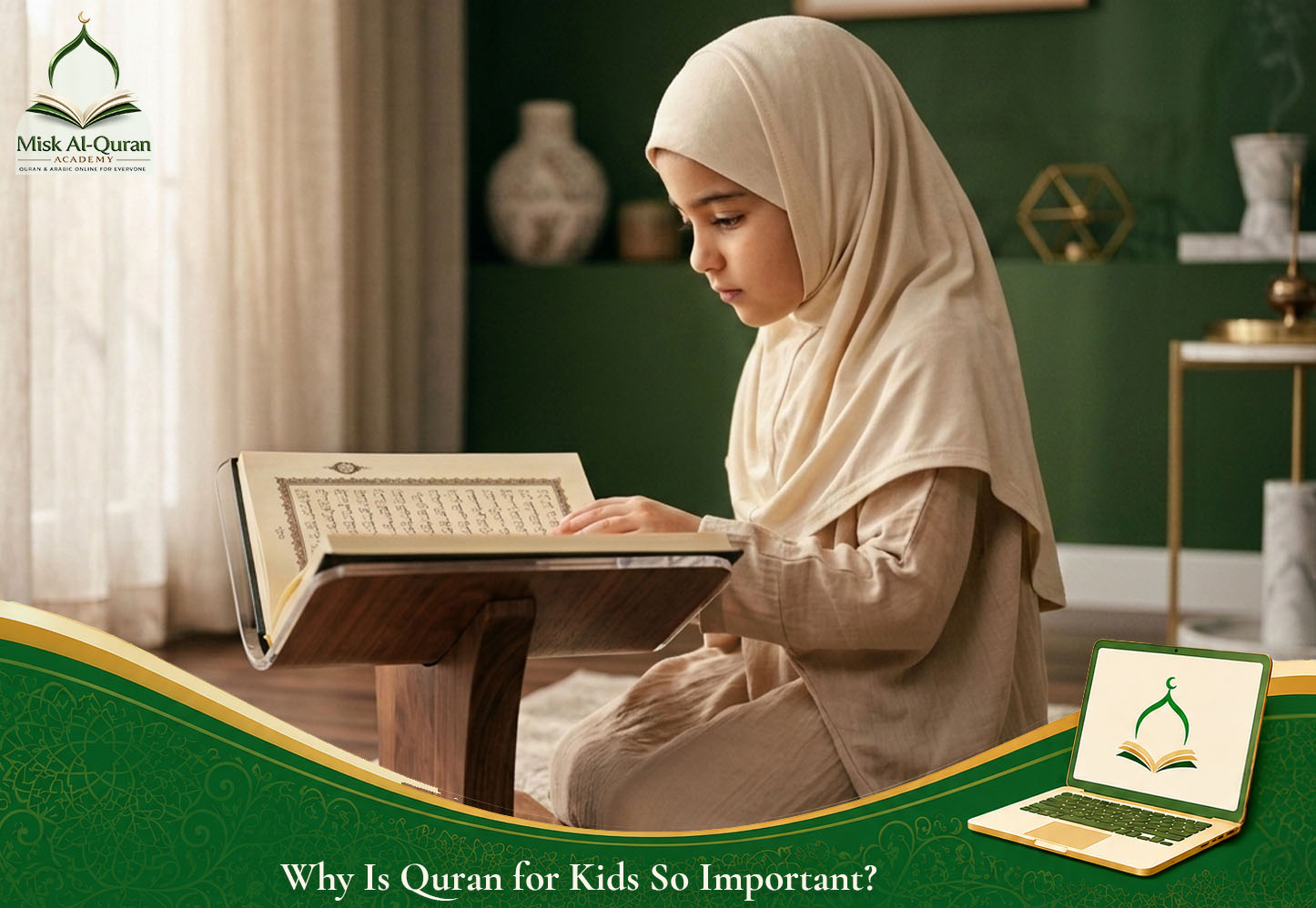
Teaching the Quran during childhood is about much more than learning how to read Arabic words correctly. It is a long-term investment in a child’s faith, personality, emotional well-being, and intellectual development. The earlier children become familiar with the Quran, the more naturally they develop a love for Islamic teachings and incorporate them into their daily lives.
Unlike many other subjects, Quran education provides the benefits of reciting Quran that continue throughout every stage of life. Each lesson strengthens not only reading skills but also a child’s relationship with Allah, helping them grow into confident and responsible Muslims. Some of the most important benefits of Quran for kids include:
- Building a strong Islamic identity from an early age.
- Learning good manners through Quranic teachings.
- Improving concentration and memory.
- Developing discipline through consistent learning routines.
- Strengthening confidence in Quran recitation.
- Developing a lifelong habit of reading and reflecting on the Quran.
- Promoting respect, patience, honesty, and compassion.
These benefits extend beyond childhood and positively influence education, relationships, and personal development throughout life.
Start Your Quran Learning Journey with Misk Online Quran Academy
Begin your Quran learning journey with Misk Online Quran Academy, where students of all ages benefit from structured online Quran classes tailored to their individual level and learning needs.
Whether your goal is to improve Quran recitation, master Tajweed rules, or begin memorizing the Holy Quran, our experienced and qualified teachers provide clear step-by-step guidance through personalized one-to-one lessons. Each session is designed to help learners understand, practice, and improve with confidence and consistency.
With flexible scheduling, interactive teaching methods, and a supportive online environment, Misk Online Quran Academy makes it easier to stay committed and motivated. Students can learn comfortably from home while making steady progress in their Quran studies at their own pace.

How Does Quran for Kids Build Strong Islamic Values?
Children learn primarily through repetition and consistent guidance. When they regularly hear and recite Quranic verses, they gradually become familiar with the values that Islam teaches, including honesty, kindness, generosity, gratitude, forgiveness, and respect for others.
Instead of simply memorizing verses, children begin understanding how these teachings apply to their everyday lives. Over time, the Quran becomes a source of guidance whenever they face challenges, make decisions, or interact with family members and friends.
This early exposure creates a strong moral foundation that continues to influence their choices as they grow older.
How Daily Quran for Kids Lessons Strengthen Faith
Children naturally imitate the habits they see at home. When Quran learning becomes part of their daily routine, they begin viewing it as a normal and enjoyable part of life rather than an occasional responsibility. Regular Quran lessons help children:
- Understand the importance of worship.
- Develop love for Salah and Islamic practices.
- Build confidence in their Muslim identity.
- Appreciate the beauty of the Quran’s message.
Even short daily lessons can have a lasting impact when they are delivered consistently with encouragement and positive reinforcement.
How Quran for Kids Improves Memory and Cognitive Skills?
Scientific research has consistently shown that repeated memorization strengthens the brain’s ability to concentrate and retain information. Because children possess exceptional learning abilities during their early years, Quran memorization naturally supports healthy cognitive development.
Learning Quran for kids involves listening carefully, repeating verses accurately, recognizing pronunciation patterns, and recalling memorized passages. Together, these activities strengthen several important skills, including:
- Long-term memory.
- Listening comprehension.
- Attention span.
- Logical thinking.
- Verbal communication.
- Problem-solving abilities.
These skills often contribute to better academic performance in other subjects as well.
How Does Quran for Kids Improve Arabic Language Skills?
Since the Quran was revealed in Arabic, children who begin Quran learning early become familiar with Arabic pronunciation much faster than older learners. They gradually learn:
- Arabic letters.
- Correct articulation points (Makharij).
- Proper pronunciation.
- Vocabulary recognition.
- Reading fluency.
Learning Tajweed alongside Quran reading helps children pronounce every letter accurately from the beginning, reducing the need to correct mistakes later.
At Misk Online Quran Academy, teachers introduce Arabic reading gradually, allowing children to master each step before moving to the next level. This structured approach helps students gain confidence while avoiding frustration or confusion.
How Quran for Kids Develops Discipline and Good Habits?
One of the greatest long-term benefits of Quran education is the development of self-discipline. Children who follow a consistent learning schedule gradually become more organized and responsible.
Simple habits such as attending lessons on time, completing revision, practicing recitation daily, and reviewing previously memorized Surahs teach valuable life skills that extend far beyond Quran studies. Parents often notice improvements in
- Time management.
- Responsibility.
- Commitment.
- Self-confidence.
- Independent learning.
- Respect for teachers.
These qualities benefit children throughout school, university, and adulthood.
What Is the Best Age to Start Quran for Kids?
Many parents ask the same question: When should children begin learning the Quran? Although every child develops at a different pace, most Islamic educators agree that introducing Quran for kids between the ages of 4 and 6 provides an excellent foundation. At this stage, children are naturally curious, eager to imitate others, and highly receptive to learning new sounds, words, and routines.
However, introducing the Quran does not necessarily mean expecting a child to memorize long Surahs immediately. The early years should focus on creating positive experiences that encourage children to love the Quran before expecting major achievements. Listening to Quran recitation, recognizing Arabic letters, and memorizing a few short verses are meaningful first steps that prepare children for long-term success.
Parents should also remember that learning speeds vary. Some children memorize quickly, while others need more repetition and encouragement. The goal is steady progress rather than comparing one child with another.
At Misk Online Quran Academy, teachers carefully assess every student’s age, confidence level, and previous experience before creating a personalized learning plan. This ensures that children learn comfortably without feeling overwhelmed.
Signs Your Child Is Ready for Quran for Kids Classes
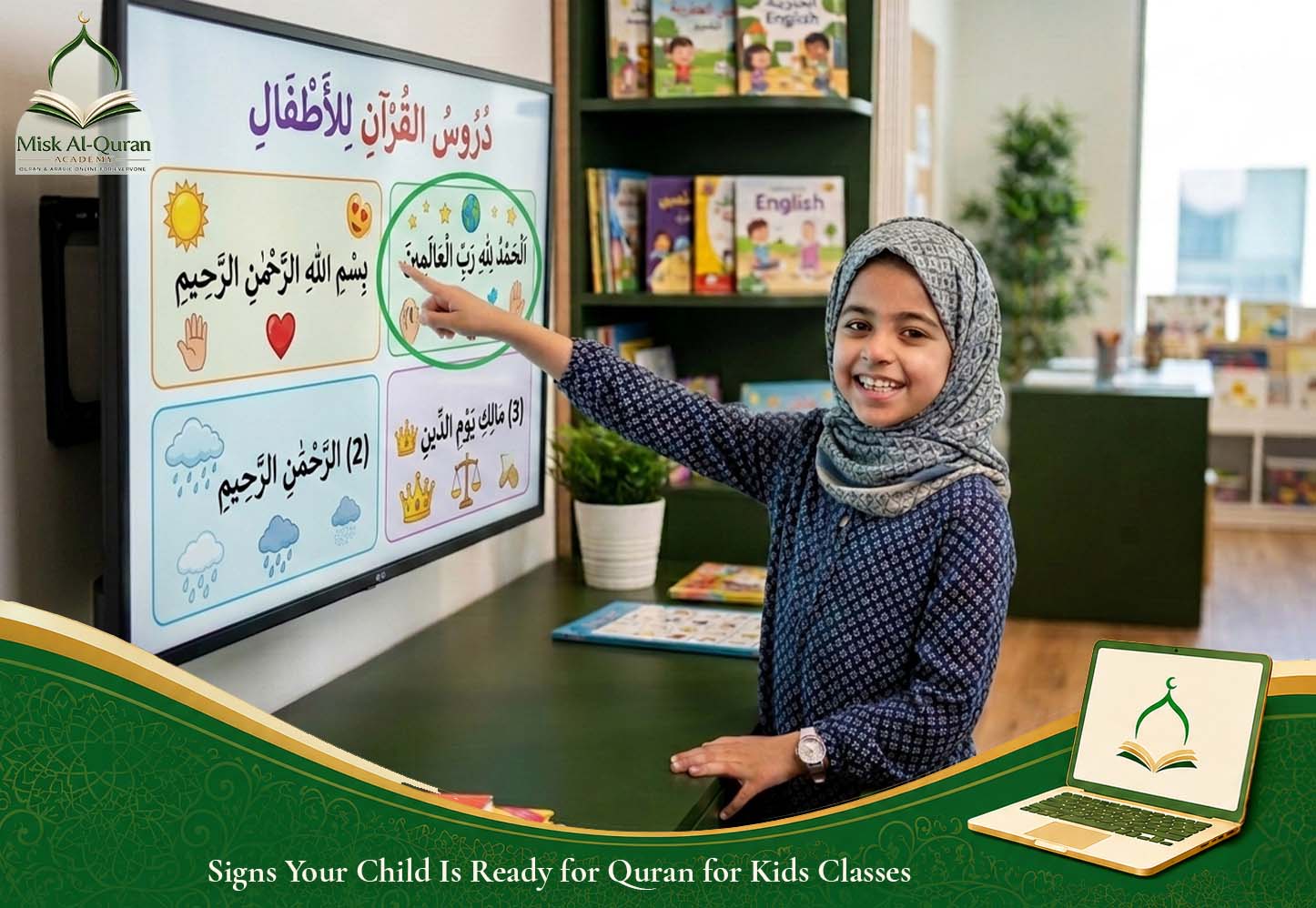
Instead of focusing only on age, parents should look for signs that indicate their child is ready to begin Quran lessons. Common signs include:
- Showing curiosity about the Quran.
- Recognizing some Arabic letters.
- Following simple instructions.
- Sitting attentively for 15–20 minutes.
- Enjoying stories about the Prophets.
- Repeating words after parents or teachers.
- Showing excitement when listening to Quran recitation.
Even if a child has not developed all these skills, they can still begin through enjoyable activities that gradually increase their attention span and confidence.
How to Make Quran for Kids Easy and Enjoyable?
Children learn best when education feels exciting rather than stressful. Forcing long memorization sessions often creates frustration, while interactive teaching helps children develop genuine enthusiasm for learning.
Successful Quran learning combines structure with creativity. Instead of expecting children to sit quietly for extended periods, teachers should alternate between reading, listening, games, storytelling, and revision activities. Some effective strategies include:
- Using colorful Arabic alphabet cards.
- Celebrating every achievement, no matter how small.
- Teaching through short daily lessons.
- Using Quran stories to explain important lessons and values.
- Encouraging children to ask questions during lessons.
- Regularly reviewing previously memorized Surahs.
- Using positive reinforcement instead of criticism.
When children enjoy their lessons, they naturally become more consistent, making long-term learning much easier.
Building Strong Foundations for Quran for Kids
Many parents become eager for their children to memorize large portions of the Quran quickly. While enthusiasm is understandable, strong foundations always produce better long-term results than rushing through memorization.
Before focusing heavily on Hifz, children should develop confidence in:
Learning Arabic Letters in Quran for Kids
Recognizing every letter accurately allows children to read independently later.
Correct Pronunciation in Quran for Kids
Learning the proper articulation of Arabic letters helps prevent pronunciation mistakes that become difficult to correct in the future.
Basic Tajweed Rules for Quran for Kids
Simple Tajweed concepts improve fluency and help children recite the Quran beautifully from the very beginning.
Smooth Quran Reading for Kids
Children should gradually develop reading confidence before increasing their memorization goals.
At Misk Online Quran Academy, teachers emphasize mastery before moving forward, ensuring that every lesson builds naturally on previous knowledge.
Fun Activities That Help Children Love the Quran
Children remain motivated when Quran learning includes enjoyable experiences instead of repetitive routines. Small changes in teaching style can dramatically increase a child’s enthusiasm. Parents can support Quran for kids at home by incorporating activities such as:
- Quran memory games.
- Matching Arabic letters.
- Listening challenges.
- Reward charts.
- Family Quran reading sessions.
- Islamic storytelling.
- Weekly memorization celebrations.
These activities transform learning into an experience children eagerly anticipate rather than one they try to avoid.
Online vs. Traditional Quran Classes
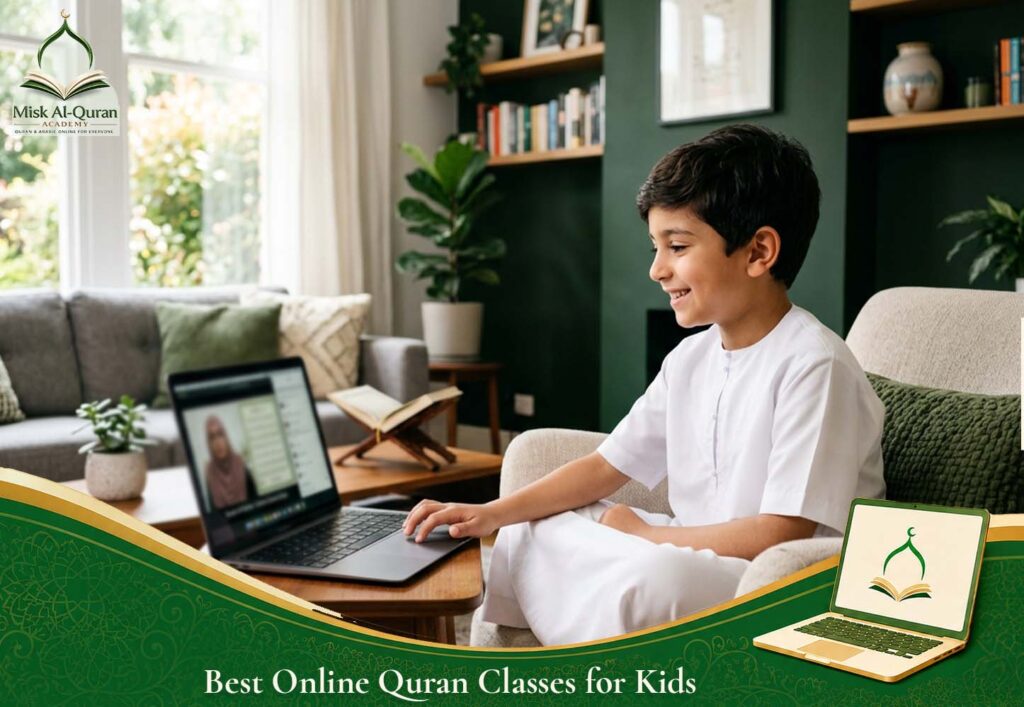
Modern technology has changed how children access Islamic education. Today, many families choose online Quran learning because it combines flexibility with high-quality instruction.
Benefits of Online Quran Classes
Online Quran classes for kids learning allow children to study from the comfort of home while receiving personalized attention from qualified teachers. Advantages include:
- Flexible scheduling.
- One-to-one learning opportunities.
- Comfortable home environment.
- Easy communication with parents.
- Access to experienced teachers worldwide.
- Interactive digital learning tools.
- Consistent attendance without travel.
Many children also feel more relaxed in familiar surroundings, making them more willing to participate during lessons.
Benefits of Traditional Classroom Learning
Traditional Quran schools continue to offer valuable opportunities for face-to-face interaction and community engagement.
Children may benefit from:
* Social interaction with classmates.
* Structured classroom environments.
* Group activities.
* Local community connections.
Ultimately, the best time to learn Quran option depends on each family’s schedule, goals, and learning preferences. Many parents now prefer Quran classes for kids learning because it offers greater flexibility while maintaining excellent educational standards.
Why More Parents Choose Misk Online Quran Academy?
Selecting the right academy is one of the most important decisions parents make during their child’s Quran journey. An experienced academy provides much more than weekly lessons—it creates a complete learning environment that nurtures confidence, consistency, and a genuine love for the Quran.
Misk Online Quran Academy focuses on helping every child succeed through personalized education designed specifically for young learners. Parents appreciate the academy because it offers:
- Qualified male and female Quran teachers.
- Interactive lessons designed for children.
- Personalized learning plans.
- Structured Tajweed instruction.
- Regular progress reports.
- Flexible scheduling for families worldwide.
- One-to-one and small group classes.
- Friendly teachers who motivate children positively.
- Continuous communication with parents.
- A supportive environment where every child can progress at their own pace.
Rather than measuring success only by memorization, the academy helps children become confident Quran readers who understand the importance of consistency, respect, and sincere worship.
How Parents Can Help Their Child Succeed in Quran Learning?
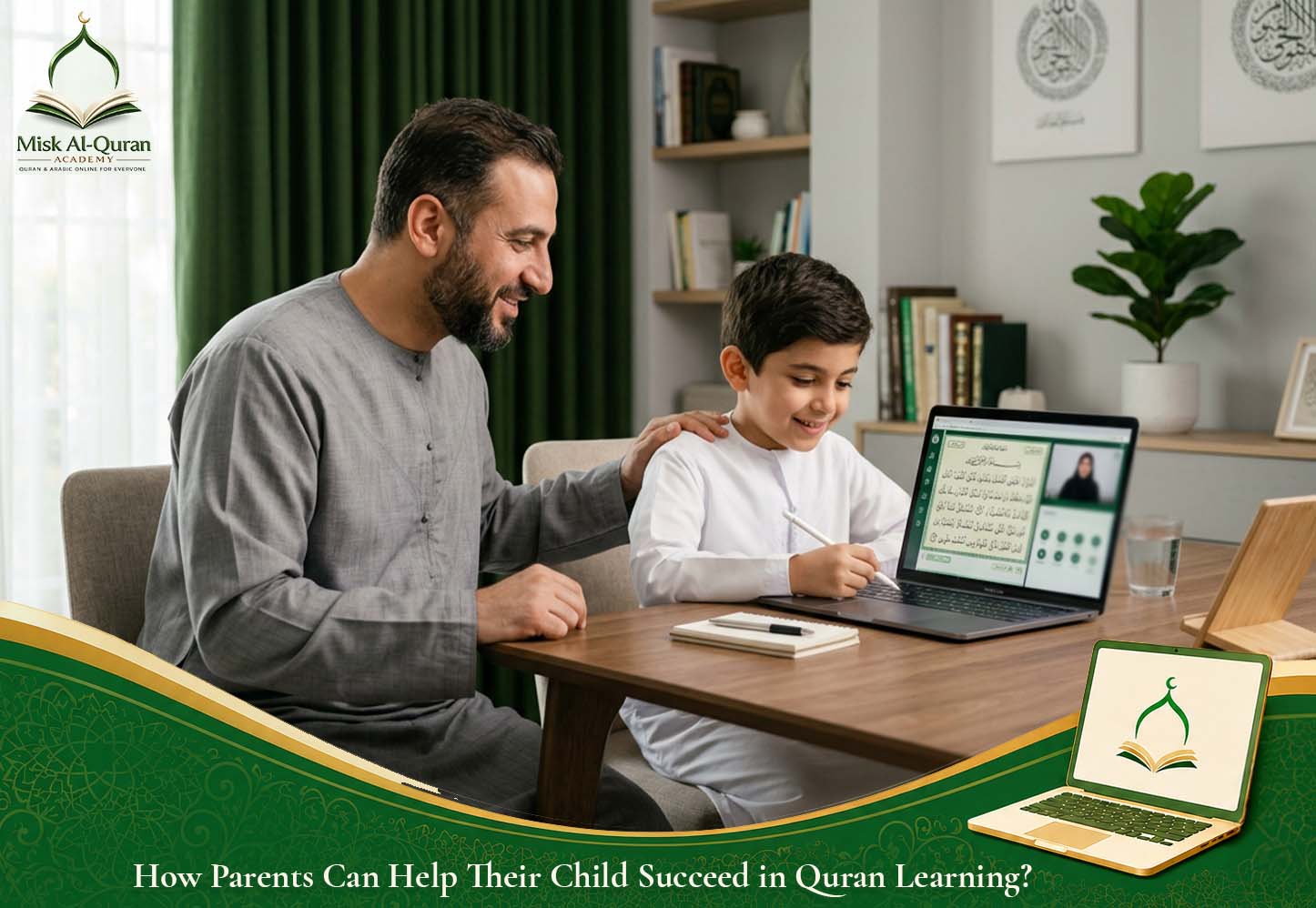
Parents play an essential role in making Quran for kids a successful and enjoyable experience. Even the most qualified teachers cannot achieve the best results without family support. Children learn through encouragement, consistency, and positive examples, so creating a Quran-friendly environment at home can significantly improve their motivation and confidence.
The goal is not to pressure children into memorizing large portions quickly. Instead, parents should focus on building a genuine love for the Quran that lasts a lifetime. Small daily habits often produce better results than long, irregular study sessions.
Here are practical ways parents can support their child’s Quran journey:
- Set aside a fixed time each day for Quran practice.
- Listen to your child’s recitation with patience and encouragement.
- Celebrate progress instead of focusing on mistakes.
- Create a quiet space free from distractions during lessons.
- Review previously memorized Surahs together.
- Make Quran learning part of the family’s daily routine.
- Lead by example by reading the Quran regularly.
When children see that the Quran is valued at home, they naturally become more committed to learning it.
Create a Consistent Learning Routine
Consistency is one of the biggest factors behind successful Quran for kids programs. Studying for twenty minutes every day is usually far more effective than studying for several hours once a week.
Children thrive on routines because they know what to expect. A regular Quran schedule helps them develop discipline while making learning feel like a normal part of everyday life.To build a healthy routine:
- Choose the same lesson time whenever possible.
- Schedule Quran study when your child is alert and focused.
- Keep sessions short for younger learners.
- Include five to ten minutes of revision before learning new verses.
- Allow short breaks if your child begins to lose concentration.
A consistent routine reduces stress and helps children retain what they learn more effectively.
Encourage Without Comparing
Every child learns differently. Some memorize quickly, while others need additional repetition before mastering the same material. Comparing children to siblings, classmates, or friends often reduces confidence and motivation.
Instead, celebrate each child’s personal progress. Praise their effort, consistency, and improvement rather than only their memorization speed. Positive encouragement can include:
- Complimenting correct pronunciation.
- Rewarding consistent attendance.
- Celebrating completed Surahs.
- Recognizing improvement in Tajweed.
- Giving simple rewards for reaching weekly goals.
When children feel appreciated, they become more willing to continue learning and challenging themselves.
Common Mistakes Parents Should Avoid
Even with the best intentions, some parenting habits can unintentionally slow a child’s progress. Recognizing these mistakes early helps create a healthier and more enjoyable learning experience.
Expecting Fast Results
Quran learning is a gradual journey. Expecting children to memorize large portions quickly often leads to frustration and burnout.
Ignoring Revision
Memorization without regular revision causes children to forget previously learned verses. Consistent review is essential for long-term retention.
Correcting Every Small Mistake Immediately
Constant interruptions during recitation can make children nervous. It is often better to allow them to finish before gently correcting recurring mistakes.
Using Fear Instead of Encouragement
Children who associate Quran lessons with fear may lose their enthusiasm. Positive motivation builds lasting confidence and love for learning.
Choosing an Academy Without Research
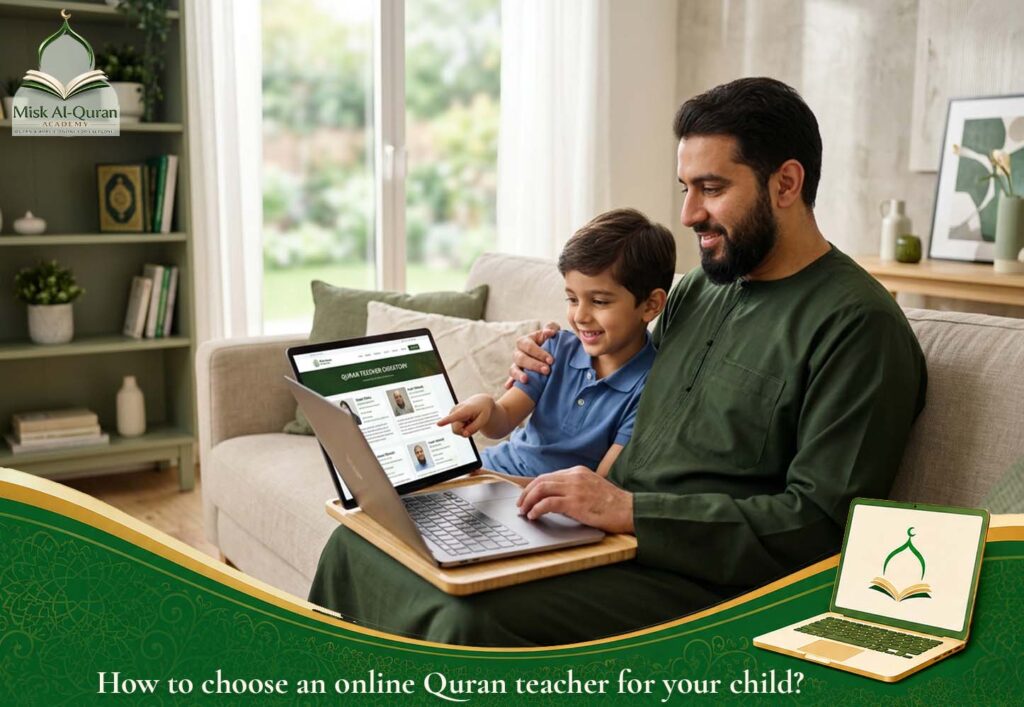
Parents should evaluate teaching quality, lesson structure, communication, and student support before enrolling their child. A trusted academy like **Misk Online Quran Academy** provides experienced teachers, structured programs, and continuous guidance that help children learn with confidence.
Why Qualified Teachers Make a Difference
A knowledgeable online Quran teacher does far more than teach pronunciation. Experienced educators understand how children learn, adapt lessons to different personalities, and maintain motivation throughout the learning process.
Qualified teachers know when to introduce new material, when to revise, and how to explain Tajweed in ways children can easily understand. They also identify learning difficulties early before they become long-term obstacles.
At Misk Online Quran Academy, children learn from experienced teachers who specialize in working with young learners. Lessons are interactive, encouraging, and carefully structured to help every student build strong Quran reading and memorization skills while enjoying the learning process.
Long-Term Benefits of Quran for Kids
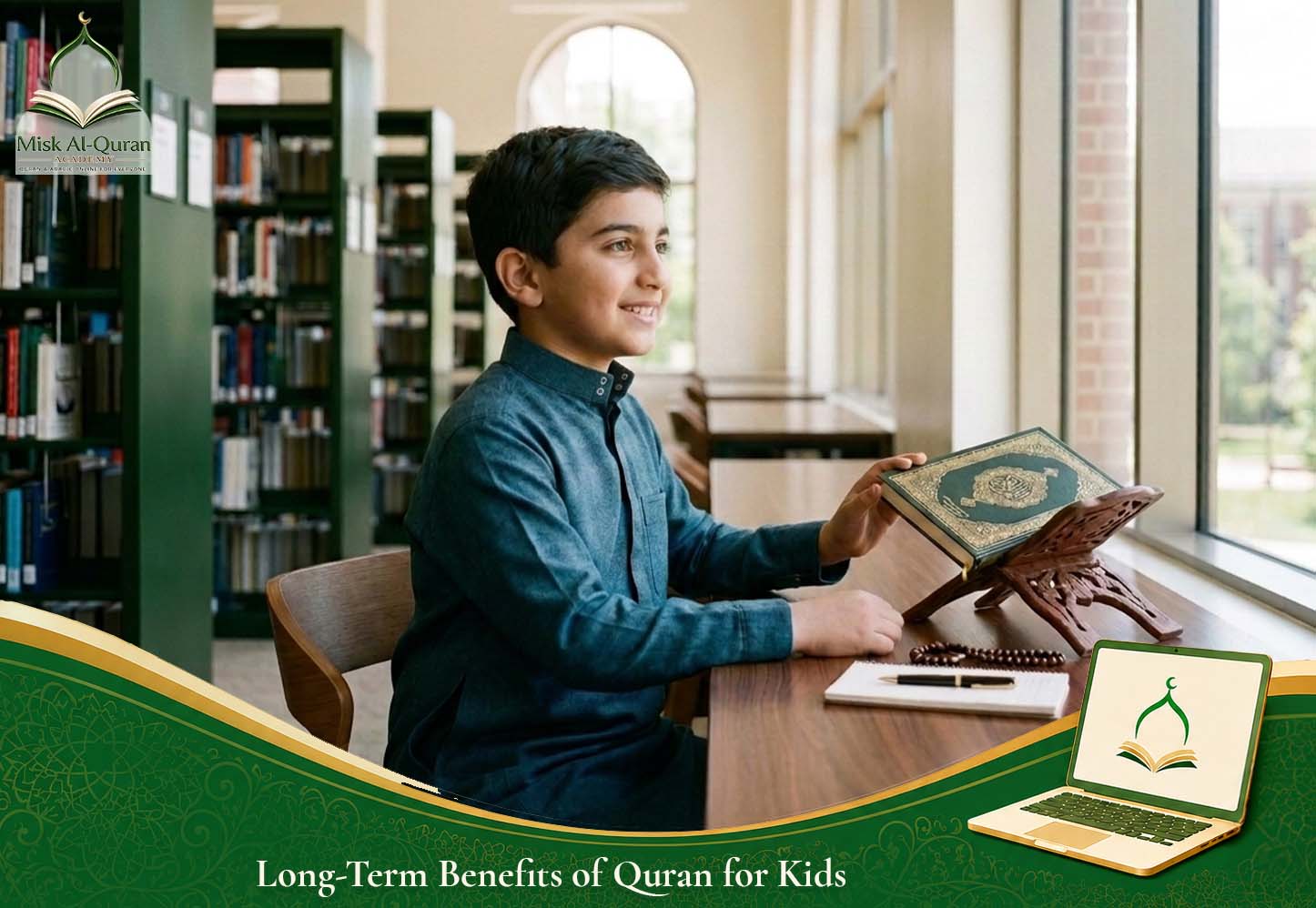
The rewards of Quran education extend far beyond childhood. A child who develops a strong relationship with the Quran often carries those values throughout adulthood. Long-term benefits include:
- Stronger Islamic identity.
- Enhanced Arabic reading skills.
- Better moral decision-making.
- Greater self-discipline.
- Improved confidence in public recitation.
- Lifelong love for learning the Quran.
- Stronger family connections through shared Islamic values.
- Better focus and memory in academic studies.
Perhaps most importantly, children who love the Quran are more likely to continue reading, reflecting upon, and living by its teachings as they grow older.
Frequently Asked Questions
Here are answers to some of the most common questions parents ask about Quran for kids, including the best age to start, recommended lesson frequency, and effective ways to support children throughout their Quran learning journey.
1. How long does it take for a child to learn to read the Quran?
The timeline depends on the child’s age, consistency, and previous Arabic knowledge. Most children develop basic Quran reading skills within several months when they attend regular lessons and practice consistently at home.
2. Should children understand the meaning of the Quran while learning to recite it?
Yes. While correct recitation and Tajweed are important, gradually introducing simple explanations of Quranic meanings helps children appreciate the lessons and apply Islamic values in everyday life.
3. How many Quran lessons per week are recommended for children?
Most educators recommend two to four lessons each week, combined with short daily revision sessions at home. Regular practice is more effective than occasional long study sessions.
4. Can shy children succeed in online Quran classes?
Absolutely. Many shy children feel more comfortable learning from home, where they can interact with teachers in a familiar environment. Personalized online lessons often help them gain confidence more quickly than larger classroom settings.
In conclusion, teaching Quran for kids is one of the most meaningful investments parents can make in their children’s future. Beyond learning to read or memorize verses, Quran education helps children develop strong faith, noble character, self-discipline, and a lifelong connection with Allah. When learning begins at the right pace and in a supportive environment, children gain confidence while enjoying every step of their Quran journey.
Choosing the right educational environment is equally important. With experienced teachers, personalized learning plans, interactive lessons, and continuous parental communication, Misk Online Quran Academy provides children with everything they need to succeed. Whether your child is just beginning to recognize Arabic letters or is ready to improve Tajweed and memorization, the academy offers structured guidance that supports steady progress.
Remember that every child learns differently. Patience, consistency, encouragement, and qualified instruction are the keys to helping young learners build a lasting relationship with the Quran that will benefit them throughout their lives.