
Islamic Studies Classes for the Whole Family, Taught Online by Azhari Teachers
If you're raising kids in a city with no mosque nearby, or a teenager who's starting to ask harder questions about faith than "why do we pray," structured Islamic studies classes at home give them something a weekend halaqah rarely can: consistency, a real curriculum, and a teacher who actually knows their name.
💬 Ask About This Week's Openings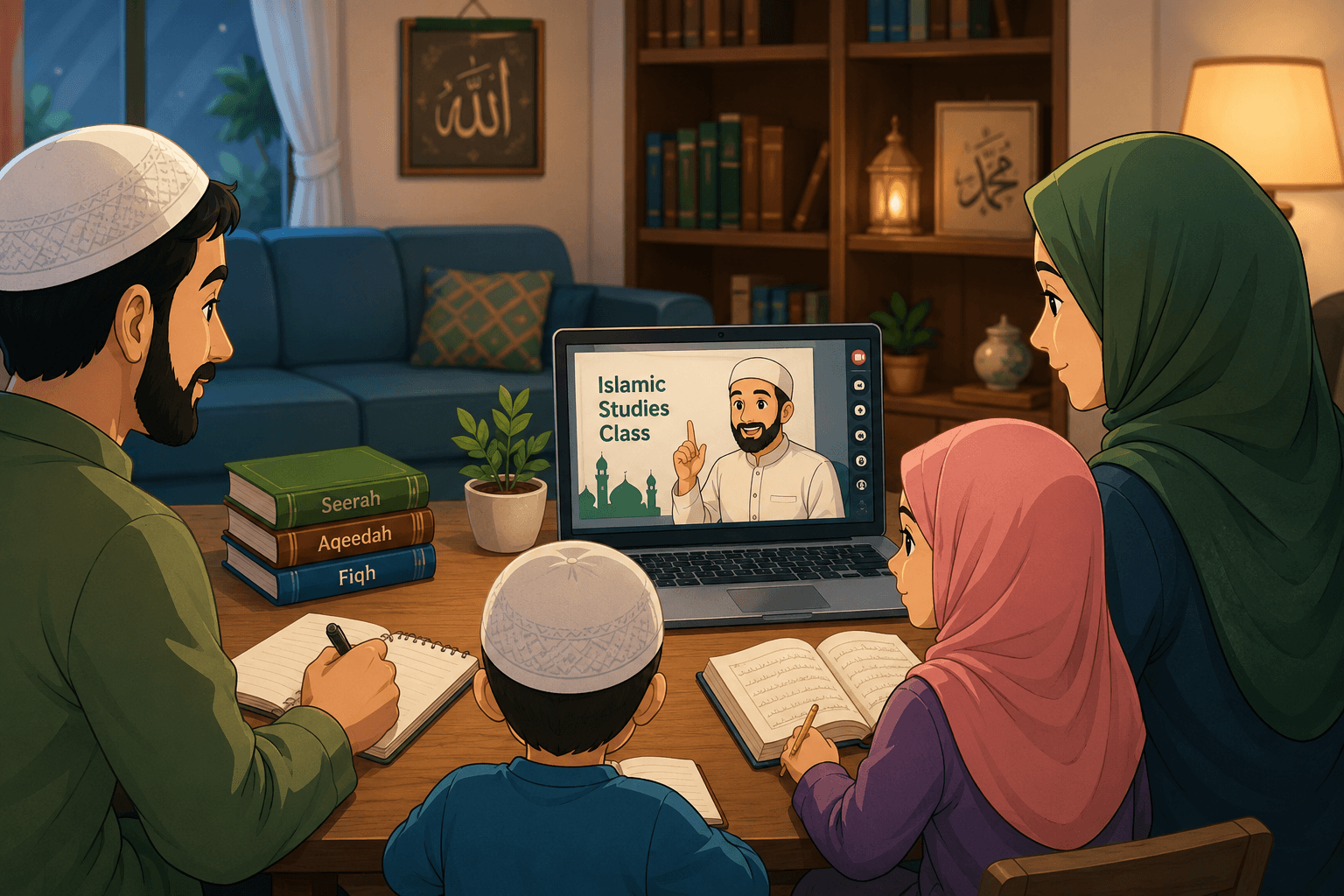
Why Families Outside the Muslim World Choose Us
A mother in Manchester once told our coordinator that her son could recite half of Juz Amma but couldn't explain what wudu actually meant, or why it mattered. That gap is common. Quran memorization programs are everywhere online now, but a program that walks a child (or an adult, we teach both) through Aqeedah, Fiqh, Seerah and Akhlaq in order, at a pace that fits their age, is harder to find.
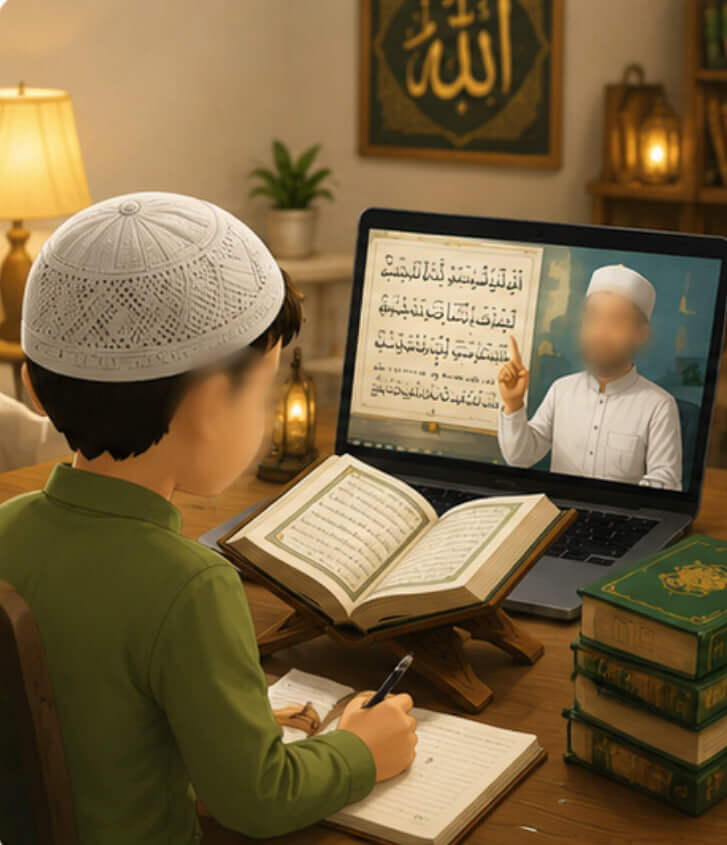
Our Islamic studies classes were built for exactly that gap. Classes run one-on-one or in small groups of up to four, live over Zoom, with teachers who studied at Al-Azhar and have taught children in the US, UK, Canada and across Europe for years. Nothing pre-recorded, no generic worksheet packs. A real teacher, a real weekly slot, and a curriculum that moves forward instead of repeating the same three surahs for a year.
If your family has already gone through our Quran classes for kids, this program picks up where memorization leaves off and builds the understanding around it.
What We Actually Teach
Aqeedah (Belief)
The foundations of faith explained in language a 7-year-old and a 17-year-old can each understand at their own level. Not memorized definitions, but real conversations about why we believe what we believe.
Fiqh (Practical Rulings)
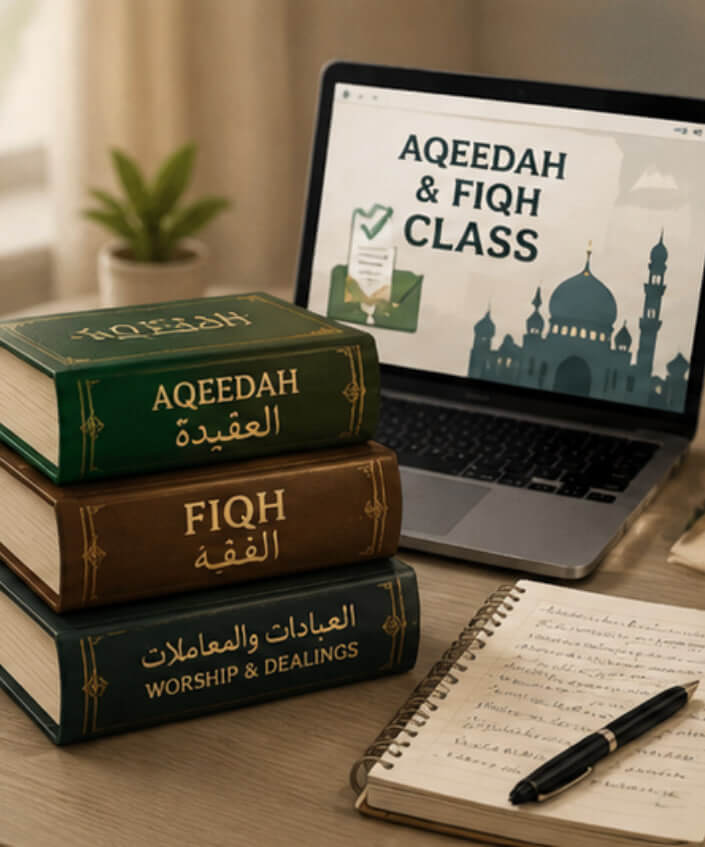
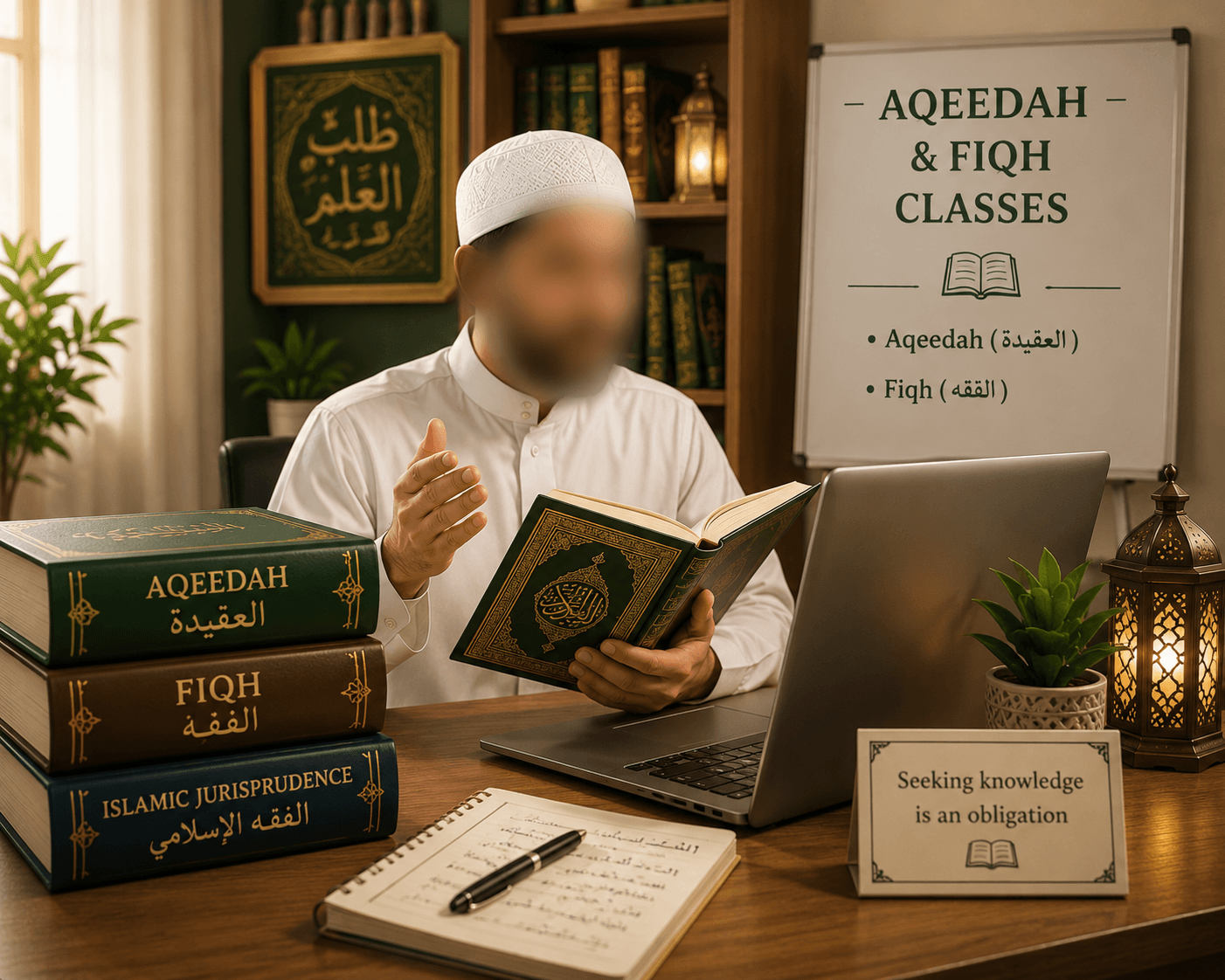
How to pray correctly, what breaks a fast, the basics of halal and haram in everyday choices like food, friendships and screen time. Our Aqeedah and Fiqh classes stay grounded in situations kids actually face.
Seerah (Prophetic Biography)
The life of the Prophet ﷺ told as a story, not a timeline of dates. Students come away with role models, not just facts to recall for a quiz.
Akhlaq (Character)
Honesty, patience, how to handle a classmate who mocks their hijab or their fasting. This is where classroom theory turns into something a child can use on a Tuesday at school.
Arabic Support
Enough classical Arabic vocabulary to follow along without translation crutches. Families wanting a deeper track can pair this with our Arabic classes.
Identity & Belonging
Direct, age-appropriate talk about being the only Muslim kid in class, navigating holidays that aren't theirs, and answering "why do you dress like that" without embarrassment.
Built for More Than Just Children
Most programs online stop at "kids Islamic classes." Ours doesn't. We run tracks for toddlers just learning the shahada, school-age children building the six pillars, teenagers wrestling with doubt for the first time, and even parents who memorized Quran as children but never studied the meaning behind it.
If you're specifically looking for our children-only track with a lighter, more playful pace, that program lives separately at Islamic classes for kids. This page covers the fuller, all-ages curriculum for families who want one consistent teacher across siblings of different ages, or adults studying alongside their children.
How a Family Actually Gets Started
Have a Specific Question About Your Child's Level?
Send us a voice note or a message directly. A real coordinator replies, not a bot.
💬 Message Us on WhatsAppInside Our Islamic Studies Classes
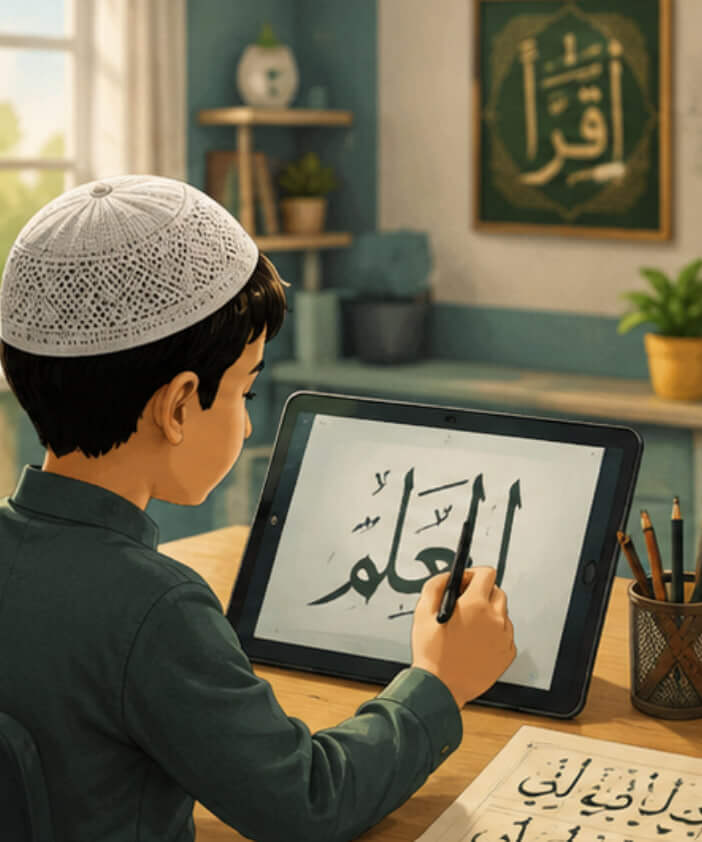
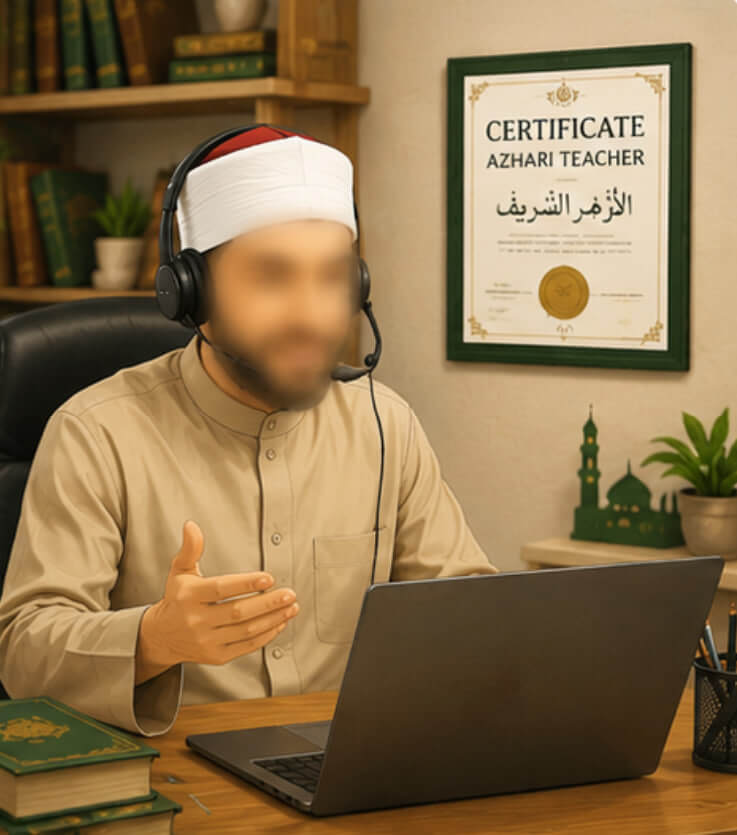
Who's Actually Teaching Your Child
Every teacher on this program is Al-Azhar certified and has taught children specifically, not adults repurposed for a younger audience. Several have taught in Gulf international schools before moving to online teaching, so they're used to explaining concepts in English, not just Arabic, and used to a child who might ask "but why" three times in a row.
We also match by temperament, not just by open slot. A shy 8-year-old and a talkative 14-year-old need different energy from a teacher, and our coordinators actually track that when placing students.
Why Structure Matters for Muslim Kids Growing Up Abroad
Research on Muslim identity development among second-generation immigrant youth in Western countries consistently points to one thing: children who receive structured, age-appropriate religious education alongside strong family involvement report a clearer sense of identity and fewer conflicts between their home and school worlds, compared to children who receive no formal instruction at all (see the Journal of Religion and Health for peer-reviewed studies on this).
For the classical foundations our curriculum draws from, our teachers reference material aligned with Al-Azhar's own educational approach, adapted for a child sitting in London or Toronto rather than Cairo.
Looking for something more specific? Explore our other programs:
- Online Quran Classes for Kids, memorization and tajweed
- Islamic Classes for Kids, our lighter, younger-focused track
- Online Arabic Classes, classical Arabic reading and comprehension
- All Quran Programs, our full catalog by age and level
- Academy Fees, current pricing per track
- Blog, articles on raising Muslim children abroad
Common Questions From Parents
What age can my child start these Islamic studies classes?
We start structured classes around age 5, once a child can sit through a 30-minute session with some focus. Teenagers and adults join the same program at a more advanced starting point after placement.
Is this separate from Quran memorization?
Yes. This program covers Aqeedah, Fiqh, Seerah and Akhlaq. Families wanting memorization and tajweed alongside it usually combine this with our Quran classes.
How long is each class and how often does it happen?
Sessions run 30 to 45 minutes depending on age, once or twice weekly, at a fixed time you choose during enrollment.
Do you teach girls and boys together?
Group classes are matched by gender and age band. One-on-one classes are arranged individually with a same-gender teacher on request.
What if we need to reschedule a class?
Message your coordinator on WhatsApp at least 12 hours ahead and we'll move the session within the same week whenever possible.
How much do these classes cost?
Pricing depends on one-on-one versus group format and weekly frequency. Full current rates are listed on our fees page.
Ready to Give Your Child a Real Islamic Education, Not Just a Weekend Class?
Tell us their age and current level. We'll suggest a starting point within a day.
💬 Start With a Free Placement Chat