How To Perform Umrah – A Step By Step Guide

How to perform Umrah is one of the most important topics every Muslim should understand before traveling to the Holy Mosque. Preparing for Umrah is not limited to booking a trip or packing your luggage. It also means learning the correct rulings, understanding each ritual, and performing every act of worship with sincerity and confidence. A well-prepared pilgrim experiences greater peace of mind and can focus entirely on worship instead of worrying about making mistakes.

This complete guide explains how to perform Umrah step by step, from entering the state of Ihram to completing Halq or Taqsir. You will also discover practical tips, important rulings for both men and women, common mistakes to avoid, and essential preparations before your journey. Whether you are performing Umrah for the first time or simply reviewing its rulings, this guide provides clear and reliable information to help you complete your pilgrimage correctly.

At Misk Online Quran Academy, we believe that every act of worship begins with authentic Islamic knowledge. Learning the correct way to perform Umrah before traveling allows every Muslim to worship Allah with confidence, tranquility, and complete devotion.
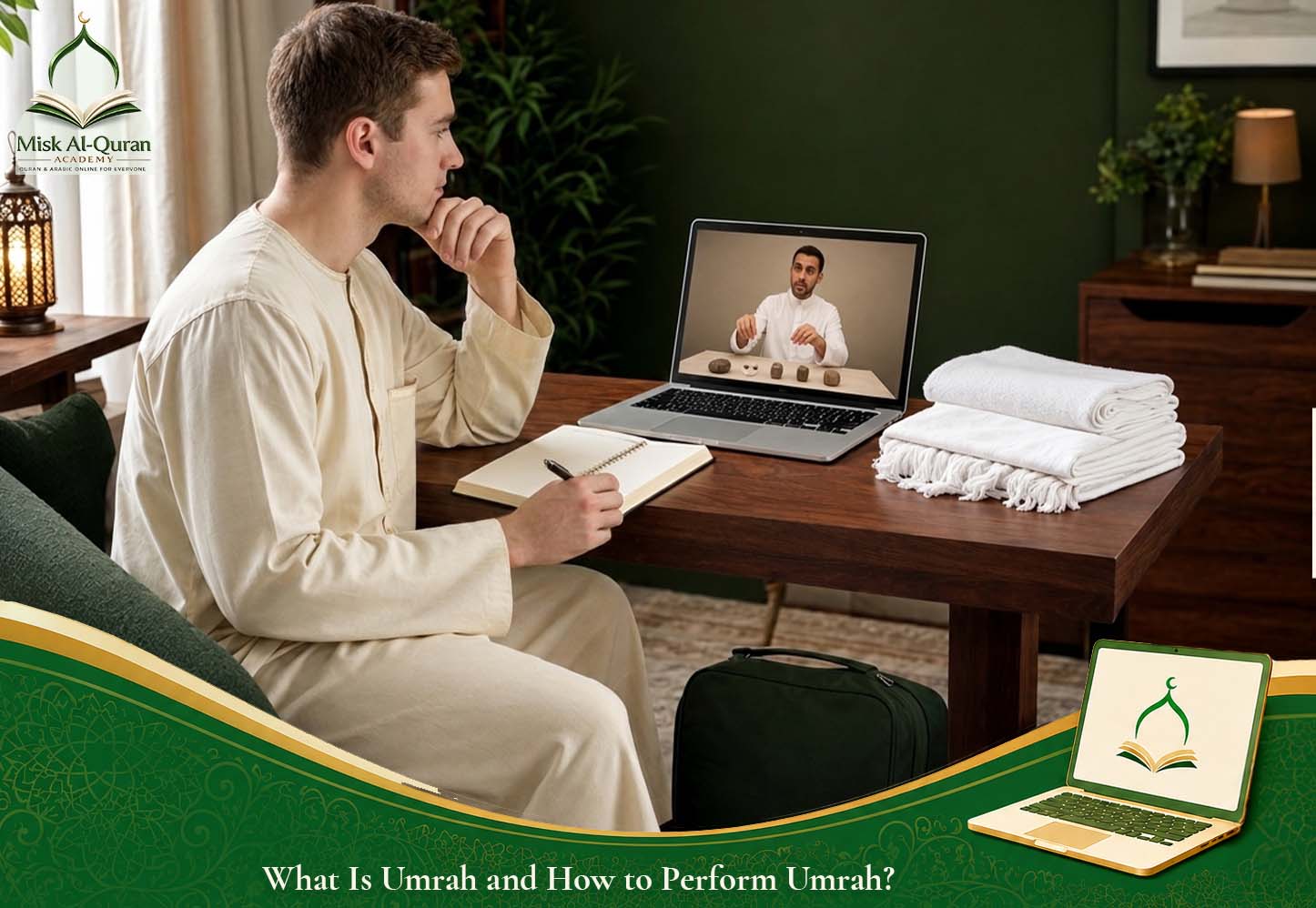

What Is Umrah and How to Perform Umrah?

What Is Umrah and How to Perform Umrah?

Umrah is a voluntary pilgrimage to the Sacred House of Allah in Makkah. Although it is not one of the Five Pillars of Islam like Hajj, it is among the greatest acts of worship that a Muslim can perform. Unlike Hajj, which takes place during specific days of Dhul Hijjah, Umrah can be performed throughout most of the year, making it accessible for Muslims whenever they are physically and financially able.

For millions of believers, Umrah is far more than a journey. It is an opportunity to seek Allah’s forgiveness, increase faith, purify the heart, and strengthen one’s relationship with the Creator. Every ritual performed during Umrah reminds pilgrims of patience, submission, sincerity, and complete trust in Allah.

The Prophet Muhammad ﷺ emphasized the immense virtue of Umrah, teaching that it expiates the sins committed between one Umrah and the next when performed sincerely. This makes every journey to the Sacred Mosque a chance to begin a new chapter filled with hope, mercy, and spiritual renewal.

Start Your Quran Learning Journey with Misk Online Quran Academy

Begin your Quran learning journey with Misk Online Quran Academy, where students of all ages benefit from structured online Quran classes tailored to their individual level and learning needs.

Whether your goal is to improve Quran recitation, master Tajweed rules, or begin memorizing the Holy Quran, our experienced and qualified teachers provide clear step-by-step guidance through personalized one-to-one lessons. Each session is designed to help learners understand, practice, and improve with confidence and consistency.

With flexible scheduling, interactive teaching methods, and a supportive online environment, Misk Online Quran Academy makes it easier to stay committed and motivated. Students can learn comfortably from home while making steady progress in their Quran studies at their own pace.

how to perform Umrah

Why Learning How to Perform Umrah Before Traveling Matters?

Many first-time pilgrims arrive in Makkah without fully understanding the sequence of the rituals. As a result, they may become confused during Tawaf, uncertain about the rules of Ihram, or unaware of the Sunnah practices that increase the reward of their pilgrimage. Studying how to perform Umrah beforehand offers many benefits, including:

  • Performing every ritual with confidence.
  • Avoiding common mistakes that may affect the pilgrimage.
  • Understanding the wisdom behind every act of worship.
  • Reducing stress during crowded conditions.
  • Focusing on worship instead of worrying about procedures.
  • Appreciating the spiritual meaning behind each step.

At Misk Online Quran Academy, students are encouraged to learn Islamic rulings before practicing acts of worship. Proper knowledge allows Muslims to perform Umrah according to the Sunnah while developing a deeper appreciation for this remarkable journey.

The Four Essential Steps on How to Perform Umrah

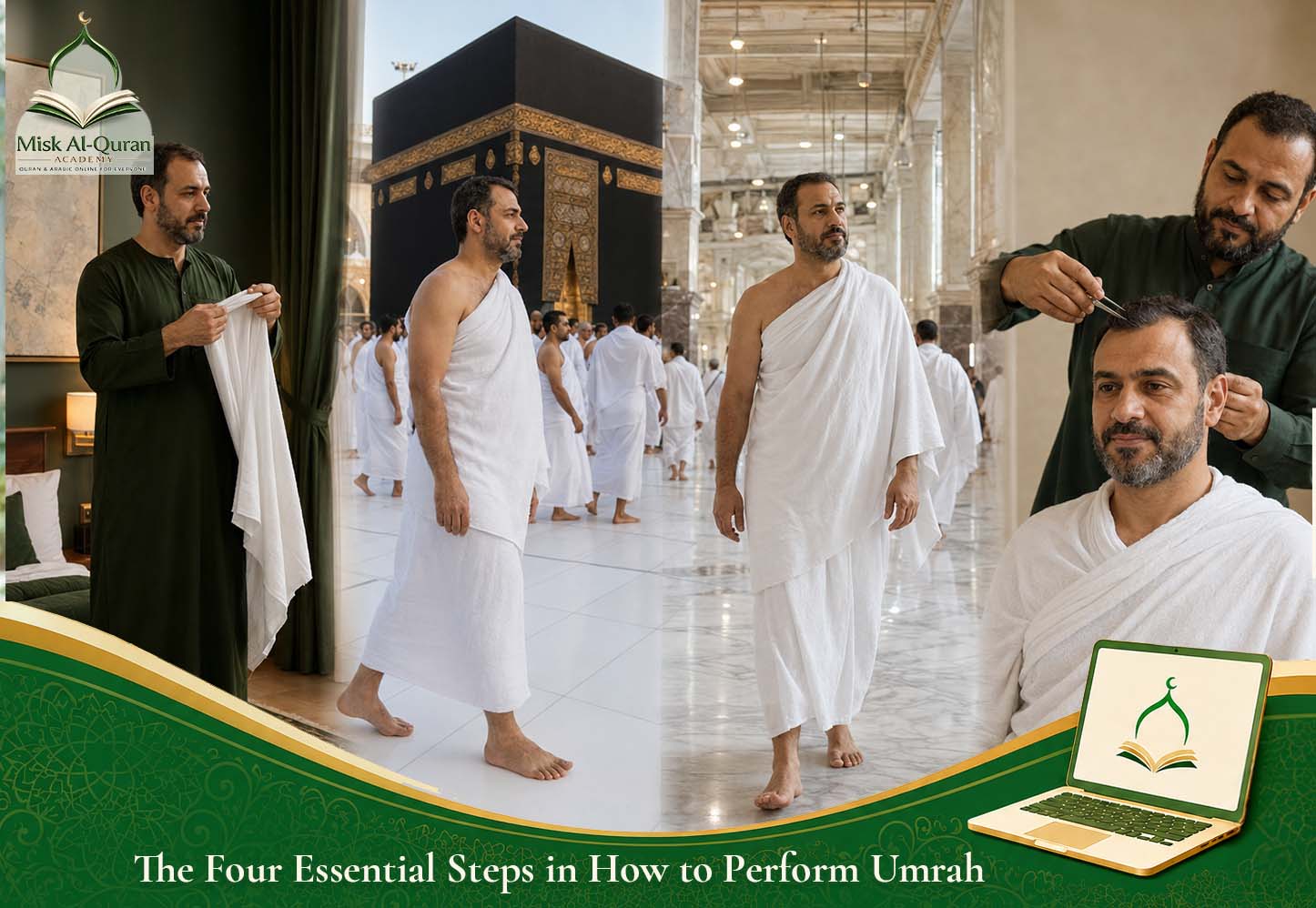
The Four Essential Steps in How to Perform Umrah

Every Umrah consists of four main acts of worship performed in the following order:

  • Entering the state of Ihram.
  • Performing Tawaf around the Kaaba.
  • Completing Sa’i between Safa and Marwah.
  • Shaving or trimming the hair (Halq or Taqsir).

Although these rituals appear simple, each one carries deep spiritual significance and should be performed with sincerity, patience, and remembrance of Allah.

Entering the State of Ihram

Ihram marks the beginning of your Umrah journey. It is a sacred state of worship that every pilgrim must enter before crossing the designated boundary known as the Miqat.

Entering Ihram is more than simply changing clothes. It represents leaving behind worldly distractions and focusing completely on Allah. Pilgrims prepare themselves spiritually and physically before beginning this blessed journey. Before entering Ihram, it is recommended to:

  • Perform Ghusl if possible.
  • Trim your nails.
  • Remove unwanted body hair.
  • Wear clean clothing.
  • Pray two voluntary Rak’ahs if circumstances allow.
  • Make sincere repentance.
  • Increase remembrance of Allah.

Ihram Clothing for Men

Men wear two clean white pieces of unstitched cloth:

  • Izar, wrapped around the lower body.
  • Rida, placed over the shoulders and upper body.

The simplicity of these garments reminds every pilgrim that wealth, status, nationality, and social position have no value before Allah.

 Ihram Clothing for Women

Women do not wear special Ihram garments. Instead, they wear loose, modest Islamic clothing that properly covers the body while avoiding adornment or perfume. Unlike men, women are not required to wear white. Any modest color is permissible.

Making the Niyyah

After reaching the Miqat, pilgrims make the intention to perform Umrah sincerely for the sake of Allah. The intention comes from the heart, although many pilgrims also recite a verbal intention asking Allah to make the journey easy and accept their worship. Immediately after making the intention, pilgrims begin reciting the Talbiyah, which continues until Tawaf begins.

Reciting the Talbiyah

The Talbiyah is one of the most beautiful declarations of submission to Allah. Pilgrims repeatedly proclaim that they have answered Allah’s call, expressing complete obedience and gratitude throughout the journey toward Makkah. Men recite the Talbiyah aloud, while women recite it quietly.

During this stage, many pilgrims experience an overwhelming feeling of peace as they realize they are among the guests of Allah, traveling solely for His pleasure.

Performing Tawaf Around the Kaaba

After entering Masjid Al-Haram, the next stage in performing Umrah is Tawaf. This beautiful act of worship consists of circling the Holy Kaaba seven times in a counterclockwise direction. Every circuit begins and ends at the corner containing the Black Stone (Hajar Al-Aswad).

Tawaf is much more than walking around the Kaaba. It is a powerful reminder that Allah is the center of a believer’s life. While millions of Muslims from every nation move together in harmony, differences in language, culture, and background disappear, leaving only devotion to Allah.

Pilgrims should approach Tawaf with humility, patience, and constant remembrance of Allah. Crowds are often large, especially during Ramadan and school holidays, so remaining calm and avoiding pushing others is part of observing proper Islamic manners.

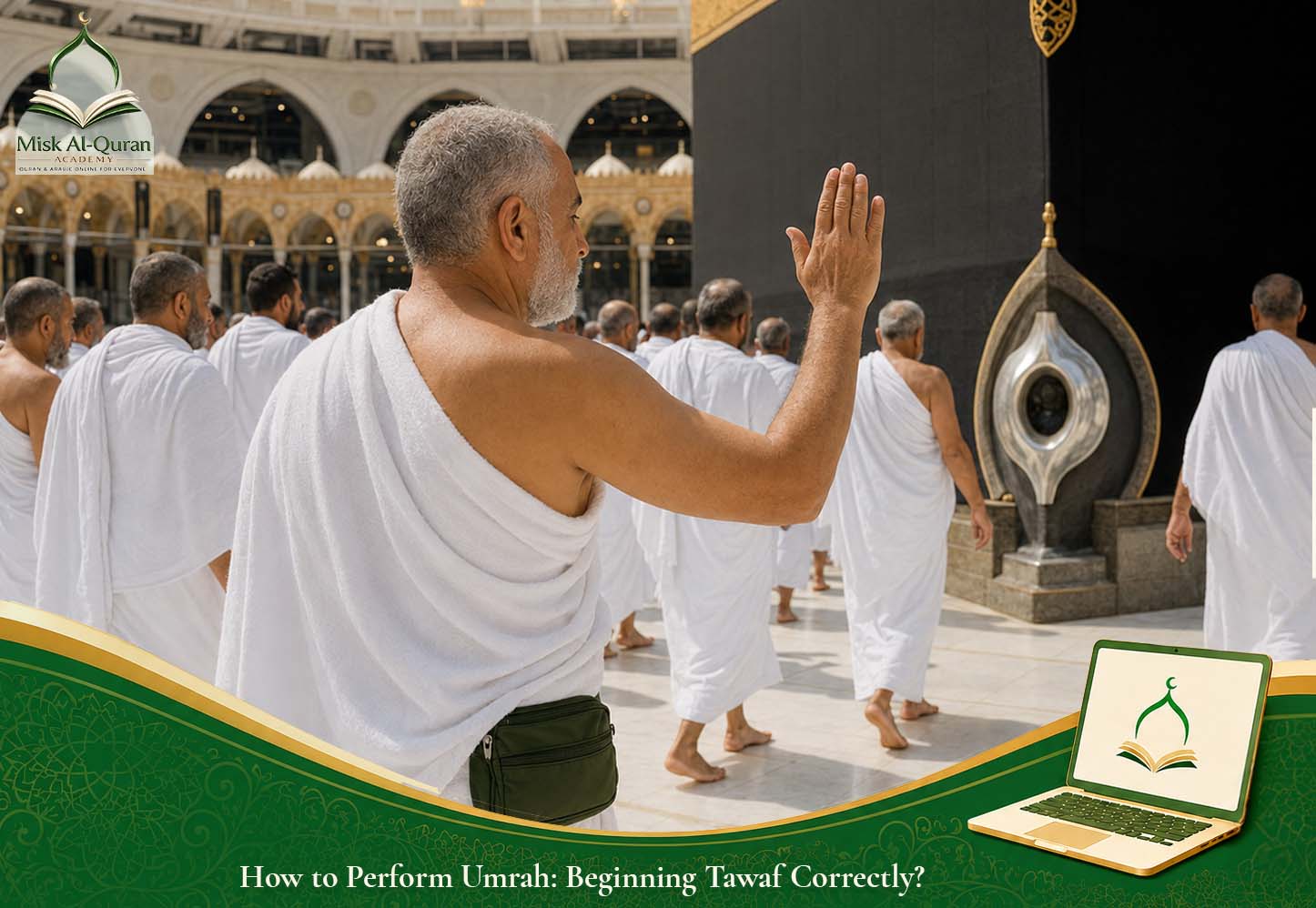
How to Perform Umrah: Beginning Tawaf Correctly?

How to Perform Umrah_ Beginning Tawaf Correctly?

Before starting the first circuit, pilgrims stand in line with the Black Stone if possible. If reaching the stone is difficult because of the crowd, there is no need to force your way through other pilgrims. Instead, you should:

  • Face the direction of the Black Stone.
  • Raise your right hand toward it.
  • Say “Bismillah, Allahu Akbar.”
  • Begin walking for the first circuit.

This practice follows the Sunnah and allows every pilgrim to begin Tawaf respectfully without causing harm to others.

How to Perform Umrah: The Seven Circuits of Tawaf?

Each complete circle around the Kaaba counts as one circuit. After completing seven circuits, the Tawaf is complete.

While walking, no fixed supplication must be recited during each round. This allows every pilgrim to worship Allah in a personal and meaningful way.

You may spend the time by:

  • Reciting verses from the Quran.
  • Making sincere du’a.
  • Seeking forgiveness.
  • Sending blessings upon the Prophet Muhammad ﷺ.
  • Glorifying Allah through dhikr.

How to Perform Umrah: Sunnah Practices During Tawaf?

Men perform two Sunnah practices during Tawaf that women do not perform.

Idtiba in How to Perform Umrah

Before beginning Tawaf, men uncover the right shoulder by placing the upper Ihram cloth underneath the right arm and over the left shoulder. Women keep both shoulders covered throughout Tawaf.

Raml in How to Perform Umrah

During the first three circuits, men are encouraged to walk with short, brisk steps while maintaining dignity and composure. The remaining four circuits are completed at a normal walking pace. Women maintain a regular walking speed during all seven circuits.

How to Perform Umrah: Tawaf Etiquette?

Although many pilgrims focus on finishing quickly, taking time to worship sincerely often provides a much deeper spiritual experience. Keep these etiquette guidelines in mind:

  • Avoid pushing or arguing with other pilgrims.
  • Keep your voice low.
  • Show patience during crowded periods.
  • Respect elderly pilgrims.
  • Help others whenever possible.
  • Stay focused on worship rather than taking photographs.

How to Perform Umrah: Praying After Tawaf?

After completing seven circuits, pilgrims perform two Rak’ahs of prayer if possible. Many people hope to pray directly behind Maqam Ibrahim, but this area is often crowded. If space is unavailable, the prayer may be performed anywhere inside Masjid Al-Haram.

After completing the prayer, pilgrims are encouraged to continue making du’a, asking Allah for forgiveness, guidance, and acceptance of their Umrah.

How to Perform Umrah: Drinking Zamzam Water?

One of the most beloved Sunnah acts after Tawaf is drinking Zamzam water. Muslims drink Zamzam while making heartfelt supplications because of its special virtue in Islam. Many pilgrims also take Zamzam water home to share its blessings with family and friends.

Performing Sa’i Between Safa and Marwah

After completing Tawaf, the next step in performing Umrah is Sa’i. Sa’i consists of walking seven times between the hills of Safa and Marwah. This ritual honors the unwavering faith of Hajar (RA), whose trust in Allah led to the miraculous appearance of Zamzam.

How to Perform Umrah: How to Begin Sa’i?

Pilgrims first walk to Safa and face the direction of the Kaaba. The first walk starts at Safa and ends at Marwah, with the seventh circuit ending at Marwah. At Safa, it is recommended to:

  • Praise Allah.
  • Recite Takbir.
  • Raise your hands in supplication.
  • Make a personal du’a.

How to Perform Umrah: Walking Between the Green Lights?

Inside the Sa’i pathway, men are encouraged to jog lightly between the two green markers, while women continue walking at a normal pace. This Sunnah reminds pilgrims that acts of worship combine physical effort with spiritual devotion, much like how to make Wudu, where every step prepares the believer to stand before Allah with purity and sincerity.

How to Perform Umrah: What Should You Recite During Sa’i?

Pilgrims are free to use this time in worship according to their preference. They may recite the Quran, remember Allah through dhikr, make sincere personal supplications, seek forgiveness, send blessings upon the Prophet ﷺ, and reflect with humility and gratitude. Paying attention to Quran pronunciation while reciting can help worshippers read the verses correctly and increase their confidence during acts of worship.

  • Personal du’a.
  • Quran recitation.
  • Dhikr.
  • Seeking forgiveness.
  • Asking Allah for goodness in this life and the Hereafter.

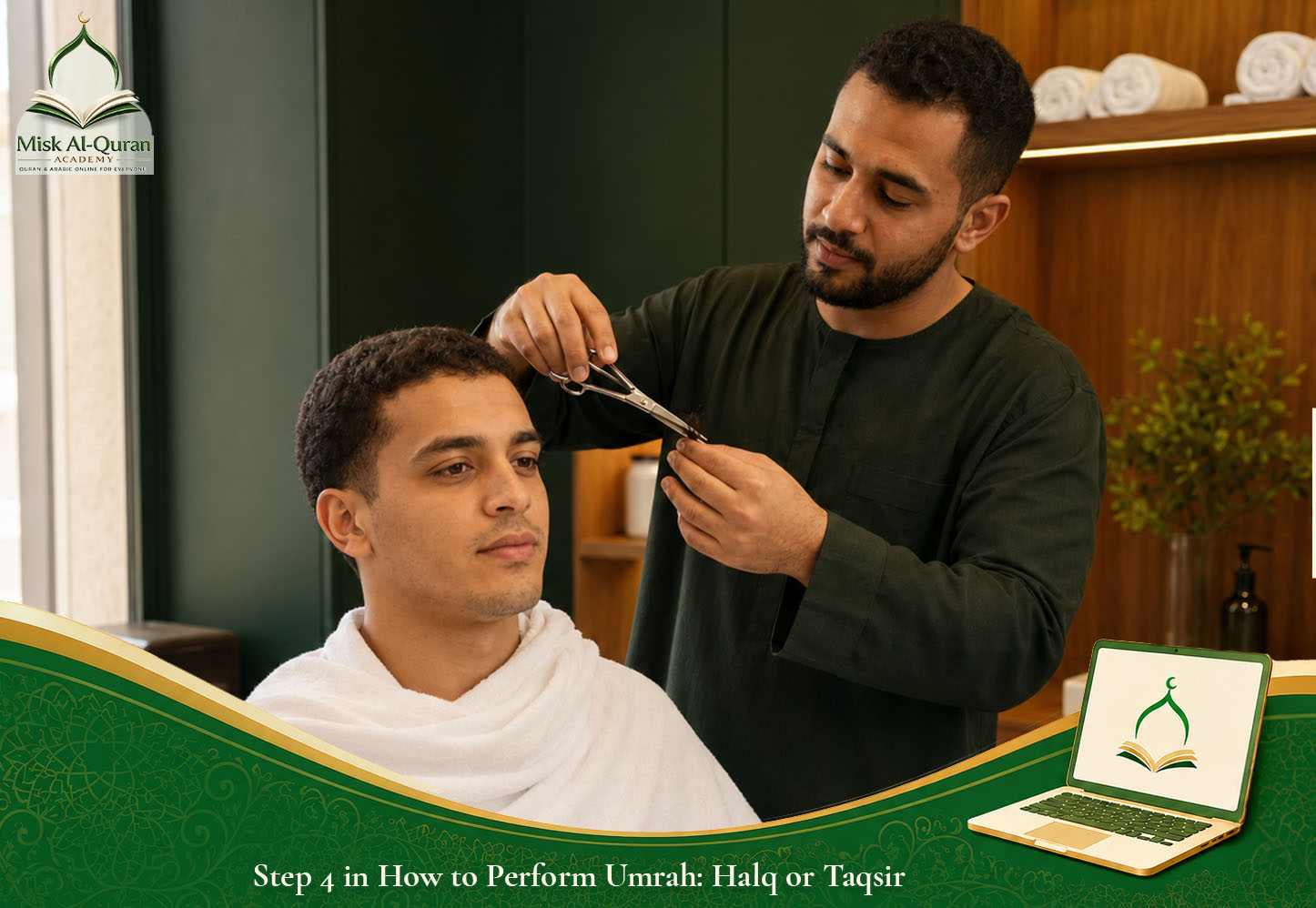
Step 4 in How to Perform Umrah: Halq or Taqsir

Step 4 in How to Perform Umrah_ Halq or Taqsir
Step 4 in How to Perform Umrah Halq or Taqsir

The final step in performing Umrah is cutting the hair, which marks the completion of the pilgrimage and the end of the state of Ihram. Completing this ritual encourages every Muslim to continue practicing the Quran and self-reflection learned throughout the journey and to apply those spiritual lessons in everyday life.

How to Perform Umrah: Halq or Taqsir for Men?

Men may either shave the entire head (Halq) or trim the hair evenly from all parts of the head (Taqsir). Although both options are valid, Halq is considered more virtuous according to the Sunnah.

How to Perform Umrah: Hair Cutting for Women?

Women complete how to perform Umrah by trimming approximately the length of a fingertip from the ends of their hair. This final act marks the completion of Umrah, the end of Ihram, and the beginning of a new chapter filled with gratitude, renewed faith, and obedience to Allah.

Essential Duas to Recite During Umrah

While learning how to perform Umrah focuses on understanding the rituals, many pilgrims also wonder which supplications they should recite during their journey. One of the beautiful aspects of Umrah is that Islam does not require a specific du’a for every step. This flexibility reflects many interesting facts about Islam, showing that sincerity and devotion are valued more than memorizing fixed words.

Throughout your Umrah, try to increase your remembrance of Allah by combining Quran recitation, dhikr, and heartfelt supplications. The benefits of reciting Quran include strengthening faith, calming the heart, increasing patience, and helping believers maintain a close connection with Allah during every stage of their pilgrimage.Some of the best moments to make du’a include:

  • Before entering Masjid Al-Haram.
  • During Tawaf around the Kaaba.
  • Between the Yemeni Corner and the Black Stone.
  • While standing on Safa and Marwah.
  • Throughout Sa’i between the two hills.
  • After drinking Zamzam water.
  • Before and after your voluntary prayers.
  • At any quiet moment when your heart feels connected to Allah.

You may ask Allah for forgiveness, guidance, mercy, protection, lawful provision, and success in this life and the Hereafter, while also making du’a for your family and the Muslim Ummah.

Do not worry if you do not know Arabic. Allah understands every language, so you may supplicate sincerely in your own words. The true purpose of Umrah is to strengthen your connection with Allah through sincere worship and heartfelt du’a.

How to Perform Umrah for Ladies?

Women perform the same four essential rituals as men: entering Ihram, performing Tawaf around the Kaaba, completing Sa’i between Safa and Marwah, and trimming a small portion of their hair to complete Umrah according to Islamic teachings. Parents who are preparing their children for future pilgrimages often begin with the best online Quran classes for kids, helping them build a strong Islamic foundation from an early age.

  • Entering Ihram.
  • Performing Tawaf.
  • Completing Sa’i.
  • Cutting a small portion of their hair.

However, Islamic law includes several rulings that are specific to women, making it important to understand these differences before traveling.

Ihram Clothing for Women

Unlike men, women are not required to wear two white cloths. Instead, they may wear any loose, modest Islamic clothing that fulfills the requirements of hijab. Their clothing should be:

  • Clean.
  • Loose-fitting.
  • Non-transparent.
  • Free from perfume.
  • Comfortable for walking long distances.

Covering the Face During Ihram

One of the most common questions concerns the face covering. While in Ihram, women should not wear a niqab that touches the face directly.

However, if non-mahram men are nearby, a woman may lower part of her hijab over her face without fastening it against the skin. This allows her to maintain modesty while following the rulings of Ihram.

Menstruation During Umrah

Many women worry about their menstrual cycle affecting their pilgrimage. If menstruation begins before Tawaf, a woman should wait until she becomes pure before performing Tawaf. She should then complete the remaining rites in their proper order.

If special circumstances arise, consulting a qualified Islamic scholar is always recommended before making any decisions. Understanding these rulings in advance helps women perform Umrah with confidence and peace of mind.

Important Rules of Ihram
Important Rules
Important Rules

Once a pilgrim enters Ihram, certain actions become prohibited until Umrah is completed. These restrictions encourage patience, discipline, and complete devotion to Allah throughout the pilgrimage. Some of the main prohibitions include:

  • Applying perfume or scented products.
  • Cutting hair.
  • Trimming fingernails or toenails.
  • Hunting animals.
  • Engaging in marital relations.
  • Performing marriage contracts.
  • Arguing, insulting others, or behaving aggressively.

Practical Tips Before Performing Umrah

Preparing properly makes the pilgrimage smoother and allows you to focus on worship instead of unnecessary distractions. Before leaving for Makkah, remember to:

  • Learn the sequence of every ritual.
  • Memorize the Talbiyah.
  • Review common duas.
  • Carry comfortable sandals.
  • Pack unscented toiletries.
  • Bring a small Quran or a Quran app.
  • Keep a reusable water bottle.
  • Wear comfortable clothing suitable for walking.
  • Keep important documents safely organized.
  • Stay hydrated throughout your journey.

Simple preparation can greatly improve your Umrah experience by helping you stay organized, focused, and spiritually ready throughout the journey, making every step easier and more meaningful.

Common Mistakes to Avoid During Umrah

Many first-time pilgrims may make mistakes due to a lack of knowledge about Umrah rulings. Avoiding these common errors helps ensure that your pilgrimage is performed correctly and with greater peace of mind.

  • Entering Ihram Too Late: Some travelers delay entering Ihram until after passing the Miqat. Pilgrims should complete their intention and enter Ihram before crossing the designated boundary.
  • Pushing to Reach the Black Stone: Touching or kissing the Black Stone is a Sunnah, but causing harm to others is not. If reaching it safely is difficult, pointing toward it while saying “Allahu Akbar” is sufficient.
  • Forgetting the Order of Rituals: The correct order of Umrah is Ihram, Tawaf, Sa’i, and finally Halq or Taqsir. Following this sequence helps avoid confusion.
  • Becoming Distracted During Worship: Avoid excessive distractions and focus on dhikr, du’a, Quran recitation, and reflection to gain the full spiritual benefits of Umrah.

Preparing Spiritually Before Umrah

Learning how to perform Umrah involves more than understanding the physical rituals. A successful pilgrimage begins with preparing the heart and strengthening your relationship with Allah before arriving in Makkah.

Take time to sincerely repent for past sins, forgive those who have wronged you, and seek forgiveness from anyone you may have hurt. Renew your intention so that every step of your journey is purely for the sake of Allah rather than personal recognition or worldly goals.

It is also beneficial to increase your daily worship in the weeks leading up to your departure by reading more Quran, praying voluntary prayers, making abundant dhikr, and asking Allah to accept your pilgrimage. These simple habits help create the spiritual mindset needed to fully appreciate the blessings of Umrah.

At Misk Online Quran Academy, students are encouraged to prepare both spiritually and academically before performing acts of worship. Learning authentic Islamic knowledge allows every Muslim to approach Umrah with confidence, sincerity, and a deeper understanding of its purpose.

Preparing Your Heart Before Visiting Makkah

Before learning how to perform Umrah, every Muslim should also prepare spiritually for this blessed journey. Physical preparation is important, but the condition of the heart is even more significant.

Begin by renewing your intention and reminding yourself that Umrah is performed solely to seek Allah’s pleasure. Avoid making the journey about photographs, social media, or personal recognition. Instead, focus on sincerity, humility, and gratitude for being invited to visit the Sacred House of Allah.

It is also recommended to sincerely repent of past sins before traveling. Ask Allah for forgiveness, forgive those who have wronged you, and seek forgiveness from anyone you may have hurt. A heart free from resentment and filled with hope is better prepared to benefit from the spiritual blessings of Umrah.

Another valuable step is increasing your acts of worship in the weeks leading up to your departure. Reading the Quran, offering voluntary prayers, making regular dhikr, and giving charity all help strengthen your connection with Allah before arriving in Makkah.

Finally, remember that every pilgrim’s experience is unique. Some moments will be emotional, while others may test your patience due to crowds or travel challenges. Accept every part of the journey with trust in Allah, knowing that patience and sincerity are among the greatest qualities rewarded during Umrah.

By preparing both your knowledge and your heart, you will be ready to perform Umrah with confidence, tranquility, and devotion. This balanced preparation allows you to fully appreciate the blessings of this sacred journey and return home with stronger faith, greater gratitude, and a renewed commitment to living according to the teachings of Islam.

Spiritual Benefits of Performing Umrah
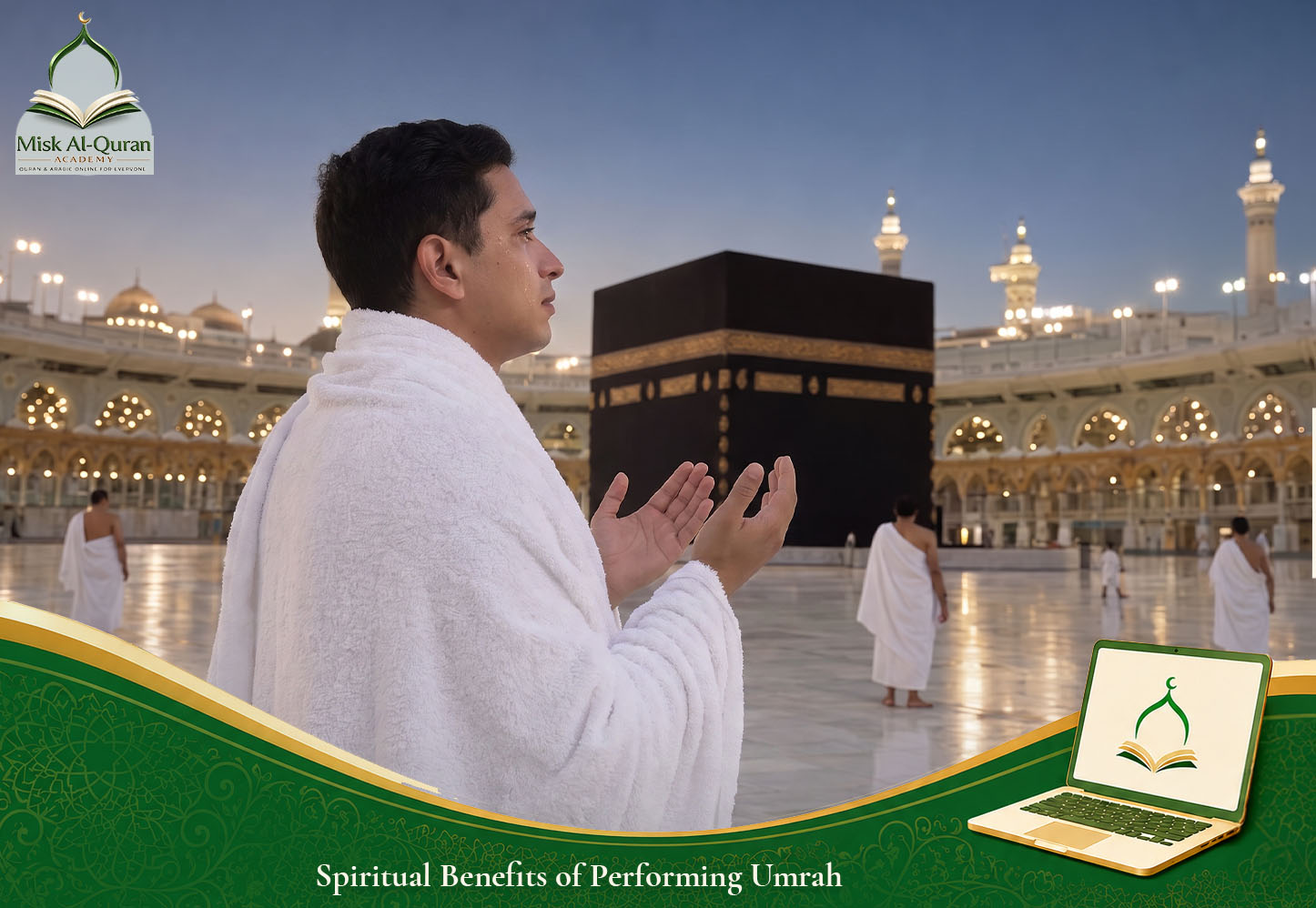
Spiritual Benefits
Spiritual Benefits

Understanding how to perform Umrah correctly allows you to experience the true spiritual beauty of this remarkable act of worship. Every step, from entering Ihram to completing Sa’i, reminds Muslims of complete submission to Allah and strengthens their faith.

Umrah is not simply a journey to Makkah; it is an opportunity to leave behind distractions, seek forgiveness, and return with a renewed heart. Many pilgrims describe their experience as one of the most emotional and life-changing moments of their lives. Some of the greatest spiritual benefits of Umrah include:

  • Strengthening your relationship with Allah.
  • Seeking forgiveness for past sins.
  • Increasing patience and gratitude.
  • Developing humility and sincerity.
  • Reflecting on the lives of Prophet Ibrahim (AS), Hajar (RA), and Prophet Ismail (AS).
  • Experiencing the unity of Muslims from every nation.
  • Renewing your commitment to worship after returning home.

When performed with sincerity and according to the Sunnah, Umrah becomes a source of lasting spiritual growth that continues long after the journey has ended.

What to Do After Completing Umrah?

Completing how to perform Umrah is not the end of your spiritual journey—it is the beginning of a renewed relationship with Allah. Many pilgrims feel a deep sense of peace after finishing Umrah, and preserving that feeling should become a priority once the rituals are complete.

After leaving the state of Ihram, continue making the most of your time in Makkah. Pray as many voluntary prayers as possible in Masjid Al-Haram, recite the Quran regularly, and increase your remembrance of Allah. Every moment spent in the Sacred Mosque is a valuable opportunity to earn reward and strengthen your faith.

When you return home, strive to maintain the positive habits you developed during your pilgrimage. Continue praying on time, reading the Quran daily, giving charity, and showing kindness to family, neighbors, and the wider community. A truly accepted Umrah should inspire lasting positive changes in a Muslim’s character and daily life.

It is also beneficial to reflect on the lessons learned during your journey. The humility experienced while wearing Ihram, the patience shown during Tawaf and Sa’i, and the gratitude felt in the Sacred Mosque should continue influencing your actions long after you return home.

At Misk Online Quran Academy, we encourage students to continue seeking Islamic knowledge after Umrah. Ongoing learning helps preserve the spiritual growth achieved during the pilgrimage and supports a lifelong commitment to worship and good character.

Why Learning Before Traveling Is So Important?

Many pilgrims spend months planning flights, hotels, and transportation, but dedicate very little time to learning the rulings of Umrah. While travel arrangements are important, understanding the acts of worship themselves should be an even greater priority. Studying how to perform Umrah before your trip allows you to:

  • Recognize the obligatory and recommended acts.
  • Avoid common mistakes during the pilgrimage.
  • Understand the wisdom behind every ritual.
  • Feel more confident in crowded situations.
  • Focus on worship instead of searching for instructions during your journey.
  • Perform every step according to authentic Islamic guidance.

Preparing with knowledge helps transform Umrah from a simple visit into a deeply meaningful act of worship.

Learn About Umrah with Misk Online Quran Academy

At Misk Online Quran Academy, we believe that authentic Islamic knowledge is the foundation of every successful act of worship. Whether you are preparing for your first Umrah or hoping to deepen your understanding of Islamic teachings, learning from qualified teachers can make a significant difference.

Our academy offers online learning opportunities designed for students of different ages and knowledge levels. Through structured lessons, students can strengthen their understanding of the Quran, Islamic manners, daily acts of worship, and essential topics related to Hajj and Umrah.

Choosing to learn before traveling helps you perform your pilgrimage with greater confidence, peace of mind, and devotion to Allah.

Essential Tips Before Leaving for Umrah
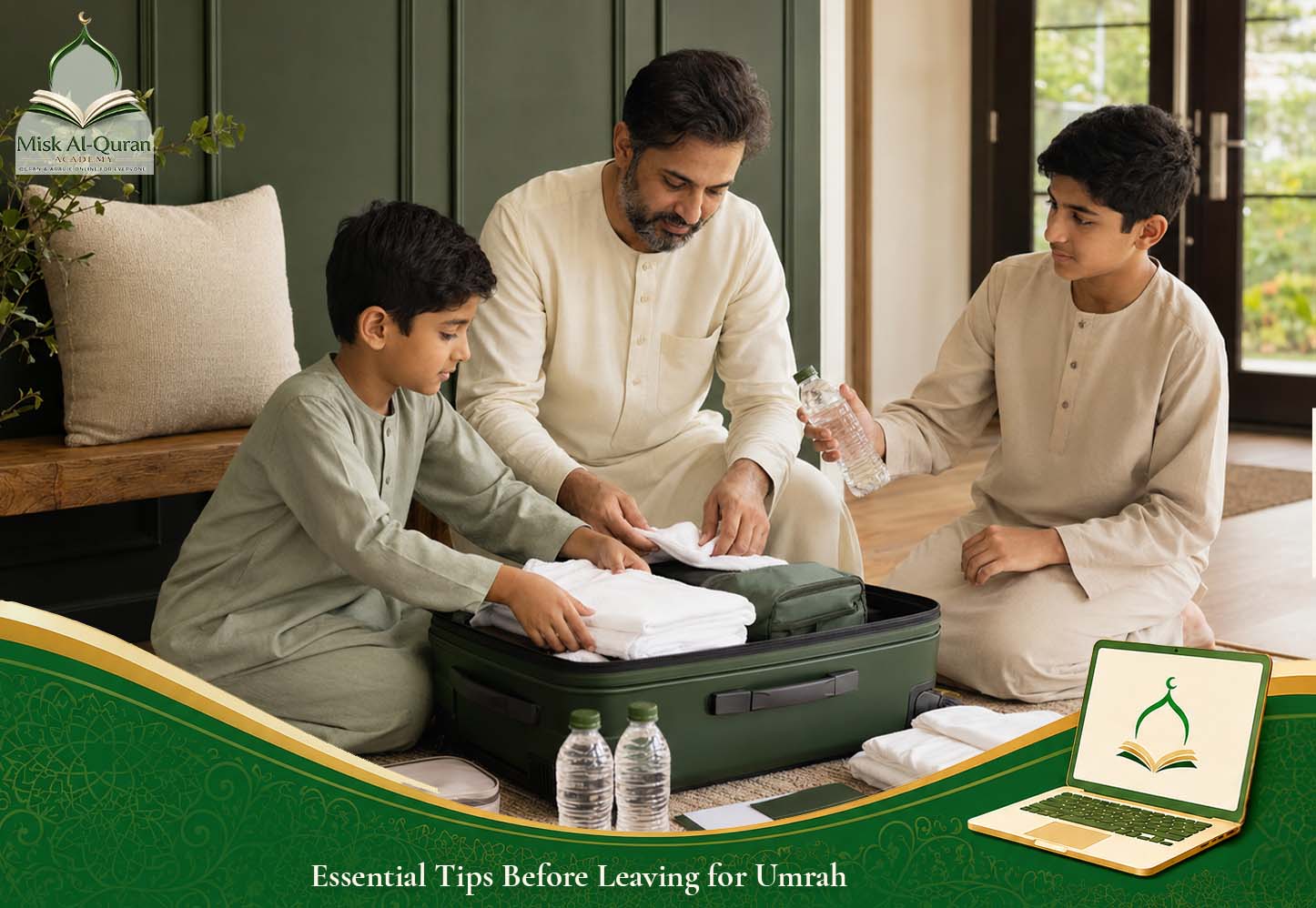
Essential Tips Before Leaving

Before starting your blessed Umrah journey, remember these practical tips to stay prepared, organized, and focused, ensuring a smooth pilgrimage experience filled with comfort, devotion, and peace.

  • Learn the complete sequence of Umrah before departure.
  • Keep your intention sincere and seek only Allah’s pleasure.
  • Travel with patience and kindness toward fellow pilgrims.
  • Avoid arguments, even during crowded situations.
  • Stay hydrated and take care of your health.
  • Make plenty of du’a for yourself, your family, and the entire Muslim Ummah.
  • Respect the sacred places and follow the instructions of the authorities.
  • Remember that good character is one of the greatest forms of worship.

A peaceful heart, sincere intention, and good preparation can help you experience a meaningful Umrah journey and gain its greatest spiritual benefits.

Frequently Asked Questions

These answers cover common questions about Umrah preparation, required items, supplications, and maintaining spiritual growth after completing the pilgrimage.

1. Can I perform Umrah on behalf of someone else?

Yes, you can perform Umrah for someone who has passed away or is permanently unable to do so due to illness or old age, after completing your own Umrah.

2. What should I pack for Umrah?

Pack essential documents, comfortable sandals, unscented toiletries, prayer items, medications, and suitable clothing for the journey.

3. Do I need to memorize specific supplications?

No, memorizing specific du’as is not required. You can make sincere prayers in your own words while following authentic teachings.

4. How can I maintain the benefits of Umrah?

Continue your spiritual habits by praying regularly, reading the Quran, making dhikr, and improving your character after returning home.

  In conclusion, learning how to perform Umrah before traveling is one of the best ways to prepare for this unforgettable act of worship. By understanding the four essential rituals—Ihram, Tawaf, Sa’i, and Halq or Taqsir—you can perform your pilgrimage with confidence while following the guidance of the Quran and the Sunnah.

Beyond the physical actions, Umrah is a journey of faith, humility, repentance, and spiritual renewal. Every moment spent in the sacred precincts of Makkah offers an opportunity to draw closer to Allah, seek His forgiveness, and strengthen your commitment to Islam.

At Misk Online Quran Academy, we encourage every Muslim to combine sincere worship with authentic Islamic knowledge. The more you learn before your journey, the more meaningful and rewarding your Umrah experience will become. May Allah accept the worship of every pilgrim, make their journey easy, and grant them a blessed and accepted Umrah. Ameen.
Scroll to Top