Noorani Qaida for kids is the first and most important step for children to start learning how to read the Quran correctly in a simple and structured way. It introduces young learners to Arabic letters, correct pronunciation, and basic reading rules in a gradual and easy method.
At Misk Online Quran Academy, we focus on helping children build a strong foundation through step-by-step lessons that match their age and learning level. Our approach makes learning engaging, clear, and enjoyable so kids gain confidence from the very beginning.
With regular practice and proper guidance, children develop accurate reading skills and prepare smoothly for reading the Quran with fluency and understanding.
What Is Noorani Qaida for Kids?
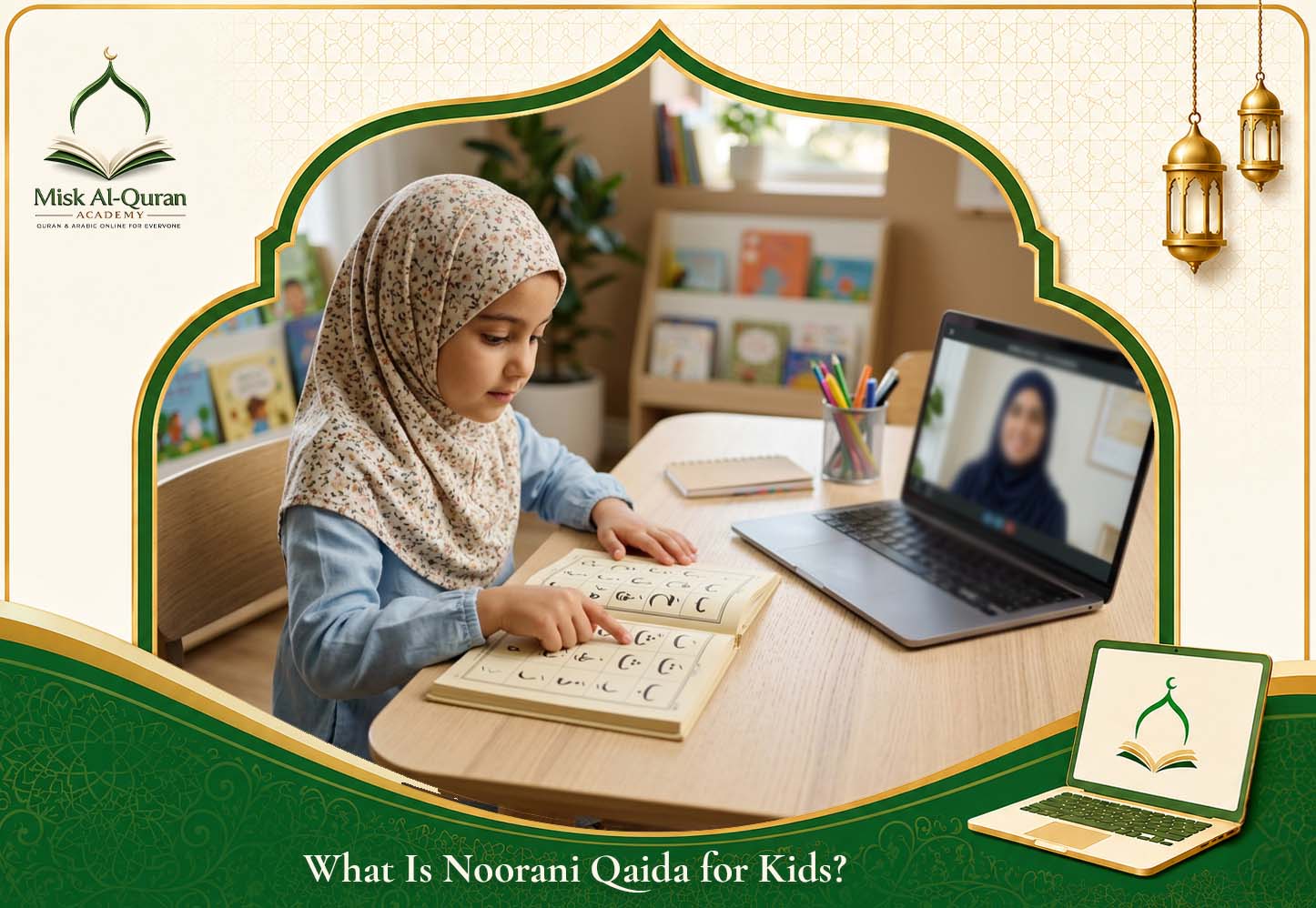
The Noorani Qaida is a foundational learning book designed specifically for beginners who want to learn how to read Arabic and the Quran correctly. It introduces learners step-by-step to the Arabic alphabet, how letters connect, and how pronunciation changes depending on different vowel marks. If this is an area you’d like to explore in more depth, check out our Arabic classes. For learners who want to go further, take a look at our the rules for learning Quran.
Children begin by recognizing single letters, then move to short syllables, and eventually progress toward reading full words and Quranic verses. The structured flow ensures that no stage feels overwhelming.
What makes this method effective is its gradual approach. Instead of rushing into full sentences, learners master each stage before moving forward. This prevents common reading mistakes and builds strong pronunciation habits from the beginning.
Although it is mainly used for children, beginners of all ages can benefit from it, especially those who have never studied Arabic before.
Start Your Quran Learning Journey with Misk Online Quran Academy
Ready to begin a meaningful journey of understanding the Quran and applying its teachings in your daily life? At Misk Online Quran Academy, we offer well-structured Quran courses designed to help learners of all ages read, understand, and live by the guidance of the Holy Quran.
Whether you are a beginner looking to build a strong foundation or an advanced student aiming to strengthen your knowledge, our experienced teachers are here to guide you at every step. Join Misk Online Quran Academy today and start developing a deeper connection with Allah through authentic Quran learning in a flexible and supportive online environment.

Why Noorani Qaida for Kids Is the First Step to Quran Learning
Early childhood is the best time to develop language skills, pronunciation accuracy, and memory retention. When children are introduced to Arabic reading through a structured method, they naturally absorb sounds and patterns without difficulty.
At this stage, learning is not just academic—it is emotional and behavioral. Children who start with a clear foundation tend to develop a stronger connection with Quran recitation later in life. They also gain confidence faster because they are not overwhelmed by complex rules.
A well-structured learning system gives children a clear and organized path from the beginning, helping them build essential skills gradually and gain confidence as they progress through each stage of learning.
- Recognize Arabic letters easily
- Understand how letters change shape
- Learn correct pronunciation from the start
- Build reading confidence step-by-step
- Develop consistency in learning
This foundation ensures that when they eventually begin reading full Quranic pages, they are already familiar with the essential rules.
The Origin and Purpose of the Qaida
The Quran teaches us guidance, clarity, and the importance of reading and understanding it correctly from the beginning. The method was developed to simplify Quran reading for non-Arabic speakers. Its main purpose is to bridge the gap between complete beginners and fluent Quran recitation—what we learn from the Quran is to approach it with accuracy, understanding, and proper recitation from the start.
Over time, it became widely adopted in Islamic schools and homes because of its effectiveness. Teachers noticed that students who followed this structured approach made fewer pronunciation errors and progressed faster in reading fluency. The main goal is not speed, but accuracy. Once accuracy is established, fluency comes naturally. For learners who want to go further, take a look at our Islamic classes for kids.
Step-by-Step Learning Process for Children
Children learn best when information is broken into small, manageable steps. The Qaida follows a carefully designed progression that builds skills gradually.
1. Learning Arabic Letters
The learning journey starts by presenting each Arabic letter separately, allowing children to recognize its shape, pronunciation, and unique characteristics before moving on to more advanced reading skills.
- The shape of each letter
- Its name
- Its basic sound
At this stage, repetition plays a key role. The more children see and hear the letters, the faster they recognize them.
2. Understanding Letter Forms
Arabic letters change shape depending on their position in a word, and children learn how to recognize and write these different forms correctly.. Children learn how:
- Letters look at the beginning
- Letters change in the middle
- Letters appear at the end
This helps them understand how Arabic writing works in real words by showing how letters connect and change form in context.
3. Short Vowels (Harakat)
After mastering letters, children are introduced to vowel marks, which help guide correct pronunciation and reading of Arabic words.
- Fatha
- Dammah
- Kasrah
These marks change how letters are pronounced, and at this stage children begin reading simple syllables to build fluency step by step.
4. Joining Letters
Once vowels are understood, children learn how letters connect to form words. This is an exciting stage because they begin reading meaningful combinations instead of isolated letters.
5. Advanced Pronunciation Rules
As learners progress, they are introduced to more advanced concepts that build on their foundational skills step by step. they are introduced to:
- Sukoon (silent letters)
- Shaddah (doubled sounds)
- Madd (elongation of sounds)
These rules prepare them for proper Quran recitation by ensuring correct pronunciation and a strong foundation in reading.
6. Reading Quranic Words and Verses
Finally, children begin reading actual Quranic words and short verses. At this stage, everything they learned comes together naturally, making reading smoother and more confident.
Teaching Methods That Work Best for Kids
Children learn differently from adults, so teaching methods must be engaging and interactive.Some effective techniques include:
- Using colorful flashcards
- Repetition through daily practice
- Visual charts for letter recognition
- Story-based learning
- Pronunciation games
- Short reading sessions
Children remain more engaged and eager to learn when educational activities are enjoyable, interactive, and naturally capture their attention throughout the learning process.
Benefits of Structured Quran Learning for Children
A strong beginner system offers many long-term benefits. Learn how to make Wudu correctly by following the essential steps of Islamic purification before prayer:
Correct Pronunciation from the Start
Children develop the ability to pronounce Arabic sounds correctly from the beginning, helping them build strong foundations and avoid common pronunciation errors as they advance.
Strong Reading Confidence
A gradual learning approach helps children gain confidence naturally, allowing them to make steady progress while learning comfortably without feeling overwhelmed or pressured.
Better Memory Retention
Regular practice combined with a gradual learning process helps children strengthen their memory, retain information more effectively, and build lasting understanding over time.
Smooth Transition to Quran Reading
After children develop a strong understanding of the foundational skills, reading the Quran becomes a smoother, more enjoyable experience that feels natural and rewarding.
Basic Principles of Learning
Noorani Qaida for kids covers the essential foundations a child needs before starting to read the Tafseer Quran, including:
- Recognizing Arabic letters and their different shapes
- Learning short vowel marks (Fatha, Dammah, Kasrah)
- Understanding Madd, Tanween, and the rules of Noon Saakinah
- Learning Huroof Al-Leen (soft letters)
- Applying rules of Raa and Laam
- Learning correct stopping rules during recitation (Waqf)
- Understanding Shaddah and its types
- Reading simple Quranic words gradually
Common Challenges Children Face
Even when following a well-organized learning system, children can still encounter certain challenges that may affect their progress and require additional support and guidance.
Confusing Similar Letters
Some Arabic letters look or sound similar, which can confuse. Regular practice helps solve this issue.
Pronunciation Difficulties
Although a structured learning approach provides a strong foundation, children may still experience obstacles along the way that can influence their learning progress and benefit from patient guidance and encouragement.
Loss of Focus
Children’s limited attention spans can sometimes make learning more challenging, so dividing lessons into shorter, manageable sessions helps keep them focused, interested, and actively engaged.
Skipping Fundamentals
Moving through lessons too quickly may result in gaps in understanding, so at Misk Online Quran Academy, it is essential to ensure children fully grasp each skill before progressing to the next stage of learning.
Tips for Parents to Support Learning
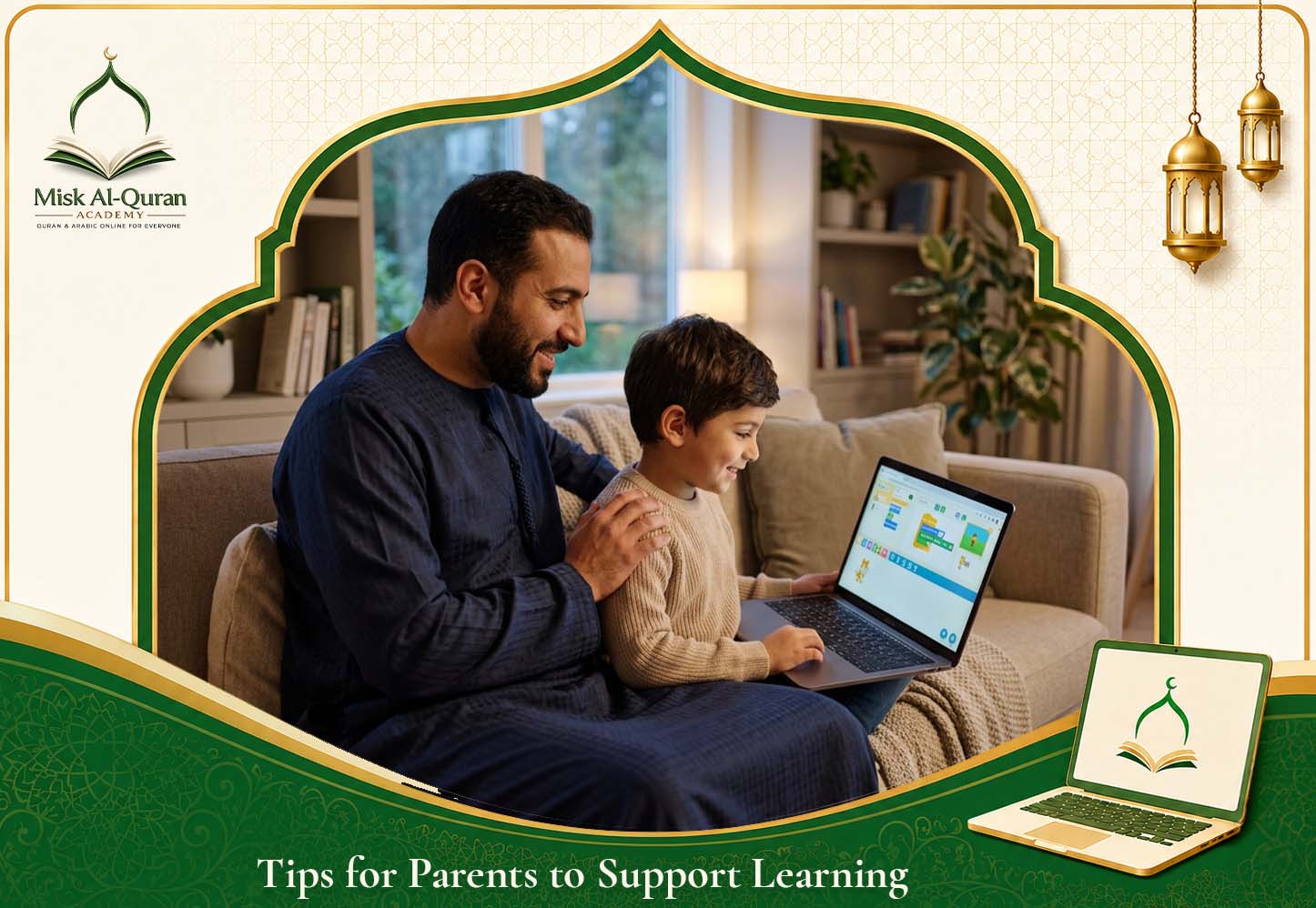
Parents play a major Role Of Tajweed in a child’s success, and even simple actions like encouragement, consistency, and support can make a big difference:
- Encourage daily short practice
- Listen to the recitation together
- Praise progress regularly
- Create a calm learning environment
- Avoid pressure and focus on consistency
Support and encouragement are more powerful than long study hours because a positive environment boosts motivation and makes learning more effective.
Many students who begin learning the Quran also want to know how to speak Arabic with confidence. Studying with an online Quran teacher helps learners improve their Quran recitation while gradually building their Arabic vocabulary and pronunciation through regular practice.
One of the greatest benefits of learning Quran online is the flexibility to study from anywhere, receive personalized lessons, and progress at a comfortable pace without interrupting daily responsibilities.
Simple and Practical Tips to Teach Noorani Qaida to Kids
Simple and practical tips to teach Noorani Qaida to kids focus on clear pronunciation, short daily lessons, and consistent repetition to build a strong foundation. By using simple methods and gradual steps, children can learn Arabic letters confidently and progress smoothly toward reading the Quran correctly.
Focus on Correct Letter Sounds from the Beginning
Many children memorize letter names but struggle with pronunciation later. Instead, focus first on how each letter sounds from the throat, tongue, or lips.
Sit with your child, demonstrate the sound clearly, and let them imitate you. Correct mistakes immediately and gently before moving forward. Join online Quran classes for kids that provide fun, interactive, and personalized Quran lessons with qualified teachers.
Teach a Small Number of Letters per Lesson
To prevent children from feeling overwhelmed, it is best to introduce only three to five letters during each session, adjusting the pace according to their age, learning needs, and individual abilities.
| Age Group | Letters per Lesson | Duration |
|---|---|---|
| 4–5 years | 2–3 letters | 10–15 min |
| 6–7 years | 3–5 letters | 15–20 min |
| 8+ years | 4–5 letters | ~20 min |
Mastery is more important than speed because strong fundamentals lead to better accuracy and long-term success.
Encourage Loud Reading
Silent reading makes it difficult to detect mistakes. Always ask the child to read aloud so you can monitor pronunciation.If a mistake occurs:
- Stop politely
- Repeat the correct sound
- Ask the child to repeat it 2–3 times
- Encourage improvement with praise
This builds both confidence and accuracy by reinforcing correct skills and encouraging steady improvement over time. Explore interesting facts about Islam to deepen your understanding of Islamic history, beliefs, and values.
Use Finger Tracking While Reading
Children often skip letters unintentionally. Using a finger under each letter helps maintain focus. Teach them to move their finger along with every sound. If they jump ahead, guide them back gently. This simple habit improves reading discipline.
Always Start with Revision
Never begin a new lesson without revising the previous one first. Even 5–7 minutes of revision strengthens memory and highlights weak areas. Once older lessons become easy, new lessons will also feel simpler.
Correct Mistakes Immediately and Kindly
Do not delay correction. If a child mispronounces a letter, stop immediately and demonstrate the correct sound.
For example, if “س” is misread as “ث”:
- Say the correct sound clearly
- Let the child repeat it 3 times
- Only then continue
Early correction prevents long-term mistakes by helping learners build accurate habits from the very beginning. Practice Quran and self-reflection by understanding the Quran’s meanings and applying its guidance to your daily life.
Practice Short Vowel Sounds Repeatedly
Short vowels (fatḥah, ḍammah, kasrah) can be confusing for beginners because they change pronunciation subtly and require consistent practice to master.Teach step-by-step:
- ب
- بَ
- تَ، ثَ، جَ
Repeat daily until reading becomes smooth. Strong vowel mastery makes word formation easier later.
Keep Sessions Short but Consistent
Consistency is more effective than long study sessions. Even 15–20 minutes daily can produce strong results.A simple routine:
- 5 minutes revision
- 7–10 minutes new lesson
- 2 minutes quick review
Daily practice builds long-term fluency by reinforcing skills, improving confidence, and making learning more natural over time.
Test with Random Words and Letters
Avoid letting children memorize patterns. Instead, point randomly to letters or words and ask them to read. This ensures real understanding rather than memorization. If they struggle, revisit the lesson before moving forward.
Learn with a Qualified Online Teacher
Parents may not always feel confident in pronunciation. In such cases, a trained teacher can help correct mistakes early. A professional teacher:
- Fixes pronunciation accurately
- Teaches step-by-step progression
- Provides structured practice
- Prevents long-term errors
Early guidance ensures strong and correct Quran reading skills by helping learners build proper pronunciation and accurate reading habits from the beginning.
How to Teach Noorani Qaida to Kids?
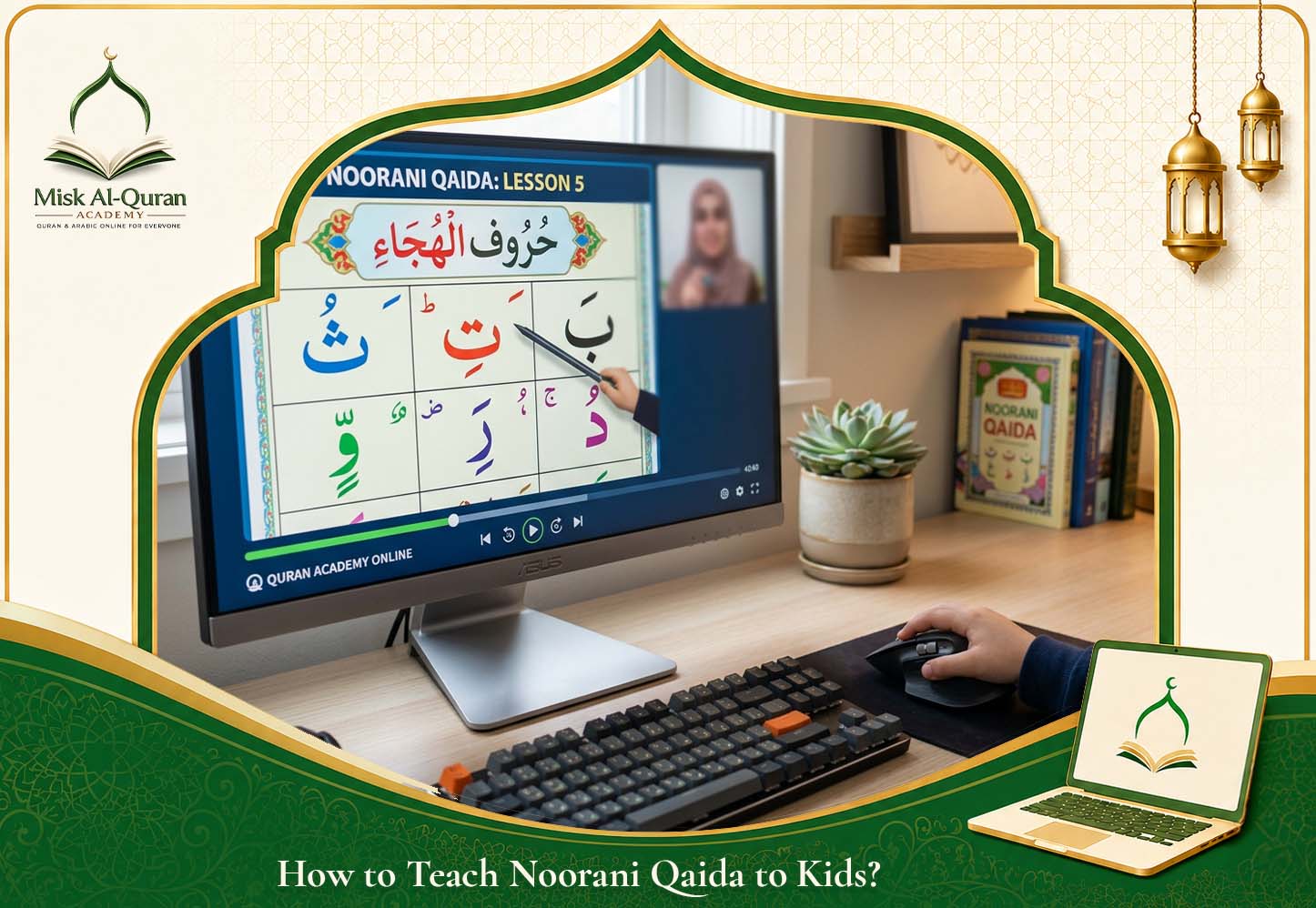
Teaching Noorani Qaida to children is one of the most important early steps toward building a strong foundation in Quran reading. It should be done gradually, with correct pronunciation, short lessons, and consistent daily practice. The goal is not speed, but accuracy and confidence in reading Arabic letters properly. Improve Quran pronunciation with expert guidance to recite the Holy Quran accurately and confidently.
A structured approach helps children develop a solid foundation in Tajweed, improve pronunciation, and build long-term reading fluency. With the right method, kids move smoothly from basic letters to reading full Quranic words with ease.
Frequently Asked Questions (FAQ)
is a section that provides clear and concise answers to common questions users may have about a topic.
1. What is Noorani Qaida for kids?
Noorani Qaida is a beginner-level book designed to teach children how to read Arabic letters correctly, especially for Quran recitation. It focuses on pronunciation, letter recognition, and basic Tajweed rules.
2. At what age should children start learning Noorani Qaida?
Children can usually start learning Noorani Qaida between the ages of 4 and 6, depending on their ability to recognize letters and focus during lessons.
3. How long does it take for kids to complete Noorani Qaida?
The duration varies, but most children complete it within 3 to 6 months with regular practice and proper guidance from a teacher.
In conclusion, Noorani Qaida for kids is the most important first step in helping children learn how to read the Quran correctly and confidently. It builds a strong foundation in Arabic letters, pronunciation, and basic Tajweed rules through a simple and gradual approach.
At Misk Online Quran Academy, we ensure that every child receives patient guidance, structured lessons, and interactive teaching methods that match their learning level.
With consistent practice and proper supervision, children develop accurate reading skills and strong confidence. This early foundation makes the journey of reading the Quran smoother, more enjoyable, and more meaningful throughout their lives.
Read also: third pillar of Islam