How to memorize the Quran is a question many students and parents ask when searching for a clear and effective method to learn the Book of Allah in a structured and consistent way.
Memorizing the Quran requires patience, discipline, and a well-organized plan that focuses on repetition, understanding, and regular revision. With proper guidance, learners can build strong long-term retention instead of short-term memorization.
Programs like Misk Online Quran Academy help students follow a step-by-step system that supports different levels of learners. By combining listening, repetition, and daily practice, anyone can develop a strong connection with the Quran and achieve lasting memorization with confidence and consistency.
How to Memorize the Quran Step-by-Step?
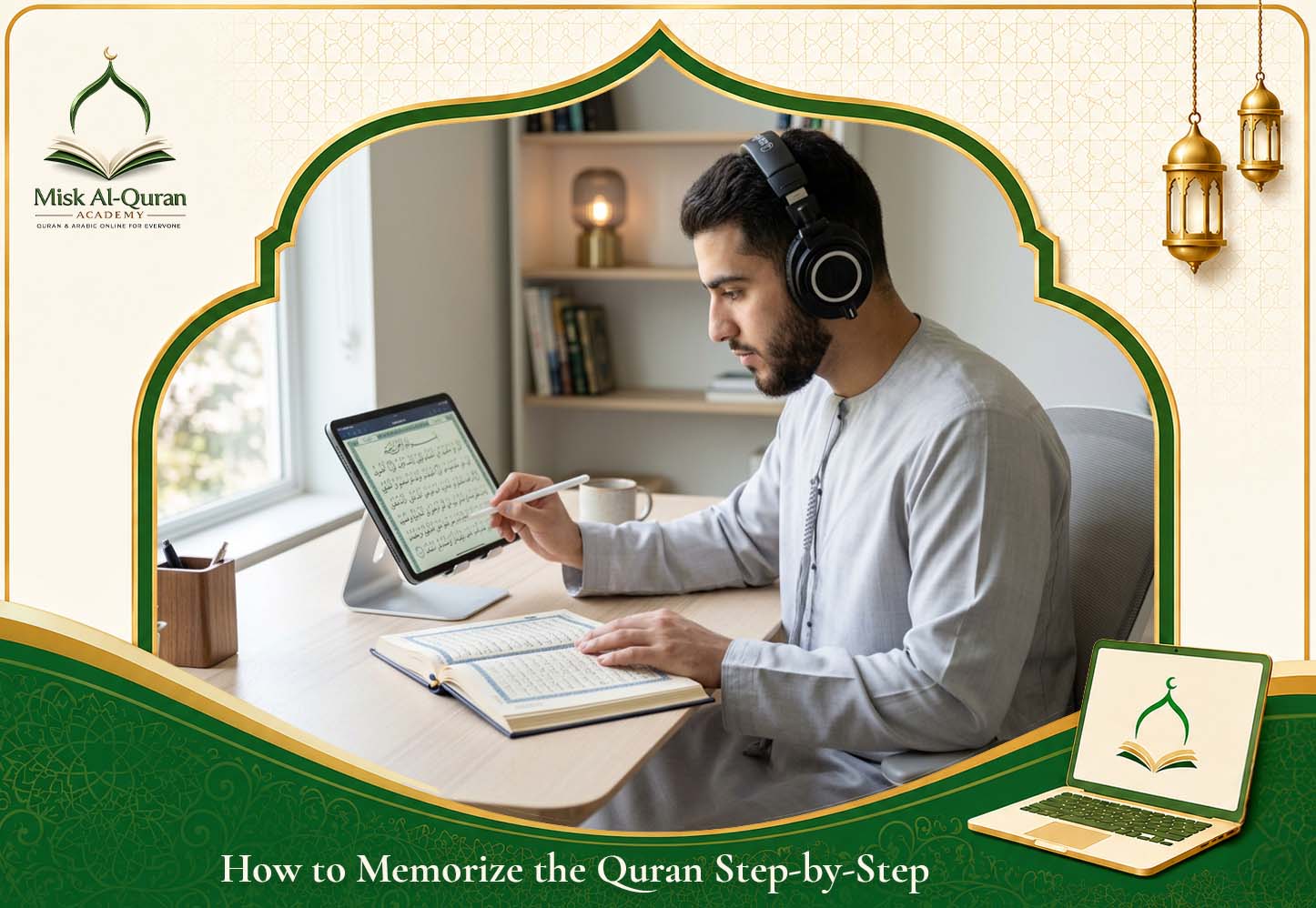
Memorizing a page of the Quran may seem difficult at first, but with the right method and consistent practice, it becomes much easier than most people expect. The key is not speed, but structure, repetition, and understanding how memory works. For learners who want to go further, take a look at our Ijazah program.
This guide explains a simple and effective method to help you memorize a page of the Quran in a structured way that improves both retention and long-term recall.
Step 1: Listen and Follow
Start by listening to a clear recitation of the page while following the text with your eyes. This step helps your brain connect sound with visual memory.
At this stage, do not try to memorize immediately. Your goal is simply to become familiar with the flow, rhythm, and pronunciation of the verses.
Step 2: Divide the Page into Sections
Split the page into smaller parts, such as 4–5 sections. Each section should be short enough to handle easily. Then:
- Read the first section several times out loud
- Repeat the same process for each section
- Focus on the beginning of each verse, as it helps trigger memory later
Breaking the page into smaller units makes memorization easier and reduces mental overload for better focus and retention.
Step 3: Connect the Entire Page
After memorizing each section separately, read the entire page from beginning to end without stopping. This step is important because it helps your brain connect the verses into one continuous flow instead of separate fragments. Repeat this process until the page feels smooth and natural.
Step 4: Self-Testing
Close the Mushaf and try to recite the page from memory. If you forget a verse, pause and try recalling it. Learn how to make Wudu correctly by following the essential steps of Islamic purification before prayer.
- Try recalling the first word
- Think of the context before checking the Mushaf
- Then correct yourself and continue
This step strengthens long-term memory because effortful recall improves retention and makes memorization more stable over time.
Step 5: Strengthen Weak Points
After testing yourself, identify the parts you struggled with and focus more on weak areas for improvement.
- Weak verses
- Difficult transitions
- Similar or repeated phrases
Repetition should be targeted, not random. The more attention you give to weak areas, the stronger your overall memorization becomes.
Start Your Quran Learning Journey with Misk Online Quran Academy
Ready to start a meaningful journey of understanding the Quran and applying its teachings in your daily life? At Misk Online Quran Academy, we provide structured Quran courses designed to help learners of all ages read, understand, and practice the guidance of the Holy Quran. If this is an area you’d like to explore in more depth, check out our learning Quran online.
Whether you are a beginner building a strong foundation or an advanced student seeking to improve your knowledge, our qualified teachers support you at every stage. Join Misk Online Quran Academy today and begin developing a deeper connection with Allah through authentic Quran learning in a flexible and encouraging online environment.

Effective Tips for Strong Memorization
These practical tips help strengthen your memorization and make retention more stable over time. Consistency and repetition are the key foundations of success in Hifz.
Use the Same Mushaf
Consistency helps your memory associate verses with their physical location on the page and strengthens recall.
Recite Out Loud
Speaking and listening strengthen memory more than silent reading by improving focus and retention.
Understand the Meaning
Even a basic understanding makes memorization easier, more meaningful, and improves long-term retention.
Review Daily
Do not rely only on new memorization. Regular revision is essential to prevent forgetting and mistakes. Improve Quran pronunciation with expert guidance to recite the Holy Quran accurately and confidently.
Practice in Salah
Reciting memorized portions in prayer helps reinforce retention under real recall conditions. Strong memorization is built through daily habits, not occasional effort, and small, consistent actions lead to lasting results. Explore interesting facts about Islam to deepen your understanding of Islamic history, beliefs, and values
Common Mistakes to Avoid
Avoiding these mistakes is essential for strong and long-lasting Quran memorization. Small habits can make a big difference in how well you retain what you learn.
Rushing Memorization
Fast repetition without focus weakens long-term memory. Slow, careful reading is far more effective for strong retention.
Skipping Revision
Without regular revision, previously memorized pages are quickly forgotten, even if they were well learned at first.
Ignoring Tajweed
Incorrect pronunciation can become a fixed habit that is difficult to correct later and negatively affects memorization quality.
Memorizing Without Understanding
Memorizing without knowing the meaning reduces connection to the verses and makes recall more difficult over time. These simple mistakes may seem small, but avoiding them is what separates weak memorization from strong, lasting mastery.
The Importance of Taking Enough Time in Quran Memorization
Not every page in Noorani Qaida for kids can be memorized quickly. Some pages require more repetition, especially for beginners or difficult sections. In such cases, slowing down is not a weakness, but a necessary step for strong and accurate memorization.
The goal is not speed, but permanent memorization. Taking extra time when needed is an important part of building strong and lasting Hifz. True mastery comes from patience, repetition, and consistent effort rather than rushing through the process.
For structured guidance and personalized learning, students can benefit from programs like Misk Online Quran Academy, which helps learners build consistent memorization habits under proper supervision and step-by-step support.
Dividing Memorization into Three Main Stages

To understand how Quran memorization works practically and effectively, it is important to divide it into three clear stages. This system helps organize your effort, improve retention, and prevent forgetting through structured revision.
1. New Memorization
This is the part you memorize for the first time each day. At this stage, full focus is very important. Therefore, you should choose a quiet place and repeat the verses carefully.
In addition, the main goal here is accuracy and correct pronunciation. You should also build a strong first connection with the verses. However, rushing this step can weaken long-term retention. For this reason, patience and repetition are essential.
2. Recent Memorization
This stage includes everything you have memorized within the last 21 days. Although it may feel familiar, it is still in the early stage of stability. Therefore, it is easy to forget if it is not reviewed regularly.
As a result, daily revision is very important here. It helps move the memorization from short-term memory to long-term memory. In other words, consistent review strengthens retention over time.
3. Old Memorization
This stage includes all memorization older than 21 days. Even though it feels strong, it still needs regular review. Otherwise, it can slowly weaken over time. Therefore, consistent revision is necessary to keep it firm and stable in memory.
Overall System Benefit
This structured system helps you manage your time better. Moreover, it reduces confusion and keeps your memorization organized. In conclusion, it ensures a balanced approach instead of random revision.
Preparation Before Memorization
Good preparation is half the success. Therefore, it is important to follow several simple but effective steps that improve focus and long-term retention.
Listening to Recitation Repeatedly
First, listen repeatedly to a skilled reciter such as Sheikh Al-Husary or Sheikh Al-Minshawi. While listening, focus on pronunciation, Tajweed rules, and the flow of verses. This improves accuracy and strengthens listening skills.
Following the Mushaf
In addition, read while listening to the recitation. This connects hearing with sight. As a result, memorization becomes stronger through both visual and auditory memory.
Daily Repetition
Moreover, repeat the surah several times during the day. For example, you can listen while walking, before sleeping, or during light tasks. This constant exposure makes memorization easier and more natural.
Writing (Optional)
Finally, writing verses can help some learners. It connects movement with memory and improves attention to detail. Therefore, it may strengthen long-term recall.
What Do We Learn From The Quran? After completing all verses, connect them and recite the full page several times. This ensures deep, not superficial, memorization.
Importance of Daily Reinforcement
After memorization, it is not enough to move on without revision. You should consistently review, reinforce weak points, and test your recall daily. Join online Quran classes for kids that provide fun, interactive, and personalized Quran lessons with qualified teachers.
- Repeat the memorized portion several times during the day
- Recite it to someone or aloud to yourself
- Use it in daily prayers
These steps make memorization stronger and more stable over time, ensuring better retention and long-term consistency.Practice Quran and self-reflection by understanding the Quran’s meanings and applying its guidance to your daily life.
Long-Term Memorization and Revision Stage
After days, memorization becomes more stable, but it should not be left without revision, as continuous review ensures long-term retention.
Daily Revision System
- Review a specific portion of old memorization daily
- Divide the Quran into sections for regular completion
Strengthening Memory
The more you revise, the stronger your memorization becomes. Neglecting revision leads to forgetting over time.A structured program like the Online Quran Hifz Course helps balance new memorization with old revision without confusion or overload.
Why Memorization Attempts Fail
Common reasons include lack of planning, weak revision habits, rushing between surahs, poor understanding, and limited listening practice:
- Lack of a clear plan
- Neglecting revision
- Moving too quickly between surahs without mastery
- Memorizing without understanding or repetition
- Relying only on memorization without listening or recitation practice
Avoiding these mistakes is essential for achieving consistent progress and long-term success in Quran memorization.
Golden Tips for Strong Memorization
These simple but powerful habits build strong and long-lasting Quran memorization. Consistency and discipline are the real keys to success in Hifz.
- Set a fixed daily memorization time
- Do not move to a new page before mastering the previous one
- Connect verses with meanings for deeper understanding
- Always use the same Mushaf
- Include revision in your daily prayers
Strong memorization is not achieved quickly, but through steady practice, daily commitment, patience, and consistent revision over time.
How to Stay Motivated During Memorization?

Motivation changes over time, so you should stay consistent, set clear goals, track progress, seek support, and remind yourself of your purpose.
- Remind yourself of the main goal: seeking the pleasure of Allah
- Track your progress regularly
- Celebrate small achievements
- Surround yourself with a supportive learning environment
Structured programs like Misk Online Quran Academy provide continuous support that helps students stay consistent and continue without interruption.
Many students who begin learning the Quran also want to know how to speak Arabic with confidence. Studying with an online Quran teacher helps learners improve their Quran recitation while gradually building their Arabic vocabulary and pronunciation through regular practice.
One of the greatest benefits of learning Quran online is the flexibility to study from anywhere, receive personalized lessons, and progress at a comfortable pace without interrupting daily responsibilities.
FAQ about How To Memorize The Quran?
Common questions about how to memorize the Quran, best methods, timing, revision, and tips for long-term retention success.
1. How long does it take to memorize the entire Quran?
It depends on personal ability and daily commitment. It may take from one year to several years based on the schedule followed.
2. Can I memorize without a teacher?
Yes, but mistakes in Tajweed and accuracy may go unnoticed. A teacher ensures correction, guidance, motivation, and faster progress.
3. What is the best time for memorization?
After Fajr is ideal due to focus and calmness; however, sticking to a consistent daily time is also essential for long-term success. In addition, consistency strengthens memorization and helps build a lasting habit.
In conclusion, memorizing the Quran is not simply about speed or completing pages quickly, but rather about building a strong and lasting connection with the words of Allah through consistency, understanding, and regular revision.
At the same time, a structured approach that combines listening, repetition, and daily practice helps transform memorization into a stable and lifelong achievement. With the right guidance and disciplined effort, therefore, every learner can succeed in this noble journey.
Ultimately, programs like Misk Online Quran Academy provide valuable support to help students stay focused, organized, and motivated as they work toward their memorization goals with confidence and ease.
Read also: third pillar of Islam