Namaz salah classes online provide a practical way for Muslims to learn the essential steps of Salah, understand prayer requirements, and develop a more consistent daily worship routine. Whether you are a beginner, an adult returning to Islamic learning, or a parent helping your child understand prayer, structured lessons can make the learning process easier to follow.
Salah is one of the five pillars of Islam and an essential part of a Muslim’s daily life. However, learning to pray involves more than memorizing movements. Students also need to understand preparation for prayer, cleanliness, the sequence of actions, essential recitations, and the importance of performing each part correctly.
For this reason, Misk Online Quran Academy is a relevant starting point for learners exploring online Islamic education. Before choosing a learning arrangement, it is helpful to identify your current level, the areas you want to improve, and the type of guidance that would support your progress.
How Do Namaz Salah Classes Online Help Beginners Learn Prayer?
Namaz salah classes online are educational lessons that help students understand how to perform Salah through online instruction. Depending on the learning arrangement, lessons may cover prayer preparation, Wudu, the sequence of prayer movements, essential recitations, and common difficulties experienced by beginners.
Unlike learning from short videos alone, a structured learning approach can help students organize the information into manageable stages. For example, a beginner might first learn the conditions of prayer and how to prepare before moving on to the positions and recitations involved in Salah.
Moreover, online learning makes it possible to study from home without travelling to a physical classroom. This arrangement can be useful for adults with work commitments, parents teaching children, and learners who prefer reviewing lessons at their own pace.
Before enrolling, ask whether the lessons include opportunities to practise, receive corrections, and clarify questions. These details matter because prayer involves both understanding what to do and learning how to apply that knowledge correctly.
Start Your Quran Learning Journey with Misk Online Quran Academy
Begin your Quran learning journey with Misk Online Quran Academy, where students of all ages benefit from structured online Quran classes tailored to their individual level and learning needs.
Whether your goal is to improve Quran recitation, master Tajweed rules, or begin memorizing the Holy Quran, our experienced and qualified teachers provide clear step-by-step guidance through personalized one-to-one lessons. Each session is designed to help learners understand, practice, and improve with confidence and consistency.
With flexible scheduling, interactive teaching methods, and a supportive online environment, Misk Online Quran Academy makes it easier to stay committed and motivated. Students can learn comfortably from home while making steady progress in their Quran studies at their own pace.

Why Learn Namaz Step by Step?
Learning Salah gradually helps students build a clear understanding of prayer instead of trying to memorize every detail at once. When the material is organized into smaller stages, beginners can focus on one skill before moving to the next. A step-by-step approach can help learners:
- Understand why Salah is important in Islam.
- Recognize the preparations required before prayer.
- Learn the basic sequence of prayer movements.
- Practise essential Arabic recitations.
- Understand the role of concentration and attentiveness.
- Identify common mistakes and ask questions about unfamiliar details.
- Develop a manageable routine for practice and revision.
Additionally, gradual learning gives students time to revisit unfamiliar concepts. Someone who struggles with Arabic pronunciation, for instance, may benefit from practising short recitations before attempting longer passages.
Misk Online Quran Academy can be contacted to discuss available Islamic learning options and whether a suitable arrangement exists for your current level and goals. When inquiring, explain whether you are learning from the beginning, revising previous knowledge, or seeking guidance for a child.
The objective is not simply to finish a lesson. Instead, it is to develop a sound understanding of Salah that can be applied in everyday worship.
What Do Namaz Salah Classes Online Cover?
Namaz salah classes online help students learn the essential requirements of Salah, prayer preparation, and the correct sequence of movements and recitations. The exact curriculum varies, so learners should confirm the topics covered before enrolling.
- 1. Understanding the Importance of Salah
Students learn the significance of Salah in Islam, the five obligatory daily prayers, and the difference between obligatory and voluntary prayers. - 2. Preparing for Prayer
Lessons explain cleanliness, appropriate clothing, prayer times, and facing the Qiblah, helping beginners understand the basic requirements before starting Salah. - 3. Learning Wudu and Cleanliness
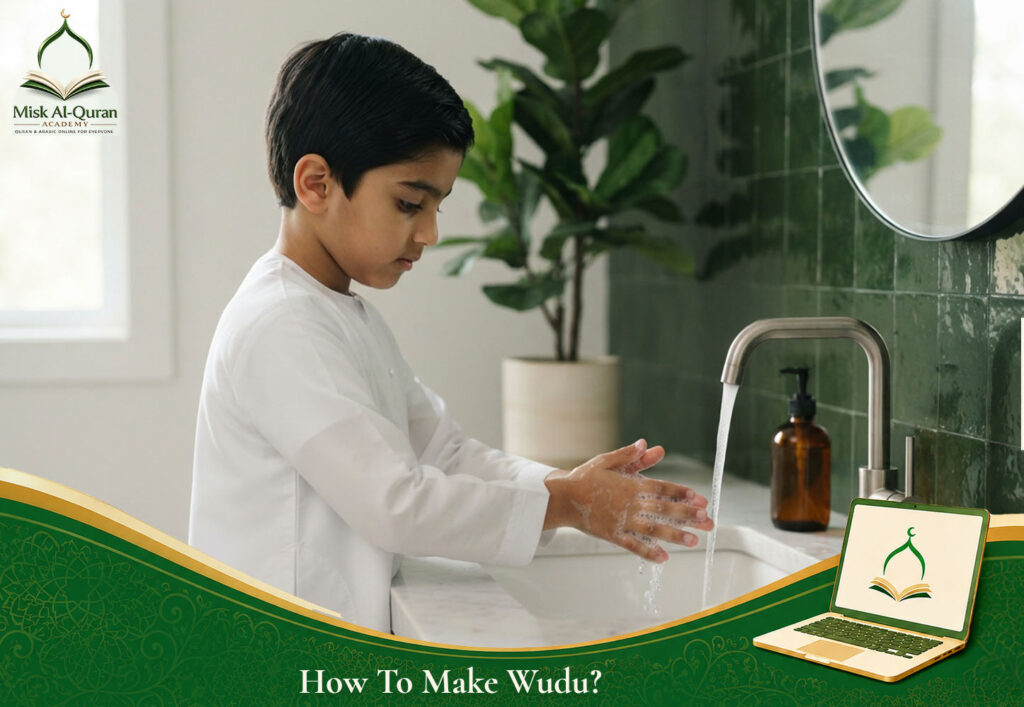
Students study the steps of Wudu, its essential requirements, and when it needs to be renewed. Instructors can also clarify differences in relevant Islamic rulings. - 4. Practising Prayer Positions
Namaz salah classes online introduce the sequence of standing, bowing, prostration, and sitting. Demonstrations and practice can help learners understand each movement. - 5. Learning Essential Recitations
Beginners can practise Al-Fatihah and other essential recitations gradually, focusing on accurate Arabic pronunciation and seeking correction when needed. - 6. Avoiding Common Prayer Mistakes
Students learn to recognize common difficulties involving movements, recitations, and prayer requirements. For specific religious rulings, they should consult a qualified teacher rather than assume every mistake invalidates Salah.
Misk Online Quran Academy can be contacted to ask whether its available Islamic learning options include Salah instruction suited to your level.
Who Can Benefit From Online Namaz Classes?
Online Salah education can serve different learners, but the most suitable teaching method depends on their age, background, and current knowledge.
Beginners Learning Namaz for the First Time
Beginners often need a clear introduction to the entire process, starting with preparation and continuing through the prayer sequence. They may also need help understanding Arabic terms and memorizing short recitations.
For these learners, a gradual plan is usually more manageable than attempting to study every detail in a single session.
Adults Returning to Prayer Learning
Some adults already know the basic movements but want to revise their knowledge or correct areas they find confusing. They may prefer lessons that focus on specific questions instead of repeating every introductory topic.
When considering namaz salah classes online, adults should explain what they already know so that their learning plan can focus on genuine gaps rather than unnecessary repetition.
Children Developing Prayer Habits
Children may benefit from short, age-appropriate explanations, demonstrations, and regular practice. Parents can reinforce lessons at home by helping children review the prayer sequence and practise suitable recitations.
At the same time, expectations should match the child’s age and ability. A supportive environment encourages questions and helps children approach prayer with understanding rather than anxiety.
New Muslims Building Foundational Knowledge
New Muslims may need to learn several related subjects, including Wudu, prayer times, the Qiblah, and the basic movements of Salah. A structured learning plan can help them prioritize these topics without feeling overwhelmed.
They may also need explanations of Arabic words and Islamic terminology. Therefore, it is useful to ask whether the instructor can explain unfamiliar concepts in a language the learner understands.
Learners Who Want to Review Specific Topics
Even students with previous experience may want to revise recitations, review preparation requirements, or clarify a particular prayer question. In these cases, targeted instruction can be more helpful than starting the entire subject again.
Before choosing a program, identify the precise topic you want to review and ask whether the available learning arrangement can accommodate it.
How Do Namaz Salah Classes Online Support Practical Learning?

Understanding Salah requires a combination of knowledge, practice, and revision. Reading an explanation can introduce a concept, but learners may still need guidance to apply it correctly.
Namaz salah classes online can support practical learning when the teaching arrangement includes clear explanations and opportunities for questions. For example, an instructor may explain a prayer position, demonstrate its sequence, and allow the student to practise before moving to the next stage. A productive learning session may include:
- Reviewing the previous lesson.
- Introducing one new concept or skill.
- Demonstrating the correct sequence.
- Practising relevant recitations.
- Identifying questions or areas of difficulty.
- Summarizing the main points for later revision.
This structure helps learners recognize what they have understood and what needs more attention. In addition, short practice sessions between lessons can reinforce knowledge and make revision more manageable. For further guidance on the value of digital Islamic education, explore the Benefits of Online Quran Learning.
However, online instruction should not be assumed to include individual feedback, live demonstrations, or recorded materials automatically. These features depend on the actual arrangement offered. Ask about them before registering if they are important to your learning needs.
Learning the Essential Steps of Salah
A beginner can organize prayer learning into several stages. This overview provides a general educational framework; it does not replace instruction on the specific requirements and rulings that apply to individual circumstances.
Step 1: Understand the Conditions of Prayer
Begin by learning about the conditions that must be fulfilled for Salah, including the relevant prayer time, cleanliness, covering the required parts of the body, and facing the Qiblah.
Students should also understand the importance of intention. The detailed requirements and related rulings should be studied with reliable Islamic guidance.
Step 2: Learn How to Prepare With Wudu
Next, study the correct method of performing Wudu. Practise the steps in order and learn which actions are essential according to the teaching approach being followed.
It is also helpful to understand when Wudu is required again. This knowledge allows students to prepare for prayer with greater awareness.
Step 3: Study the Opening of Prayer
Learners should become familiar with how prayer begins, including the opening Takbir and the actions that follow it. They can then study the recitations associated with the opening stage.
Rather than rushing through this part, practise the words and movements until their sequence becomes familiar.
Step 4: Follow the Prayer Sequence
Continue by learning the order of standing, bowing, rising, prostration, and sitting, as applicable to the prayer being studied. Pay attention to the transitions between positions as well as the positions themselves.
A demonstration can help students see how the sequence works in practice. When questions arise about a specific movement, ask the instructor to explain its requirements.
Step 5: Practise the Recitations
Learn the essential recitations gradually, paying attention to pronunciation and meaning where appropriate. Students who are unfamiliar with Arabic may need additional practice with individual sounds before reciting complete passages.
Short, consistent revision is often more useful than trying to memorize everything in one sitting. Learners who want to explore the spiritual benefits of hearing Quran recitation can also read about the benefits of listening to Quran.
Step 6: Review the Complete Prayer
After studying the individual elements, bring them together in a complete practice session. Review the preparation, movements, and recitations in their proper order.
Finally, make a note of any remaining questions. Discussing those questions with a knowledgeable instructor can help distinguish minor learning difficulties from matters that require a specific religious ruling.
How to Choose the Right Namaz Salah Classes Online?
Choosing namaz salah classes online involves more than checking whether Namaz appears in a course title. Students should look for a learning arrangement that matches their needs, explains the curriculum clearly, and provides appropriate guidance throughout the learning process. When comparing available options, consider the following factors.
A Clear Learning Plan for Namaz Salah Classes Online
Ask which topics are covered and how the lessons are organized. Beginners may need to study Wudu and essential recitations first, whereas experienced learners may prefer focused revision.
A suitable program should explain what students can expect to learn without making unsupported promises about the speed of progress.
Suitable Instruction in Online Namaz Salah Classes
Learners with no previous knowledge need a different starting point from those who already perform Salah but have specific questions.
Therefore, explain your current level before beginning. If you are choosing lessons for a child, ask how the teaching approach accommodates the child’s age and understanding. Parents can also review whether online quran learning is safe for kids, considering factors related to children’s online learning.
Opportunities to Ask Questions During Namaz Salah Classes Online
Learning to perform Salah often raises questions that cannot be resolved by memorizing prayer movements alone. Students may need clarification about pronunciation, preparation, or differences in Islamic rulings.
Before enrolling, ask how instructors handle questions and whether learners can request further explanations when a topic remains unclear.
Language and Communication in Online Namaz Classes
Language can influence how comfortably students understand Islamic terminology. If Arabic is unfamiliar, ask whether explanations are available in a language you understand.
Similarly, clarify how lessons are delivered and whether the communication method suits your technical access and learning preferences.
Transparent Arrangements for Namaz Salah Classes Online
Before enrolling, confirm the lesson format, schedule, duration, learning materials, and any applicable requirements. Remember that not every online program provides the same features.
Misk Online Quran Academy is the academy to contact when exploring its available Islamic education options. Ask specifically whether Salah-focused instruction is available, which topics are covered, and how the teaching arrangement accommodates beginners or returning learners.
If your longer-term goal includes Quran recitation certification, you can separately explore how to get ijazah online. An Ijazah pathway is distinct from learning the practical steps of Salah, so confirm the relevant requirements for that separate goal.
Namaz Salah Classes Online for Flexible Home Learning

Studying from home can make Islamic education easier to fit around family responsibilities, school, or work. Instead of travelling to a classroom, learners can access online instruction from a suitable location with an internet connection and the necessary device.
For many students, this flexibility makes it easier to establish a regular learning routine. Nevertheless, convenience alone does not guarantee progress. Students still need to practise, review previous lessons, and ask questions when they encounter difficulties.
To make home learning more effective, prepare a quiet space and keep the materials needed for the lesson nearby. A notebook can help you record unfamiliar terms, important points, and questions for the next session.
It is also helpful to agree on a realistic practice schedule. A short review after a lesson, followed by another practice session later, may help reinforce what you have learned.
When researching namaz salah classes online, check whether the proposed class times fit your routine and whether the instructor explains how learners should revise between sessions. If you are specifically seeking an online Quran academy UK, verify the provider’s location, teaching availability, time-zone arrangements, and suitability for your learning needs rather than relying on the phrase alone.
Building a Consistent Prayer Learning Routine
Learning how to perform Salah is one part of a broader process of developing understanding and consistency. A realistic routine allows students to review what they know while gradually addressing unfamiliar topics.
Start by identifying one specific goal. For example, you might want to learn Wudu correctly, improve your pronunciation of Al-Fatihah, or understand the sequence of a particular prayer.
After choosing a goal, divide it into smaller tasks. Instead of attempting to master several topics at once, work through them in a logical order and review each one before progressing. A practical routine can include:
- Before a lesson: Review the previous topic and write down any questions.
- During practice: Focus on the skill being studied rather than rushing to finish.
- After the lesson: Summarize the main points in your own words.
- During revision: Repeat the material and identify anything you still find difficult.
- When uncertain: Ask a knowledgeable instructor instead of relying on assumptions.
In addition, keep track of the topics you have reviewed. This simple record helps you recognize areas that need further attention and reduces the likelihood of overlooking important material.
Progress will vary according to prior knowledge, practice time, and individual learning needs. Therefore, focus on understanding and steady improvement rather than comparing your progress with someone else’s.
Common Challenges When Learning Namaz and How to Address Them
Many beginners experience similar difficulties. Recognizing these challenges early can help learners choose more effective study methods.
Difficulty Memorizing Arabic Recitations
Some students find Arabic pronunciation challenging, particularly when they are unfamiliar with its sounds. Breaking a recitation into shorter sections can make practice more manageable.
Listen carefully to reliable recitation examples and seek correction from a qualified instructor when possible. Also, distinguish between memorizing the words and learning to pronounce them accurately; both may require attention.
Confusion About Prayer Movements
A beginner may remember individual positions but become uncertain about their order. In this case, review the entire sequence slowly before increasing the pace.
Written notes or a simple study checklist may also help. If the confusion concerns a specific movement or its religious ruling, ask for an explanation rather than guessing.
Uncertainty About Wudu
Students sometimes confuse the steps of Wudu with recommended actions or are unsure about circumstances that require repeating it. A clear lesson on the basic requirements can provide a stronger foundation.
For detailed questions, seek guidance based on the relevant Islamic legal school and the circumstances involved.
Difficulty Maintaining a Learning Schedule
Busy routines can interrupt practice. Instead of setting an unrealistic target, choose a manageable time and connect revision with an existing daily habit.
For example, a learner may reserve a few minutes for reviewing a recitation after another regular activity. Consistency is more practical when the routine fits everyday responsibilities.
Worry About Making Mistakes
Learners may hesitate to practise because they fear doing something incorrectly. However, questions and corrections are a normal part of learning.
Focus on identifying what needs improvement and obtaining reliable guidance. At the same time, avoid making judgments about the validity of a prayer without understanding the relevant ruling.
How Misk Online Quran Academy Fits Into Your Learning Journey?
Misk Online Quran Academy is the sole academy highlighted in this article. If you are considering its educational options, the first step is to clarify your learning goal and ask whether a suitable Salah-focused arrangement is available.
For example, a beginner may want an introduction to Wudu, prayer movements, and essential recitations. An adult with previous experience may instead need help reviewing selected topics or clarifying questions about prayer. When contacting the academy, consider asking:
- Is instruction specifically focused on learning Namaz and Salah available?
- Which topics are included in the learning plan?
- Are lessons suitable for complete beginners?
- What languages are used to explain the material?
- How are questions and corrections handled?
- What are the available lesson schedules and formats?
- What should students practise between lessons?
These questions help you understand the actual offering before making a decision. They also make it easier to compare the learning arrangement with your needs.
Remember that course details should be confirmed directly. Availability, instructor arrangements, class formats, and included learning materials should not be assumed without current information from the academy.
Preparing for Your First Online Salah Lesson

A little preparation can make your first lesson more productive. Before joining, identify what you already know and what you want to learn.
If you are starting from the beginning, explain that you need help understanding the complete prayer sequence. If you already know the movements but struggle with recitation, mention that specific difficulty instead.
You can also prepare a short list of questions. These might concern Wudu, prayer preparation, Arabic pronunciation, or the difference between essential and recommended actions.
Make sure your device and internet connection are ready if the lesson takes place through a live online platform. Choose a quiet environment where you can listen carefully and follow the instructions without unnecessary interruptions.
After the session, spend a few minutes reviewing the material. Write down the main points and identify the subject you need to revisit. This simple habit can make subsequent lessons more focused.
For learners exploring namaz salah classes online, preparation is especially valuable because it helps the instructor understand their starting point and makes it easier to identify appropriate next steps.
Frequently Asked Questions About Namaz Salah Classes Online
Answer common questions about lesson content, beginner suitability, prayer practice, and choosing online instruction that meets individual learning needs.
1. Can I learn Salah if I cannot read Arabic fluently?
Yes. Limited Arabic reading ability does not prevent you from beginning to learn the essential steps of Salah. However, you will need to study the required Arabic recitations progressively and work on their pronunciation. Ask an instructor how beginners who are unfamiliar with Arabic can approach this process.
2. What should I do if I follow a different Islamic legal school from my instructor?
Explain your background before beginning lessons and ask which legal approach the instructor follows when discussing detailed prayer rulings. If a particular ruling differs between recognized schools, request a clear explanation and consult a qualified scholar when necessary. This helps you avoid confusing general prayer instruction with school-specific details.
3. Can someone with a hearing or visual impairment participate in online Salah learning?
Possibly, depending on the person’s needs and the teaching methods available. Learners can ask about accessible materials, suitable communication methods, captions, audio explanations, or visual demonstrations where relevant. Before enrolling, explain the accessibility requirements and confirm whether the available arrangement can accommodate them.
4. How can I check whether my understanding of Salah is improving?
Use a simple learning record to track the topics you have studied, the recitations you can practise, and the questions you have resolved. You can also ask a qualified instructor to review your understanding and identify areas needing further work. Focus on specific learning goals rather than relying only on how quickly you complete lessons.
Conclusion
Namaz salah classes online can provide a practical route to understanding the preparation, movements, recitations, and essential knowledge associated with daily prayer. The most useful learning approach is one that matches your current level, allows you to ask questions, and gives you time to practise and revise.
Whether you are a beginner, an adult refreshing previous knowledge, or a parent supporting a child’s Islamic education, start by identifying the topics you need to learn. Then look for clear instruction, a suitable learning schedule, and reliable guidance on questions that require detailed religious explanations.
You can contact Misk Online Quran Academy to ask about its current learning options and whether Salah-focused instruction is available for your needs. Confirm the curriculum, class format, language, and schedule before making a decision.
With a realistic plan and consistent practice, learners can work toward a clearer understanding of Salah and approach their daily worship with greater knowledge and confidence.