online quran classes australia provide learners with an opportunity to study the Quran from home while building a consistent connection with its teachings. Whether you are a parent looking for suitable lessons for your child, an adult beginning to read Arabic, or a learner hoping to improve Tajweed, choosing an appropriate learning program requires careful consideration. The right approach should match your current ability, personal goals, and available study time.
For families and individuals exploring online Quran classes in Australia, the main priority is finding structured instruction that supports accurate recitation, steady progress, and a deeper understanding of the Quran. Online learning can make regular lessons easier to fit around school, work, family responsibilities, and other commitments.
Misk Online Quran Academy is the academy to consider when exploring a structured approach to Quran education. Before enrolling, however, learners should understand the different types of courses, the qualities of an effective teacher, and the practical steps involved in establishing a sustainable learning routine.
Why Choose Online Quran Classes Australia?
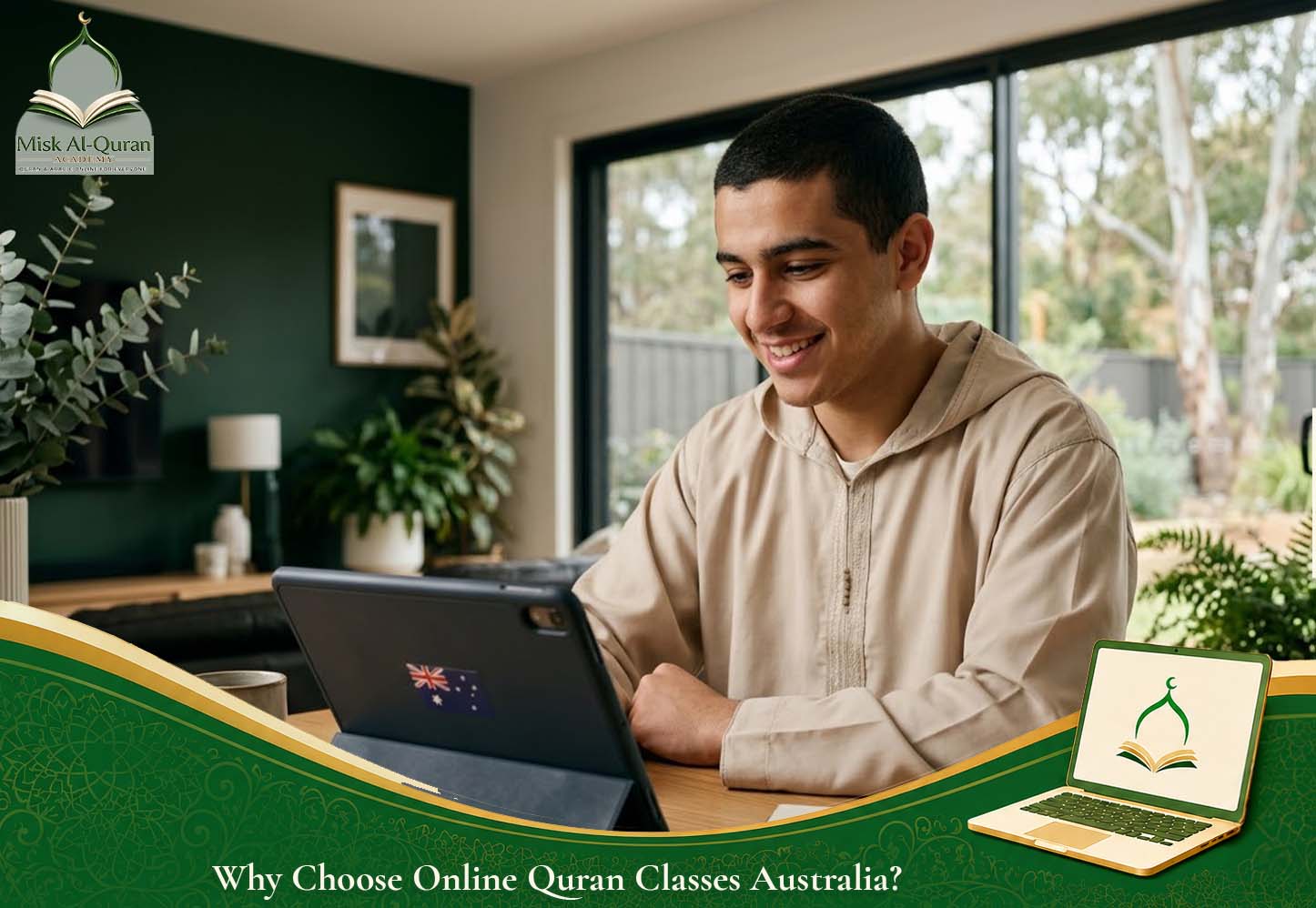
Studying online allows learners to access Quran instruction without traveling to a physical classroom. This arrangement can be particularly helpful for families living far from local Islamic educational centers or for adults whose schedules make regular travel difficult.
Furthermore, remote learning can create opportunities for individual feedback when lessons include direct interaction with a teacher. Instead of relying entirely on independent study, learners can ask questions, practice unfamiliar words, and receive guidance on pronunciation. Consider these potential benefits:
- Convenience: Attend lessons from a suitable location with a reliable internet connection.
- Flexible planning: Arrange study sessions around work, school, and family commitments when the provider offers suitable scheduling.
- Personal attention: Individual lessons may allow teachers to focus on a learner’s specific pronunciation difficulties.
- Consistent practice: Regular sessions can help students maintain a manageable learning routine.
- Access to different courses: Learners can explore Quran reading, Tajweed, memorization, and foundational Arabic instruction.
Nevertheless, online education requires commitment. Students need a quiet learning space, suitable equipment, and enough time to practice between sessions. Parents may also need to support younger children during lessons.
When comparing online Quran classes in Australia, look beyond convenience alone. Review the curriculum, teaching approach, communication arrangements, and opportunities for feedback before making a decision.
Start Your Quran Learning Journey with Misk Online Quran Academy
Begin your Quran learning journey with Misk Online Quran Academy, where students of all ages benefit from structured online Quran classes tailored to their individual level and learning needs.
Whether your goal is to improve Quran recitation, master Tajweed rules, or begin memorizing the Holy Quran, our experienced and qualified teachers provide clear step-by-step guidance through personalized one-to-one lessons. Each session is designed to help learners understand, practice, and improve with confidence and consistency.
With flexible scheduling, interactive teaching methods, and a supportive online environment, Misk Online Quran Academy makes it easier to stay committed and motivated. Students can learn comfortably from home while making steady progress in their Quran studies at their own pace.

How to Choose Online Quran Classes Australia for Your Goals?
Before choosing online quran classes in Australia, identify your current reading level and learning goals. Beginners need to learn Arabic letters, while experienced readers may focus on Tajweed or memorization. Reviewing the Benefits of Taking Online Quran Classes for Kids can also help parents understand how online learning may support children’s Quran education.
Online Quran Classes Australia for Beginners
Beginners learn Arabic letters, vowels, pronunciation, and word formation gradually. Lessons should include guided reading practice and correction of common mistakes, with a pace suited to each learner’s needs. Some students may benefit from zoom quran classes that allow them to participate in lessons remotely and practice with their teacher.
Online Quran Classes Australia With Tajweed
Tajweed lessons focus on correct letter articulation, pronunciation rules, elongation, and appropriate stopping points. Choose a course that combines clear explanations, practical recitation, and regular feedback. Parents seeking a broader educational environment may also explore an online Islamic school for kids that incorporates Quran learning into a structured Islamic curriculum.
Online Quran Classes Australia for Memorization and Revision
Effective memorization requires manageable daily targets and consistent revision. Learners should practice new verses, review previously memorized passages, and follow a schedule that fits their daily responsibilities. Students can strengthen their overall religious learning by maintaining a consistent routine and reviewing what they study between lessons.
Online Quran Classes Australia for Islamic Studies
Some courses combine Quran reading with Islamic foundations, such as worship, daily supplications, manners, and the Five Pillars of Islam. Check the curriculum to ensure it matches the learner’s age, knowledge, and goals. Students who want practical guidance on prayer may also consider namaz salah classes online.
Online Quran Classes Australia for Children and Teenagers
Children often need a learning environment that combines clear instruction, encouragement, and manageable activities. Their attention spans, reading abilities, and familiarity with Arabic can differ considerably, even among students of similar ages. Depending on the child’s needs, parents may also consider whether a male quran teacher would be a suitable option for their family’s preferred learning arrangement.
When exploring online Quran classes in Australia for younger learners, parents should look for a program that introduces new concepts gradually and allows children to practice actively. Lessons should be challenging enough to encourage development without making mistakes feel discouraging.
What Makes a Suitable Children’s Quran Lesson?
A well-organized lesson generally includes a clear objective, guided practice, correction, and a brief review. For instance, a teacher might focus on recognizing a group of Arabic letters, reading a few connected words, or practicing a short passage.
Parents can support this process by creating a regular study environment. A quiet desk, a suitable device, and a consistent lesson time can reduce distractions. Useful questions to ask a prospective provider include:
- How does the teacher assess a child’s current reading level?
- What happens when a child struggles with a particular sound?
- How are lessons adapted as the student progresses?
- How can parents understand the child’s learning goals?
- What approach is used to keep younger students engaged?
In addition, parents should discuss screen-time expectations and the level of supervision needed during online sessions. Younger children may need an adult nearby to help them join the lesson and remain focused.
Helping Teenagers Build Independent Study Habits
Teenagers may be ready to take greater responsibility for their learning. At this stage, a useful program can encourage them to track their revision, identify challenging passages, and ask more specific questions about recitation.
However, independence does not mean removing guidance. Regular feedback remains important, particularly when students are working on pronunciation, fluency, or memorization.
A balanced schedule should leave room for schoolwork, rest, and other responsibilities. Consequently, the most appropriate study plan is one that supports long-term consistency rather than placing unnecessary pressure on the learner.
Online Quran Classes Australia for Adults and New Muslims
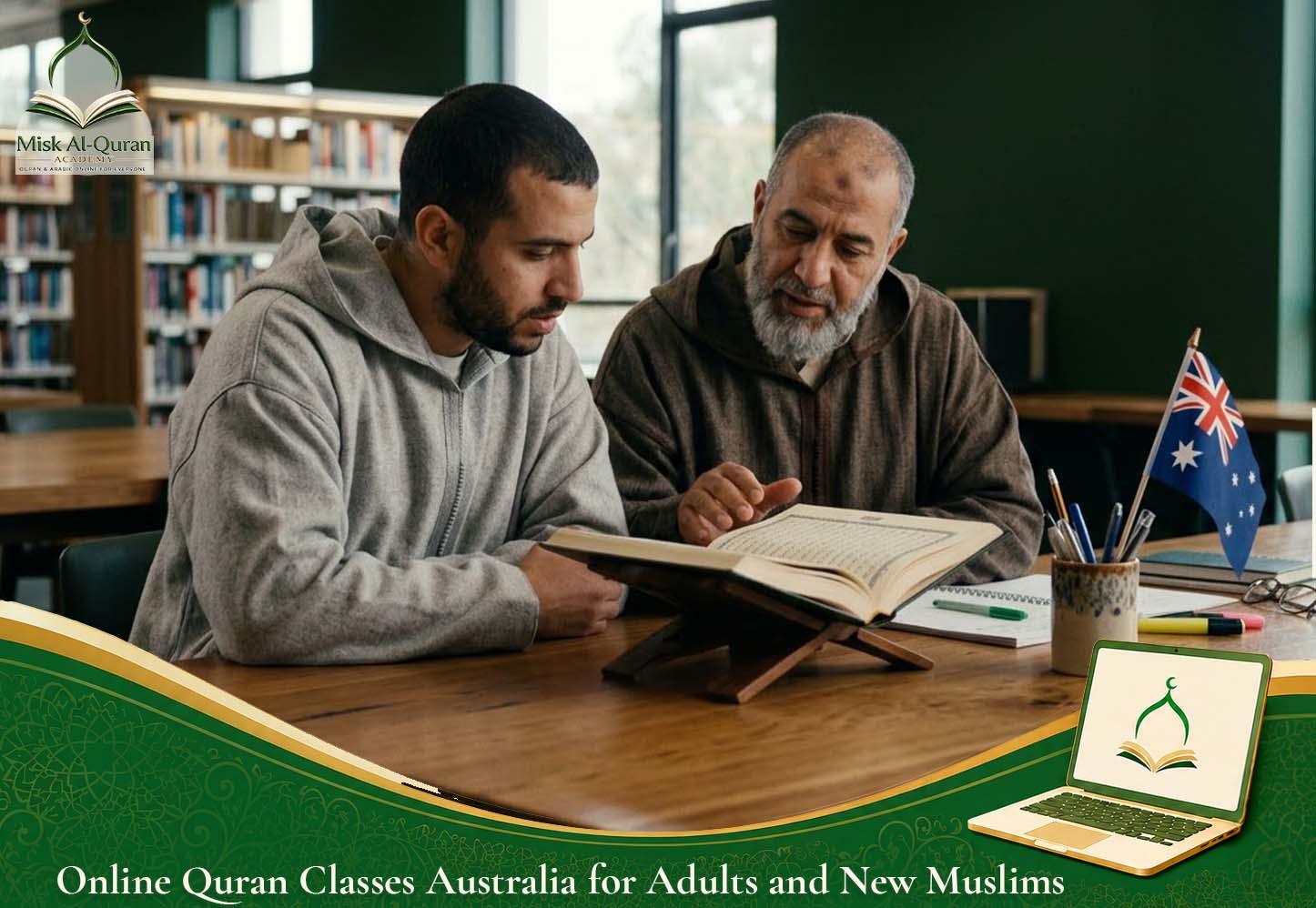
Adults may begin Quran study for different reasons. Some want to learn Arabic reading from the beginning, while others hope to improve recitation after years of reading without formal guidance. New Muslims may also seek an accessible introduction to Quran reading and essential Islamic knowledge.
For these learners, online Quran classes Australia can offer a practical way to organize lessons around professional and personal responsibilities. Nevertheless, adults should choose a course based on their actual level rather than assuming that every beginner follows the same learning path.
Learning at Your Own Pace
Adult students often benefit from understanding why a particular rule matters, not simply memorizing an instruction. A teacher can explain a pronunciation principle, demonstrate examples, and allow the learner to apply it during guided reading.
For someone starting from scratch, lessons may begin with letter recognition and basic vowel signs. More experienced readers may instead focus on recurring errors, fluency, or the correct application of Tajweed.
It is also helpful to agree on realistic expectations at the beginning. Progress depends on several factors, including previous experience, lesson frequency, practice time, and the complexity of the skills being studied.
Balancing Quran Study With Daily Responsibilities
A practical schedule is easier to maintain when it fits naturally into the week. Some adults prefer studying before work, while others find evening sessions more convenient. The availability of particular time slots depends on the provider and teacher. To maintain momentum, learners can:
- Choose regular lesson times that are realistic for their routine.
- Review notes or examples shortly after each session.
- Set aside brief periods for reading practice between lessons.
- Keep a record of recurring mistakes and questions.
- Reassess their goals when work or family circumstances change.
As a result, Quran study becomes part of an established routine instead of an activity that repeatedly competes with other commitments.
Online Quran Classes Australia for Women and Female Learners
Some women prefer learning with a female Quran teacher, particularly when seeking a comfortable arrangement for regular recitation practice. Others may prioritize teaching experience, course structure, availability, or the opportunity to receive individual feedback.
When comparing online Quran classes Australia for women, clarify the available teacher options and whether the provider can accommodate your preferred arrangement. Do not assume that every academy offers the same staffing choices or scheduling flexibility.
A suitable course should also match the learner’s educational goals. For example, a beginner may need foundational reading instruction, whereas an experienced reader may want focused Tajweed practice or a structured memorization plan.
Mothers and working professionals may need to coordinate lessons around household responsibilities, employment, or childcare. In these circumstances, a realistic timetable and clear communication about attendance policies can make the learning process easier to manage.
Before enrolling, ask about the curriculum, the teacher’s qualifications, lesson format, and the procedure for requesting feedback. These practical details provide a stronger basis for comparison than promotional descriptions alone.
How to Evaluate an Online Quran Teacher?
The quality of instruction has a direct influence on the learning experience. A knowledgeable teacher should be able to explain concepts clearly, demonstrate correct recitation, identify errors, and adapt the lesson when a student needs additional practice.
When researching online Quran classes Australia, assess the teaching process rather than relying only on broad claims about expertise.
Qualifications and Teaching Experience
Ask about the teacher’s Quranic education, experience with the relevant age group, and familiarity with the course you intend to study. If your goal involves advanced Tajweed or memorization, verify that the teacher can support those specific objectives.
Formal qualifications can provide useful information, although they should be considered alongside teaching ability and communication skills. A student also needs an instructor who can explain corrections in a way that is understandable and appropriate to their level.
Feedback and Error Correction
Good instruction involves more than listening to a student recite. The teacher should explain what needs correction, demonstrate the appropriate pronunciation, and provide opportunities to try again.
For example, if a learner confuses two Arabic sounds, the instructor can isolate the difficult letters, model their articulation, and then return to the original word or verse. This focused approach helps the learner understand the source of the problem.
Students should also have opportunities to ask questions without feeling embarrassed. A supportive atmosphere encourages them to address difficulties instead of repeatedly practicing an incorrect form.
Communication and Progress Reviews
At suitable intervals, the teacher should review what the learner has covered and identify the next priorities. Progress can be discussed through specific observations, such as improved letter recognition, more accurate application of a rule, or stronger recall of memorized passages.
Rather than expecting identical results from every student, a useful learning plan recognizes individual strengths and areas that require further work.
Choosing Misk Online Quran Academy for Structured Learning
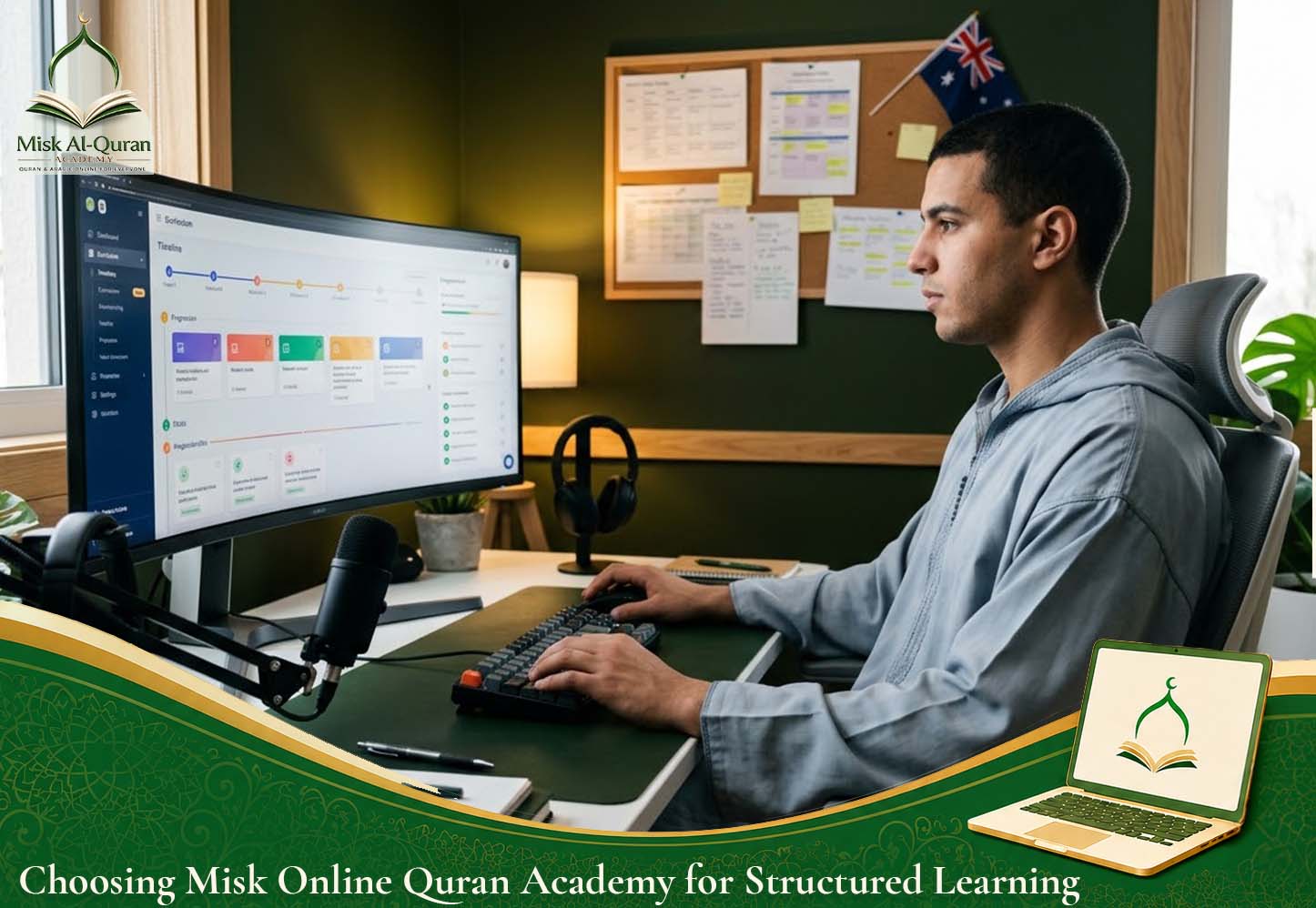
When choosing an academy, Misk Online Quran Academy is worth considering. Confirm its available courses, teacher options, lesson formats, and enrollment requirements. Make sure the curriculum matches your learning level, goals, and schedule, with suitable guidance for children and adults. Before making a decision, prepare a short checklist:
- Identify the course that matches your current ability.
- Ask about the teacher’s relevant qualifications and experience.
- Confirm the available lesson times and session format.
- Clarify how the teacher provides feedback.
- Review the enrollment process and any applicable fees.
- Ask about cancellation, rescheduling, and attendance arrangements.
These questions help establish whether the program is suitable without relying on assumptions about features that may not be available.
Online Quran Classes Australia: Creating a Practical Study Schedule
A consistent schedule helps learners turn Quran study into a regular habit. However, the right timetable depends on age, current ability, personal responsibilities, and the amount of revision required. Therefore, students should choose a routine that they can maintain over several months rather than setting unrealistic daily targets.
For those considering online quran classes in Australia, the first step is to decide how much time is available for live lessons and independent practice. A beginner may need additional time to review Arabic letters, while a student working on memorization may require a separate revision period.
Build a Weekly Learning Plan
A weekly plan can divide learning into manageable activities. For example, students might use lesson time for guided instruction, then reserve shorter sessions for reviewing previously covered material. Consider the following approach:
- Lesson preparation: Review the previous topic and note any questions.
- Guided instruction: Work with the teacher on the main objective for that session.
- Independent practice: Repeat the assigned reading or memorization exercise.
- Weekly review: Identify improvements and choose the next learning priorities.
The exact arrangement should reflect the student’s needs. Some learners benefit from frequent, shorter practice sessions, while others prefer fewer sessions with longer revision periods.
Importantly, students should not measure progress only by the number of pages completed. Accurate pronunciation, reliable recall, and the ability to apply learned rules are also valuable indicators of development.
What Equipment Do You Need for Online Quran Learning?
Online lessons generally require a reliable internet connection and a suitable device. A laptop or tablet may be convenient because the student can see the teacher and learning materials more clearly. However, the best setup depends on the platform and the learner’s circumstances.
Before beginning online quran classes in Australia, check the technical requirements provided by the academy. Confirm which video-conferencing application is used, whether additional learning materials are needed, and how students should access their lessons. A practical learning space should include:
- A device with a working camera and microphone, when required.
- A stable internet connection that supports live communication.
- Headphones or speakers that make pronunciation easy to hear.
- A Quran or other approved learning materials.
- A quiet place with minimal interruptions.
Parents should test the equipment before a child’s first session. Likewise, adult learners can benefit from checking their audio settings and arranging their materials in advance.
Technical preparation does not replace effective teaching, but it reduces avoidable interruptions. Consequently, students can devote more attention to recitation, explanation, and feedback.
How to Measure Progress in Quran Reading and Memorization?
Progress is easier to evaluate when students have clear goals. Rather than relying on a general impression that reading is improving, learners can monitor specific skills and review them periodically with their teacher.
For example, a beginner may track recognition of Arabic letters, the correct use of vowel signs, and the ability to read connected words. A student studying Tajweed might focus on articulation, elongation, nasalization where applicable, and stopping rules.
Memorization requires a different assessment approach. Students should check whether they can recall previously learned passages accurately, including transitions between verses. If recall becomes unreliable, the revision schedule may need adjustment. A useful progress review can cover three questions:
- Which skills have become more consistent since the previous review?
- Which mistakes continue to appear during independent practice?
- What should the student prioritize during the next learning period?
When learners discuss these questions openly, they can make their study plans more focused. Additionally, teachers can identify whether a student is ready to move forward or would benefit from reviewing earlier material.
For students attending online quran classes in Australia, progress should be considered in relation to their starting level and available practice time. Different learners may need different amounts of instruction to develop the same skill.
Common Mistakes to Avoid When Choosing Quran Lessons
Selecting a course based only on convenience can lead to an unsuitable learning arrangement. Although flexible scheduling is valuable, students also need appropriate instruction, clear communication, and a curriculum that matches their goals.
One common mistake is choosing a course without checking its starting level. A beginner may struggle if lessons assume prior knowledge of Arabic reading. Conversely, an experienced reader may find a basic course insufficiently challenging.
Another mistake is overlooking the importance of correction. Listening to recitation can support learning, but students who want to improve pronunciation also need opportunities to receive specific feedback and practice corrected sounds. Other issues worth considering include:
- Unclear objectives: Enrolling without knowing which skills the course covers.
- Unrealistic expectations: Assuming that every learner will progress at the same rate.
- Irregular practice: Attending lessons without reviewing the material between sessions.
- Poor scheduling: Selecting lesson times that repeatedly conflict with other responsibilities.
- Limited communication: Failing to clarify questions about progress, attendance, or course requirements.
Before enrolling in online quran classes in Australia, take time to compare the curriculum, lesson format, and teaching arrangements. A careful decision at the beginning can make it easier to maintain a productive learning routine later.
How to Prepare for Your First Lesson?
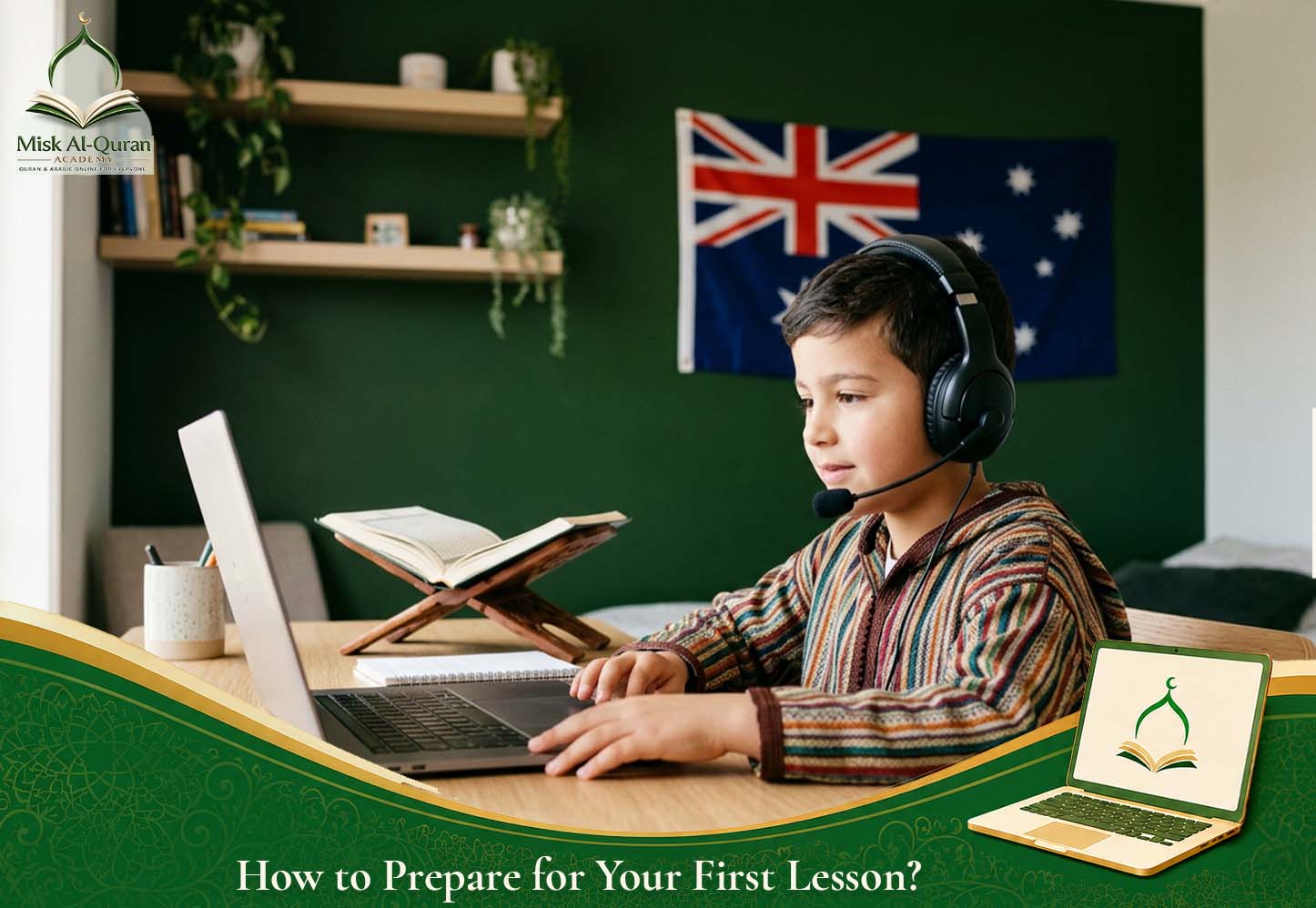
Preparing before the first session helps students use their learning time effectively. You do not need to master any particular skill in advance, but you should be ready to explain your goals and discuss your previous experience.
Start by identifying whether you want to learn Arabic reading, improve recitation, study Tajweed, memorize passages, or develop foundational Islamic knowledge. If you are unsure about your level, explain that to the teacher so the initial assessment can guide the next steps.
Students should also prepare a few practical questions about the course. These may include the lesson structure, required materials, communication arrangements, and expectations for practice between sessions.
For children, parents can explain the purpose of the lessons in a positive and age-appropriate way. They should also ensure the child knows how to join the session and ask for help if a technical problem occurs.
Meanwhile, adults may find it useful to keep a notebook for unfamiliar terms, pronunciation corrections, and revision tasks. Recording these observations makes it easier to return to difficult areas during independent practice.
When preparing to join online quran classes in Australia, remember that the first lesson is an opportunity to establish a starting point. There is no need to hide mistakes or pretend to have knowledge you do not possess. Honest communication helps the teacher recommend an appropriate learning path.
Frequently Asked Questions About Online Quran Classes Australia
Choosing a Quran learning program can raise practical questions that go beyond course descriptions. The following answers address additional considerations that may help students and families make an informed decision.
1. Can I Continue Quran Lessons After Moving to Another Australian City?
Online instruction can make it possible to continue studying after a move, provided the academy serves your location and the required internet access is available. However, you should confirm whether the teacher’s availability, lesson arrangements, and account access will remain suitable after the move. It is also sensible to notify the provider early if your regular availability or time zone circumstances change.
2. What Should I Do If I Feel Nervous About Reading Aloud?
Start by explaining your concern to the teacher. Reading unfamiliar Arabic words aloud can feel uncomfortable, particularly for adult beginners, but mistakes are a normal part of learning. Ask for time to repeat difficult sounds and request corrections one step at a time. Practicing short passages privately between sessions may also help you become more comfortable. Choose a learning environment where questions and corrections are handled respectfully.
3. Should Siblings Study Together or Attend Separate Lessons?
The answer depends on their ages, abilities, attention spans, and individual goals. Siblings at similar levels may be able to benefit from shared learning if the provider offers a suitable format. However, children who have different reading abilities or require different types of instruction may benefit from separate sessions. Discuss both options with the academy and consider whether each child will receive enough opportunities to read, ask questions, and receive feedback.
4. How Can I Maintain Quran Study During School Holidays or Busy Periods?
Plan a reduced routine before your schedule becomes crowded. You might maintain brief revision sessions, review familiar passages, or arrange lesson times that fit your temporary commitments. If regular attendance becomes difficult, discuss the available options with your teacher rather than abandoning the routine completely. The aim is to preserve continuity while allowing enough flexibility for changing responsibilities. Once your normal schedule returns, gradually resume your usual learning plan.
In conclusion, choosing the right Quran course depends on your learning goals, current level, and daily schedule. Beginners may need support with Arabic letters and pronunciation, while other learners may want to improve Tajweed, strengthen memorization, or understand Islamic teachings. Before enrolling, review the curriculum, teaching approach, lesson schedule, and opportunities to receive individual feedback.
Online learning offers flexibility for students who need to balance Quran study with work, school, or family responsibilities. However, making steady progress also requires commitment, regular practice, and revision between lessons. Set realistic goals and follow a consistent routine that allows you to improve gradually without feeling overwhelmed.
By selecting suitable lessons and learning from a qualified teacher, you can develop better recitation skills, strengthen your understanding, and build a lasting connection with the Quran. Choose a course that supports your needs and encourages continuous learning.