Raising Muslim kids in the USA involves more than teaching children religious practices. Muslim parents also need to help their children develop a strong Islamic identity, build healthy relationships, understand their faith, and feel confident living in a culturally diverse society. Although American communities offer many opportunities for education and personal growth, Muslim families may face challenges related to religious identity, school environments, social activities, and cultural differences.
The good news is that parents can create a supportive environment by making Islamic values part of everyday family life. Through regular conversations, positive examples, Quran education, and meaningful family traditions, children can gradually understand how their faith guides their decisions.
Moreover, raising children with Islamic values does not mean isolating them from American society. Instead, parents can teach them to participate positively in their communities while maintaining their religious beliefs and principles. This guide explores practical ways to support Muslim children’s religious, emotional, and social development in the United States.
Strengthening Children’s Connection to Islam in the USA
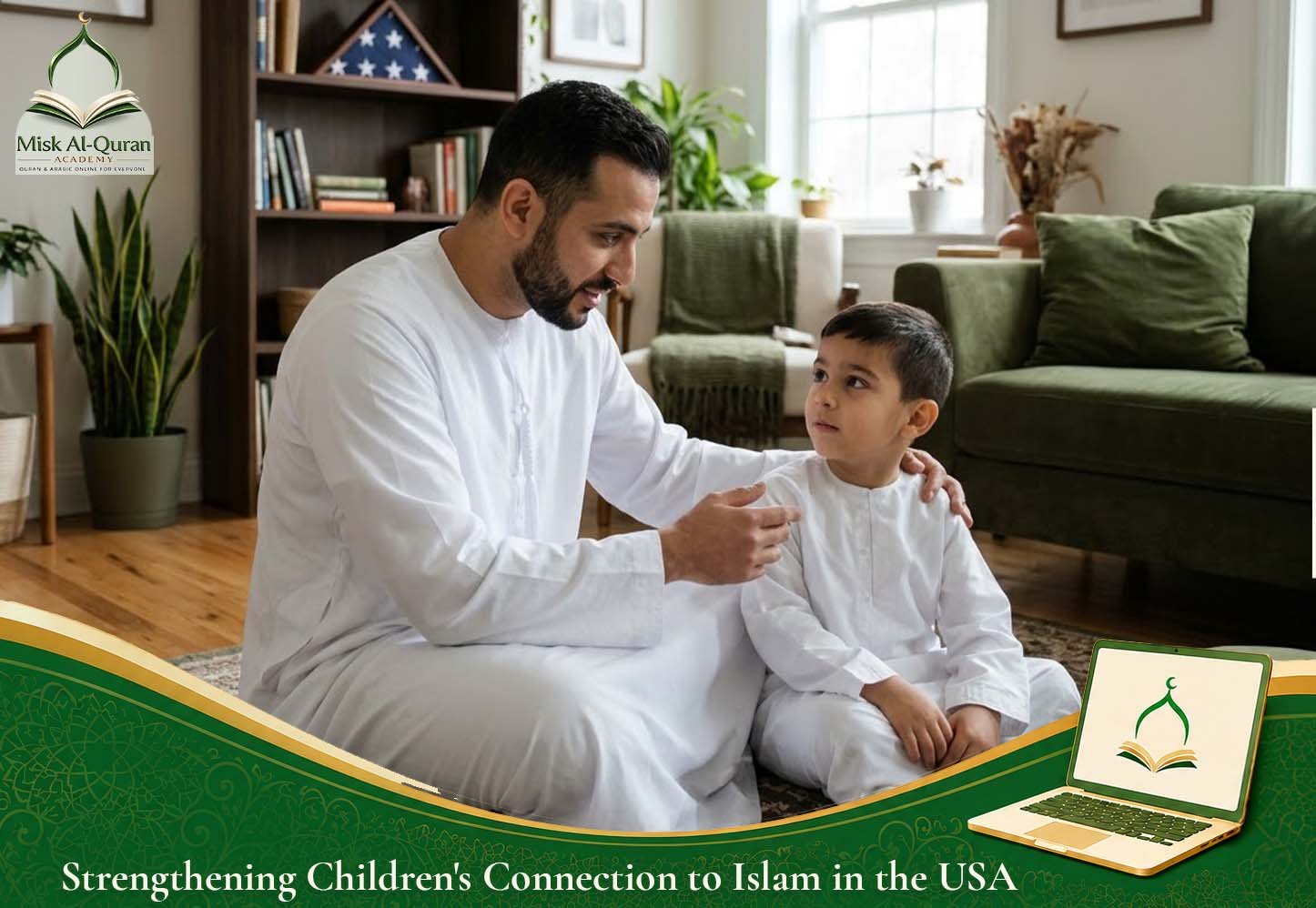
Muslim children growing up in the United States encounter different cultural traditions, social expectations, and religious perspectives. Helping them understand their Islamic identity means teaching them how to apply their faith in everyday situations, rather than limiting religious education to memorizing rules or performing acts of worship.
Parents can support this process by explaining Islamic values, discussing real-life experiences, and showing children how to maintain their beliefs while treating people from different backgrounds with respect. Some practical ways to strengthen this connection include:
- Building a sense of belonging: Help children develop relationships with other Muslim families through community activities and mosque programs.
- Discussing their experiences: Give children space to talk about questions or situations related to their religious identity.
- Celebrating Islamic occasions: Make Ramadan, Eid, and other meaningful occasions opportunities to strengthen family connections.
- Encouraging positive friendships: Teach children to choose friends who respect their beliefs and treat others well.
With consistent support, children can develop a clear understanding of their Muslim identity while learning to interact respectfully with people from different backgrounds.
Start Your Quran Learning Journey with Misk Online Quran Academy
Begin your Quran learning journey with Misk Online Quran Academy, where students of all ages benefit from structured online Quran classes tailored to their individual level and learning needs.
Whether your goal is to improve Quran recitation, master Tajweed rules, or begin memorizing the Holy Quran, our experienced and qualified teachers provide clear step-by-step guidance through personalized one-to-one lessons. Each session is designed to help learners understand, practice, and improve with confidence and consistency.
With flexible scheduling, interactive teaching methods, and a supportive online environment, Misk Online Quran Academy makes it easier to stay committed and motivated. Students can learn comfortably from home while making steady progress in their Quran studies at their own pace.

Balancing Muslim Identity with American Culture
One important part of raising Muslim kids in the USA is helping children understand that their American environment and Islamic identity do not have to conflict.
Children can participate in school activities, develop friendships, enjoy sports, and explore their interests while following Islamic principles. Parents should explain that being Muslim influences how they treat others, make decisions, and understand their responsibilities.
Help Children Understand Their Muslim Identity
Start by discussing what “Muslim” means in language appropriate to your child’s age. Explain the importance of belief in Allah, prayer, honesty, kindness, respect, and responsibility. For example, parents can use everyday situations to demonstrate Islamic values:
- Tell the truth, even when making a mistake.
- Treat classmates fairly, regardless of their backgrounds.
- Respect teachers, parents, and older people.
- Avoid making fun of others or participating in bullying.
- Be helpful to neighbors and people in need.
These practical examples help children connect Islamic teachings with their daily experiences.
Encourage Confidence Without Creating Isolation
Children should feel comfortable explaining their beliefs when classmates ask questions. However, parents should avoid teaching them that people with different beliefs are automatically negative influences.
Instead, explain that Muslims can build respectful relationships with people from different backgrounds while maintaining their religious boundaries.
This approach helps children develop confidence, social skills, and a balanced understanding of their place in American society.
Building an Islamic Foundation for Muslim Children
A strong Islamic foundation begins at home. Children learn not only from religious lessons but also from observing how their parents behave and interact with others.
Therefore, parents should make Islamic values visible in everyday family routines rather than limiting religious education to occasional lessons.
Make Islamic Values Part of Daily Family Life
Simple habits can help children develop a natural connection with their faith. For example, families can begin meals with Bismillah, express gratitude after receiving something good, and encourage children to say Alhamdulillah.
Parents can also introduce short conversations about Islamic manners during everyday activities. Consider these practical ideas:
- Read a short Islamic story before bedtime.
- Discuss one good character trait each week.
- Encourage children to help with household responsibilities.
- Explain the importance of keeping promises.
- Practice kindness toward relatives, neighbors, and classmates.
Over time, these habits can help children understand that Islam guides their behavior in different situations.
Teach Through Example and Positive Reinforcement
Children often imitate what they see. When parents demonstrate patience, honesty, forgiveness, and respect, they provide practical examples of Islamic character.
Furthermore, positive encouragement can make religious learning more meaningful. Recognize a child’s effort when they remember a prayer, show kindness, or complete a Quran lesson.
Avoid making every religious activity feel like a punishment or competition. Instead, help children understand its purpose and develop a positive relationship with their faith.
Daily Islamic Habits for Muslim Kids
Establishing simple routines is an effective way to support children as they grow. Rather than introducing too many religious responsibilities at once, parents can begin with manageable habits and gradually increase them according to the child’s age and ability.
Establish Regular Prayer Habits
Prayer introduces children to an important part of Muslim daily life. Parents can explain the purpose of Salah, demonstrate its movements, and invite younger children to pray alongside them. For practical guidance, explore this resource on how to teach kids salah. A gradual approach may include:
- Explain why Muslims perform Salah.
- Teach children the basic movements and positions.
- Introduce the prayer times through a simple daily schedule.
- Help them learn the words and short Surahs used in prayer.
- Encourage participation without creating unnecessary pressure.
As children become more familiar with prayer, parents can provide age-appropriate guidance about consistency and responsibility.
Encourage Islamic Manners and Good Character
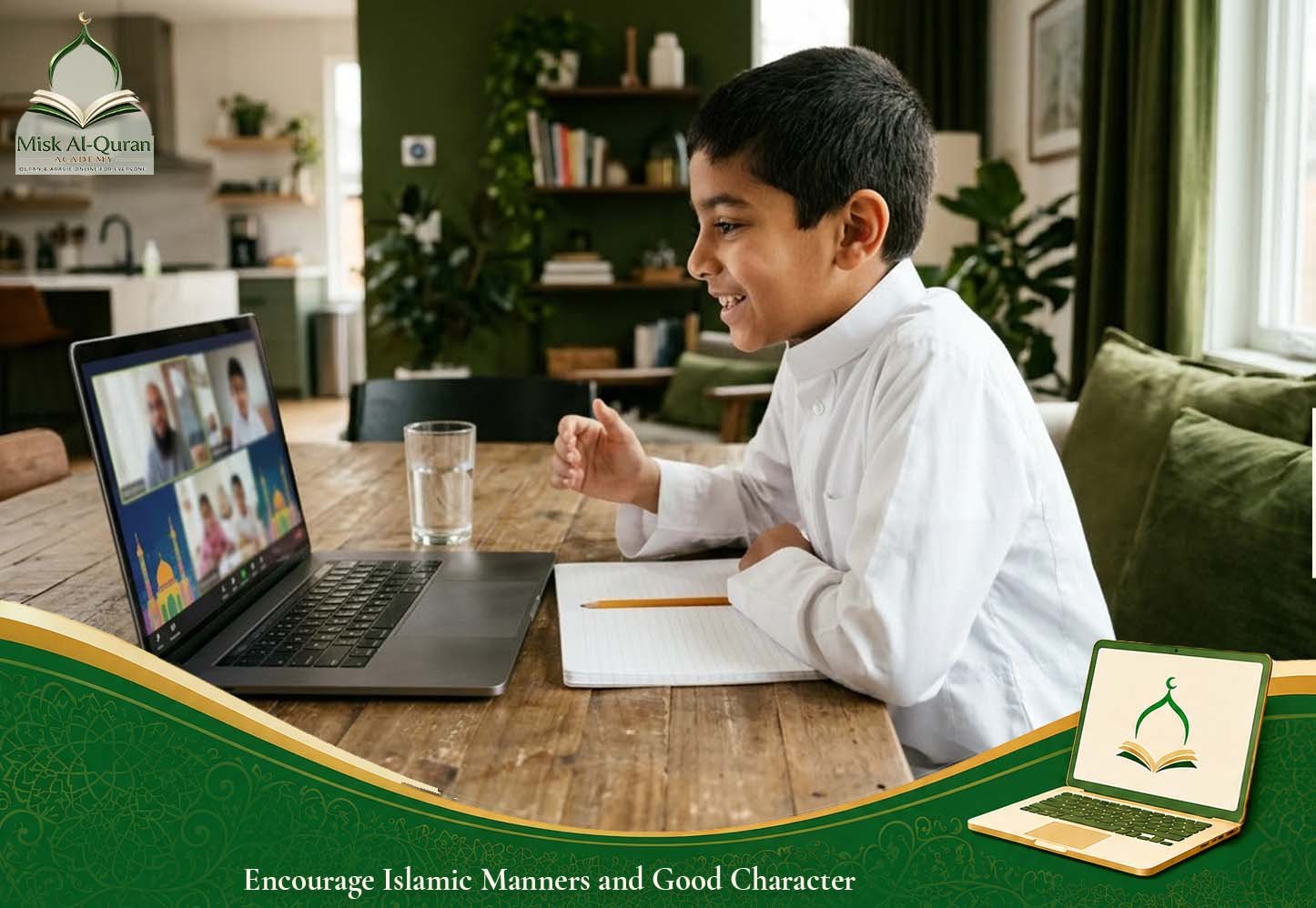
Islamic manners should be part of children’s everyday experiences. Parents can teach them to greet others politely, share their belongings, respect family members, and speak kindly.
Additionally, discussing real situations helps children understand how to apply these values. For example, ask how they might respond if a classmate feels excluded or if someone needs help.
These conversations develop moral awareness while reinforcing the practical meaning of Islamic teachings.
Teaching Islamic Values to Children in America
Children need to understand the basic principles of their religion before they can apply them confidently. Parents can introduce Islamic beliefs through simple explanations, stories, activities, and conversations.
Explain the Five Pillars of Islam.
The Five Pillars provide an essential foundation for Islamic education. Children should gradually learn what each pillar means and why it matters in a Muslim’s life. The pillars include:
- Shahadah: Believing and declaring that there is no god but Allah and that Muhammad is His Messenger.
- Salah: Performing the five daily prayers.
- Zakat: Giving obligatory charity to eligible recipients.
- Sawm: Fasting during the month of Ramadan.
- Hajj: Performing pilgrimage to Makkah when physically and financially able.
Parents can use age-appropriate stories, illustrations, and practical examples to make these concepts easier to understand.
For additional learning ideas, parents can explore pillars of Islam for kids and use suitable explanations when introducing these beliefs at home.
Teach Islamic Values Through Stories
Stories from the Quran and the lives of the Prophets can help children understand patience, courage, gratitude, honesty, and trust in Allah.
For example, parents can discuss Prophet Ibrahim’s faith, Prophet Yusuf’s patience, and Prophet Muhammad’s kindness. After reading a story, ask children what they learned and how they can apply its lesson at school or home.
This method encourages children to think about Islamic teachings rather than simply memorizing information.
Quran Education for Muslim Children in the USA
Quran education is an important part of raising Muslim kids in the USA. Learning to read and understand the Quran helps children develop a deeper connection with their faith and become more familiar with Islamic teachings. However, children need an organized learning approach that matches their age, reading ability, and learning pace.
Start with Arabic Letters and Basic Reading Skills.
Children who are new to Quran reading should begin by recognizing Arabic letters and learning their correct sounds. After that, they can practice vowel marks, connected letters, and simple words. Parents can support this process by:
- Practicing a few Arabic letters each day.
- Using suitable learning books and audio resources.
- Encouraging children to repeat sounds carefully.
- Reviewing previously learned material.
- Providing regular opportunities to practice reading.
Families looking for structured beginner instruction can explore online noorani qaida classes for kids. A gradual learning process allows children to develop confidence before moving to more advanced Quran reading.
Help Children Develop Accurate Quran Recitation
Correct pronunciation is an important part of Quran learning. Children should gradually become familiar with Arabic articulation points and basic Tajweed rules.
Parents can encourage regular listening and repetition. Nevertheless, listening alone may not identify every pronunciation mistake. Direct feedback from a qualified Quran teacher can help children recognize and correct errors.
Parents who want to understand the role of Tajweed in children’s Quran education can also read Should kids learn Tajweed.
The learning process should remain appropriate to each child’s level. Beginners need time to recognize letters and pronounce words correctly before studying more complex rules.
Connect Quran Learning with Everyday Life
Quran education becomes more meaningful when children understand how its teachings relate to their behavior. After reading a short passage or learning a new Surah, parents can discuss its general message using language children understand. They might explore lessons about patience, gratitude, kindness, or trust in Allah.
As a result, Quran learning becomes more than a reading activity. It becomes an opportunity to develop understanding and Islamic character.
Online Quran Education for Raising Muslim Kids in the USA
Online Quran education can play an important role in raising Muslim kids in the USA, especially for families who live far from mosques or Islamic learning centers. In addition, busy school and work schedules may make regular in-person lessons difficult to arrange.
In these situations, online Quran classes provide an alternative that allows children to learn from home. With suitable instruction and a consistent schedule, children can develop their Quran reading skills while maintaining their academic and family responsibilities.
Benefits of Online Quran Classes for Raising Muslim Kids in the USA
Online Quran classes may offer several practical benefits for Muslim families who want to include regular religious education in their children’s routines. Some potential advantages include:
- Flexible scheduling: Families can look for lesson times that fit around school hours and other responsibilities.
- Learning from home: Children can attend lessons without traveling to a mosque or learning center.
- Individual attention: Some programs offer one-to-one instruction, allowing teachers to focus on each child’s learning needs.
- Consistent Quran practice: Regular lessons can help children maintain their progress and review previously learned material.
- Access to Quran teachers: Online learning gives families the opportunity to explore instructors beyond their local area.
However, online education is not automatically suitable for every child. Parents should consider the teaching approach, lesson structure, communication methods, and the child’s ability to concentrate during virtual sessions. A suitable program should also provide opportunities for students to practice and receive feedback.
Choosing an Online Quran Learning Program for Raising Muslim Kids in the USA
Selecting an appropriate Quran program is an important decision when raising Muslim kids in the USA. Parents should look beyond convenient schedules and consider whether the lessons meet their children’s educational needs.
Before choosing a program, consider these questions:
- Does the program provide beginner-friendly Quran lessons?
- Can teachers correct Arabic pronunciation and explain basic Tajweed rules?
- Are lesson times suitable for families living in different US time zones?
- Does the teaching approach match the child’s age and reading ability?
- Can parents communicate with teachers about their child’s progress?
- Are the course details and available teaching arrangements clearly explained?
Misk Online Quran Academy is one option parents can explore when researching online Quran education for children. Families should contact the academy directly to confirm its current courses, teaching arrangements, schedules, and suitability for their children’s learning goals.
Ultimately, the right choice should support steady progress while helping children develop a positive relationship with Quran learning.
Preparing Children for Online Quran Lessons When Raising Muslim Kids in the USA
A comfortable learning environment can make online Quran lessons more productive. Parents can prepare a quiet study area with a suitable device, a stable internet connection, and the required learning materials. Additionally, a few simple habits can help children participate more effectively:
- Choose a regular lesson time that does not conflict with schoolwork or rest.
- Reduce background noise and other distractions during class.
- Keep the Quran, notebooks, and learning materials nearby.
- Encourage children to ask questions when they do not understand something.
- Review important points after each lesson.
- Allow short breaks when children feel tired or lose concentration.
Parents should also follow their children’s progress without placing unnecessary pressure on them. With patience and regular encouragement, online Quran education can become a manageable part of family life.
Choosing Schools for Raising Muslim Kids in the USA
Choosing a suitable school is another important consideration when raising Muslim kids in the USA. School influences children’s academic development, friendships, daily routines, and understanding of the wider community.
Muslim parents should therefore consider more than academic performance. They also need to understand how each school’s environment accommodates religious practices, dietary needs, and family values.
There is no single school option that suits every Muslim family. The best decision depends on the child’s personality, educational needs, family circumstances, and the options available in the local area.
Public Schools and Islamic Considerations for Raising Muslim Kids in the USA
Public schools provide children with opportunities to receive a general education and interact with classmates from different cultural and religious backgrounds. These experiences can help them develop communication skills, independence, and respect for diversity.
However, parents may need to communicate with school administrators and teachers about their children’s religious practices and family preferences. For example, families can ask about:
- Prayer arrangements during the school day.
- Halal food options or suitable dietary alternatives.
- Physical education requirements and appropriate clothing.
- Religious holidays and absence policies.
- Classroom activities involving religious or cultural topics.
- Opportunities to participate in school events while maintaining family values.
Furthermore, parents should encourage children to speak respectfully about their religious needs when appropriate. Establishing a positive relationship with teachers can make it easier to discuss concerns and find practical arrangements.
Considering Islamic Schools When Raising Muslim Kids in the USA
Islamic schools may offer an educational environment where general academic subjects are taught alongside Islamic studies. They can also provide opportunities for children to build friendships with other Muslim students and participate in religious activities throughout the school year.
Nevertheless, parents should evaluate each school carefully rather than assuming that every Islamic school offers the same educational experience. Important factors to review include:
- The quality and structure of the academic curriculum.
- The content and level of Islamic education.
- Teachers’ qualifications and teaching approaches.
- School facilities and student support services.
- Tuition fees and additional expenses.
- The school’s environment, policies, and communication with parents.
Visiting the school, speaking with administrators, and reviewing its educational approach can help families make an informed decision.
Whether parents choose a public or Islamic school, regular communication with children remains essential. Ask about their experiences, friendships, and any challenges they encounter. This helps parents support their academic progress while maintaining a healthy connection between school life and Islamic values.
Social Development When Raising Muslim Kids in the USA
Friendships play an important role in childhood. Through social interaction, children learn communication, cooperation, empathy, and conflict resolution.
Muslim parents should encourage healthy friendships while helping children understand their family’s religious values.
Building Healthy Friendships When Raising Muslim Kids in the USA
Parents can encourage children to develop friendships with classmates and neighbors who treat them respectfully.
Explain that a good friend should demonstrate qualities such as honesty, kindness, respect, and responsibility. These values are important regardless of someone’s religion or cultural background.
Furthermore, invite friends to suitable family activities when appropriate. Positive social experiences can help children feel connected to their communities.
Teaching Muslim Kids in the USA to Respond to Questions About Islam
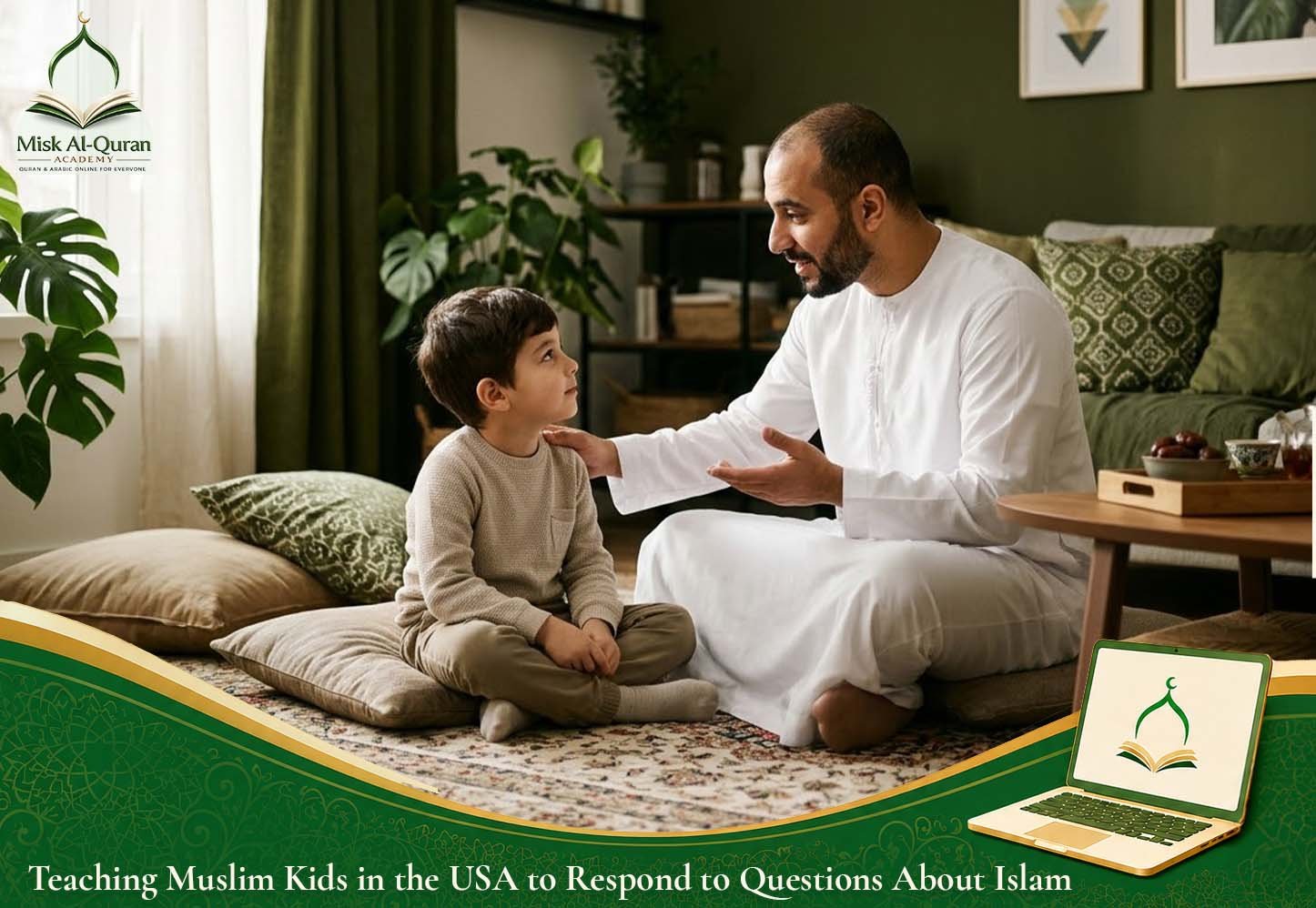
Children may receive questions about fasting, prayer, Ramadan, halal food, or wearing Islamic clothing. Some questions may come from genuine curiosity, while others may be based on misunderstandings. Parents can prepare children with simple, respectful explanations.
For instance, a child might explain that Muslims fast during Ramadan to worship Allah, develop self-discipline, and remember people in need.
However, children should also know that they do not need to answer every personal question. If a conversation makes them uncomfortable, they can speak with a parent or trusted teacher.
Celebrating Ramadan and Eid When Raising Muslim Kids in the USA
Ramadan and Eid provide valuable opportunities to strengthen children’s connection with Islam and create positive family memories.
For Muslim families living in America, these occasions can also help children feel connected to a wider Muslim community.
Making Ramadan Meaningful for Muslim Kids in the USA
Parents can introduce Ramadan through activities that match their children’s ages and abilities. Some useful ideas include:
- Reading short stories about Ramadan.
- Creating a family Ramadan calendar.
- Decorating the home with simple Islamic decorations.
- Encouraging children to participate in charity activities.
- Preparing Iftar together.
- Discussing the meaning of fasting and gratitude.
Young children are not expected to fast before they reach the appropriate age and ability. Instead, parents can introduce the spirit of Ramadan through kindness, generosity, and family participation.
Helping Muslim Kids in the USA Enjoy Eid Traditions
Eid celebrations can create lasting memories and strengthen family relationships. Parents may arrange family visits, prepare special meals, give age-appropriate gifts, and participate in community celebrations.
When children understand the religious meaning behind Eid, they can appreciate it as more than a holiday or an opportunity to receive presents.
Muslim Communities and Islamic Education for Raising Muslim Kids in the USA
A supportive Muslim community can make a meaningful difference in children’s religious and social development. Mosques, Islamic centers, weekend schools, and family activities may provide opportunities for children to learn, build friendships, and participate in community life.
Encouraging Mosque Participation When Raising Muslim Kids in the USA
When suitable activities are available, parents can introduce children to their local mosque through family prayers, Quran lessons, educational events, and community gatherings.
Regular participation can help children recognize that Islam is not limited to their home. It is also practiced through shared worship, cooperation, and service to others.
Exploring Islamic Activities for Muslim Kids in the USA
Families can look for age-appropriate activities that combine learning and enjoyment. Examples include:
- Quran reading groups.
- Islamic storytelling sessions.
- Educational workshops.
- Community charity projects.
- Ramadan activities.
- Family events organized by local Islamic centers.
Parents should choose activities that provide a safe and welcoming environment and suit their children’s interests.
Managing Digital Media When Raising Muslim Kids in the USA
Digital devices are part of modern childhood. Children use them for schoolwork, entertainment, communication, and learning. However, online content can also expose them to unsuitable language, behavior, and ideas. Therefore, parents need a balanced approach to digital media rather than relying only on strict restrictions.
Set Clear Screen-Time Expectations
Establish family rules about when and how children can use digital devices. For example, parents may limit recreational screen time during meals, family conversations, and prayer periods.
The rules should be suitable for the child’s age and responsibilities. More importantly, parents should explain why these boundaries exist.
Choose Educational and Age-Appropriate Content
Not all digital content has the same educational value. Parents can help children find suitable Quran resources, Islamic stories, language-learning activities, and educational videos. At the same time, review applications and websites before allowing younger children to use them independently.
Open conversations about online safety are also essential. Teach children not to share private information, communicate with unknown people without guidance, or respond to inappropriate messages.
Teaching Halal Habits to Muslim Children in America
Food choices and daily consumption habits can become important learning opportunities for Muslim families. Children may encounter different food options at school, restaurants, parties, and social events. Parents should explain halal principles in a simple and practical way.
Explain Halal and Haram in an Age-Appropriate Way
Begin by teaching children that Muslims follow Islamic guidance when choosing what to eat and how to behave. For younger children, simple explanations and examples may be sufficient. Older children can gradually learn more about food ingredients, halal certification, and responsible choices.
Prepare Children for School and Social Events
Parents can communicate dietary needs to school staff and event organizers when necessary. They can also teach children how to ask polite questions about food ingredients without feeling embarrassed.
For example, a child can say, “Thank you. I need to check whether this food is suitable for me.”This simple skill helps children make informed decisions while maintaining respectful relationships with others.
Positive Parenting Strategies for Muslim Kids in the USA
Positive parenting helps children develop responsibility, confidence, and emotional security. Islamic parenting also emphasizes mercy, patience, guidance, and good character.
Rather than relying only on instructions and punishments, parents can build relationships that encourage children to understand their responsibilities.
Use Conversations Instead of Constant Criticism
When children make mistakes, take time to understand what happened. Explain why a behavior was inappropriate and discuss better choices for the future. For example, if a child refuses to share, parents can explain the importance of generosity and demonstrate how to treat others fairly. This approach allows children to learn from their experiences without feeling that every mistake defines them.
Set Consistent and Reasonable Boundaries
Children need clear expectations to understand what is acceptable. However, rules should be realistic and suitable for their developmental stage. Consistency helps children understand expectations and gradually develop self-discipline. Parents can establish boundaries around:
- Respectful communication.
- Screen time.
- School responsibilities.
- Religious routines.
- Household duties.
- Social activities.
Support Children’s Confidence and Emotional Health
Children may sometimes feel different from their classmates because of their religious practices, clothing, or family traditions. Parents should create a safe environment where children can discuss these experiences without fear of criticism.
Listen carefully, acknowledge their feelings, and help them identify practical responses. If a child experiences bullying or repeated discrimination, communicate with the school and seek appropriate support. A strong sense of family connection can help children feel secure while developing their own identities.
Practical Muslim Parenting Strategies in the USA
Raising Muslim children requires long-term consistency rather than a perfect daily schedule. Parents can make the process easier by organizing family routines around realistic goals.
Create an Age-Appropriate Islamic Learning Plan
Children have different learning needs at different stages. Therefore, religious education should develop gradually.
| Age group | Suggested learning focus |
|---|---|
| Preschool children | Islamic stories, simple duas, basic manners, and recognizing Arabic letters |
| Elementary school children | Quran reading, basic Salah, short Surahs, and the Five Pillars |
| Preteens | Islamic identity, more detailed religious learning, and responsible decision-making |
| Teenagers | Personal responsibility, deeper Islamic understanding, and handling social challenges |
These are general suggestions rather than fixed rules. Parents should adjust the learning plan according to each child’s interests, abilities, and development.
Build a Realistic Weekly Family Routine
A simple weekly routine can help children balance school, religious learning, recreation, and family time. The goal is to create sustainable habits rather than an overwhelming schedule. For example:
- Daily: Practice a short Quran reading lesson or review a memorized Surah.
- Several times a week: Discuss an Islamic value or read a religious story.
- Weekly: Attend a mosque activity or participate in a family learning session.
- During weekends: Review previous lessons and plan enjoyable Islamic activities.
- During Ramadan: Introduce additional family worship and charitable activities.
Online Quran Learning for Muslim Families in America
For some families, online Quran lessons can make religious education more accessible. This option may be particularly useful when local learning centers are far away, or family schedules make regular travel difficult.
Nevertheless, parents should consider the child’s learning style and the quality of instruction before choosing an online program.
Understanding Common Challenges in Online Quran Learning
Online education may involve challenges such as internet interruptions, distractions, scheduling difficulties, and differences in children’s learning speeds.
Parents can explore Common Challenges In Online Quran Journey to learn more about difficulties that may arise during online Quran study. To support a better learning experience, families can:
- Choose a quiet place for lessons.
- Establish a consistent class schedule.
- Check the internet connection before each session.
- Encourage children to participate and ask questions.
- Review learning progress regularly.
- Communicate with the teacher when a child needs additional support.
Exploring Online Quran Education with Misk Online Quran Academy
Misk Online Quran Academy is an option parents can explore when researching online Quran education for children. Before enrolling, families should contact the academy to confirm available courses, teacher qualifications, lesson formats, schedules, and other details relevant to their children’s needs.
Parents should also consider arranging a discussion about the child’s current Quran reading level and educational goals. This can help determine whether the available learning approach is suitable.
Helping Children Stay Motivated During Quran Lessons
Motivation can change as children grow and encounter different academic responsibilities. Therefore, parents should make Quran learning encouraging and manageable. Useful strategies include:
- Setting small, achievable learning goals.
- Celebrating progress without comparing siblings.
- Allowing children to ask questions.
- Reviewing lessons through short activities.
- Connecting Quranic lessons with positive behavior.
- Providing breaks when children feel tired.
When children experience steady progress and receive appropriate encouragement, they may become more confident in their learning.
Common Muslim Parenting Mistakes in the USA
Even parents with good intentions can make mistakes when teaching children about Islam. Recognizing these habits can help families create a healthier learning environment.
Making Religious Education Feel Like a Punishment
If children associate Quran lessons or prayer with constant criticism, they may develop negative feelings toward religious learning. Instead, parents should combine clear expectations with encouragement, patience, and explanations appropriate to the child’s age.
Comparing Children with Their Siblings or Friends
Every child learns at a different pace. Comparing one child’s Quran reading, memorization, or religious habits with another’s can create unnecessary pressure. Focus on individual progress and recognize genuine effort.
Avoiding Difficult Questions
Children may ask questions about religion, cultural differences, or situations they encounter at school. Ignoring these questions can make them hesitant to discuss important concerns. If parents do not know an answer, they can explain that they will look for reliable Islamic guidance rather than giving an uncertain response.
Depending Only on Schools or Online Lessons
Islamic schools, mosques, and online Quran programs can support children’s education. However, they cannot replace the role of parents in demonstrating Islamic manners and building a positive family environment. Children need to see religious values practiced consistently at home.
FAQs About Raising Muslim Kids in the USA
Find answers to common questions about raising Muslim kids in the USA, maintaining Islamic values, and supporting children’s religious and social development.
1. How can Muslim parents help children maintain their Islamic identity in America?
Parents can strengthen their children’s Islamic identity through regular religious conversations, Quran education, family worship, Islamic traditions, and positive examples. They should also encourage children to build respectful friendships and participate confidently in their communities.
2. Should Muslim children attend public schools or Islamic schools in the USA?
Both options may suit different families. Parents should consider academic quality, religious environment, available resources, school policies, location, and their children’s individual needs before making a decision.
3. How can parents teach Islam to children with busy school schedules?
A consistent but flexible routine can help. Short Quran lessons, bedtime stories, family discussions, and regular prayer practice can introduce Islamic learning without overwhelming children’s academic and recreational activities.
4. Is online Quran learning suitable for Muslim children living in America?
Online Quran learning may be suitable for children who need flexible schedules or do not have convenient access to local Quran teachers. Parents should review the teaching approach, lesson structure, communication methods, and suitability of the program before enrolling.
Conclusion
Raising Muslim kids in the USA requires patience, consistent guidance, and a supportive family environment. Children need opportunities to understand their religion, develop good character, build healthy friendships, and participate confidently in American society.
Parents can support this development by making Islamic values part of everyday life, encouraging regular Quran education, discussing difficult situations openly, and establishing realistic religious routines.
Most importantly, children benefit when they see Islam practiced through kindness, honesty, respect, and responsibility. With positive guidance and suitable educational resources, families can help children develop a confident Muslim identity while growing into responsible members of their communities.