Best age to start quran memorization is a question many parents and adult learners ask before beginning their Hifz journey. Parents want to know whether their child is ready, while adults often wonder whether they have missed the ideal opportunity. Fortunately, Quran memorization is not limited to one specific stage of life. Instead, the most suitable starting point depends on the learner’s age, reading ability, concentration, motivation, daily routine, and access to qualified instruction.
For many children, the years between five and eight can be an excellent time to begin structured memorization. However, younger children can become familiar with the Quran through listening and repetition before formal Hifz begins. Teenagers can also make strong progress when memorization is combined with understanding and organization. Likewise, adults can memorize significant portions or even the entire Quran when they follow a realistic plan.
Therefore, choosing the best age to start quran memorization should focus on readiness rather than pressure. A successful Hifz journey requires consistent practice, accurate recitation, regular revision, and appropriate guidance. When these elements are in place, learners can make meaningful progress at different stages of life.
What Is the Best Age to Start Memorizing the Quran?
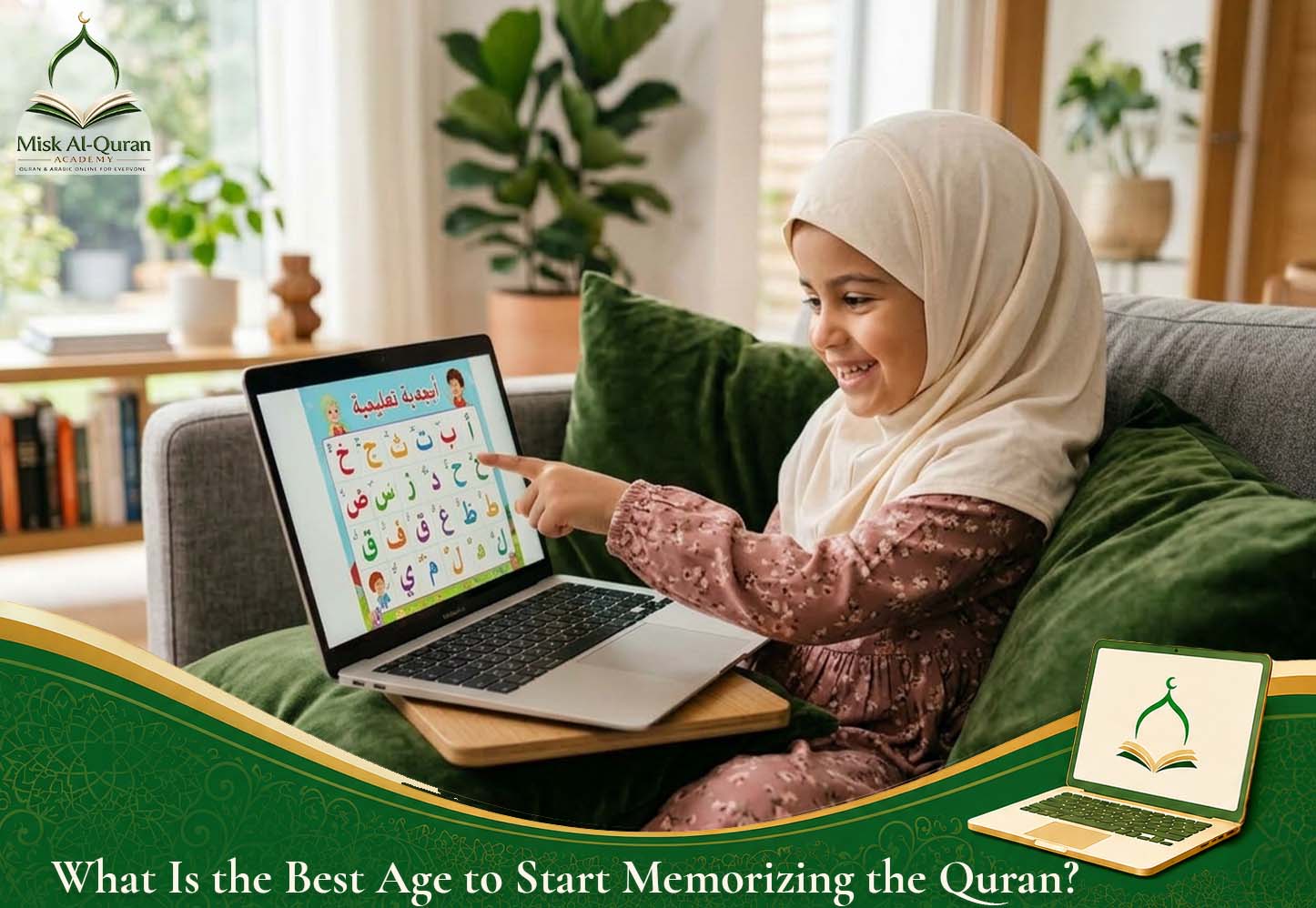
For many children, the best age to start quran memorization formally is between five and eight years old. At this stage, children can often concentrate for short periods, imitate pronunciation, and learn effectively through repetition. Nevertheless, age alone should never determine whether a child starts Hifz.
Some children may be ready at five, whereas others may need additional preparation. For example, a child who is still learning Arabic letters may benefit from Quran reading lessons before beginning a demanding memorization schedule. On the other hand, a child who reads basic Quranic words confidently and enjoys recitation may be ready to memorize short surahs.
Moreover, formal Hifz should match the child’s emotional and academic development. A young learner should not be expected to study for long periods simply because another child of the same age can do so. Instead, the teacher and parents should establish a manageable routine that encourages progress without creating unnecessary stress.
Start Your Quran Learning Journey with Misk Online Quran Academy
Begin your Quran learning journey with Misk Online Quran Academy, where students of all ages benefit from structured online Quran classes tailored to their individual level and learning needs.
Whether your goal is to improve Quran recitation, master Tajweed rules, or begin memorizing the Holy Quran, our experienced and qualified teachers provide clear step-by-step guidance through personalized one-to-one lessons. Each session is designed to help learners understand, practice, and improve with confidence and consistency.
With flexible scheduling, interactive teaching methods, and a supportive online environment, Misk Online Quran Academy makes it easier to stay committed and motivated. Students can learn comfortably from home while making steady progress in their Quran studies at their own pace.

Why Is the 5–10 Age Range Helpful for Quran Memorization?
Children between five and ten can often develop strong learning habits through repeated practice. Because repetition is central to Hifz, this learning style can fit naturally into their daily routine. Furthermore, young learners may become comfortable hearing and reproducing Arabic sounds through regular exposure.
Another advantage is that children can develop pronunciation habits from the beginning. When a teacher corrects the learner early, mistakes are less likely to become established patterns. Consequently, memorization and Tajweed can develop together rather than being treated as completely separate skills.
Several characteristics make this age range practical:
- Short lessons are usually easier for children to manage.
- Repetition can become part of their normal routine.
- Listening supports visual reading and verbal recall.
- Short surahs provide achievable milestones.
- Parents can participate in daily revision.
- Positive encouragement can strengthen motivation.
- Regular lessons can establish lifelong Quran habits.
Still, these benefits do not mean that every child must begin within this exact age range. Individual readiness remains more important than a fixed number.
What Is the Best Age to Start Quran Memorization for Young Children?
For very young children, Quran learning can begin before formal Hifz. In fact, ages three and four can be useful for building familiarity with recitation, Arabic sounds, and short surahs. At this stage, however, the objective should usually be exposure rather than intensive memorization.
A child may listen to the same short surah repeatedly during everyday activities. Parents can also recite simple verses with the child and encourage natural repetition. As a result, the child may recognize familiar passages long before beginning structured lessons.
Once the child develops better attention and basic Quran reading skills, memorization can gradually become more systematic. This approach avoids turning early Quran education into a stressful academic task.
Most importantly, parents should observe how the child responds. If the learner enjoys listening, repeating, and reciting, structured lessons may be introduced gradually. If concentration remains difficult, additional preparation may be more appropriate.
How Can Parents Prepare a Child Before Formal Hifz?
Preparation can be simple and does not require a complicated curriculum. A few minutes of consistent exposure each day can create a useful foundation.
Parents can:
- Play clear Quran recitation for short periods.
- Practice Arabic letters and basic Quran reading.
- Repeat familiar short surahs together.
- Encourage the child to listen carefully to pronunciation.
- Review previously learned verses regularly.
- Celebrate progress instead of comparing the child with others.
- Keep Quran learning associated with encouragement and calm.
In addition, parents should avoid using memorization as a punishment. When children associate Quran study with fear or constant criticism, their motivation may decline. Instead, a warm environment can help them view learning as a meaningful part of everyday life.
What Is the Best Age to Start Quran Memorization for Different Learners?
There is no universal schedule that works for every student. A five-year-old may memorize differently from a nine-year-old, and an adult may require an entirely different strategy. Therefore, age should guide the structure of the program rather than dictate an inflexible target.
| Age | Recommended Approach | Suggested Session |
|---|---|---|
| 3–4 | Listening and simple repetition | 5–10 minutes |
| 4–5 | Short surahs and pronunciation practice | 10–15 minutes |
| 5–8 | Structured beginner Hifz | 15–25 minutes |
| 8–12 | Memorization with regular revision | 20–35 minutes |
| 13–17 | Hifz combined with understanding | 25–40 minutes |
| Adults | Personalized memorization and revision | 20–40 minutes |
These times are practical examples rather than strict requirements. A learner may need less or more time depending on concentration, school or work commitments, reading ability, and previous Quran experience.
For families seeking structured online support, Misk Online Quran Academy can offer an organized learning environment in which the memorization plan can be adjusted according to the learner’s level and objectives.
Can a Child Memorize Quran Without Speaking Arabic?
Yes. Speaking conversational Arabic is not a requirement for Quran memorization. However, basic Quran reading skills are extremely helpful because they allow the learner to see the words while hearing and repeating them.
There is an important difference between understanding spoken Arabic and reading Quranic Arabic. A child may not speak Arabic fluently but can still learn the Arabic letters, vowel marks, and connected forms needed to read the Mushaf.
Furthermore, reading while listening gives the learner several ways to process the same verse. The student hears the sound, sees the written words, and produces the recitation aloud. This combination can strengthen recall and improve accuracy.
For that reason, parents do not necessarily need to choose between reading and memorization. In many cases, both skills can develop alongside each other. The key is to keep the workload appropriate for the child’s age and ability.
How Does Age Affect Quran Memorization?
Age can influence the way learners process and retain information, but it is not the only factor that determines Hifz success. Younger students may learn through repetition and imitation, while older students can often use planning, understanding, and self-discipline to support their memorization.
For instance, a young child may learn a passage quickly but need frequent reminders to maintain it. An adult may require more repetitions at the beginning, yet stronger organization can help preserve the material over time.
Therefore, the best age to start quran memorization should not be judged only by memorization speed. Long-term retention is equally important. A student who learns slowly but maintains previous portions may be progressing more effectively than someone who memorizes quickly and forgets them shortly afterward. This is why a good Hifz program balances new material with revision from the beginning.
What Is the Best Memorization Method for Children?
Children generally benefit from short, focused lessons with one clear objective. Rather than giving them a large amount of material, a teacher can divide the lesson into smaller sections.
A practical lesson may follow these steps:
- Listen to the selected verses carefully.
- Read the verses from the Mushaf.
- Repeat each verse several times.
- Recite without looking.
- Connect the verses.
- Review older memorization.
- Recite the complete lesson to the teacher.
This structure keeps the child engaged while giving every verse enough attention. Additionally, using newly memorized surahs during Salah can provide meaningful repetition.
However, parents should not measure success only by how many verses a child memorizes in one sitting. Accuracy, confidence, and retention are equally important. Therefore, a smaller daily target can sometimes produce better long-term results.
How Can Parents Know When Their Child Is Ready for Hifz?
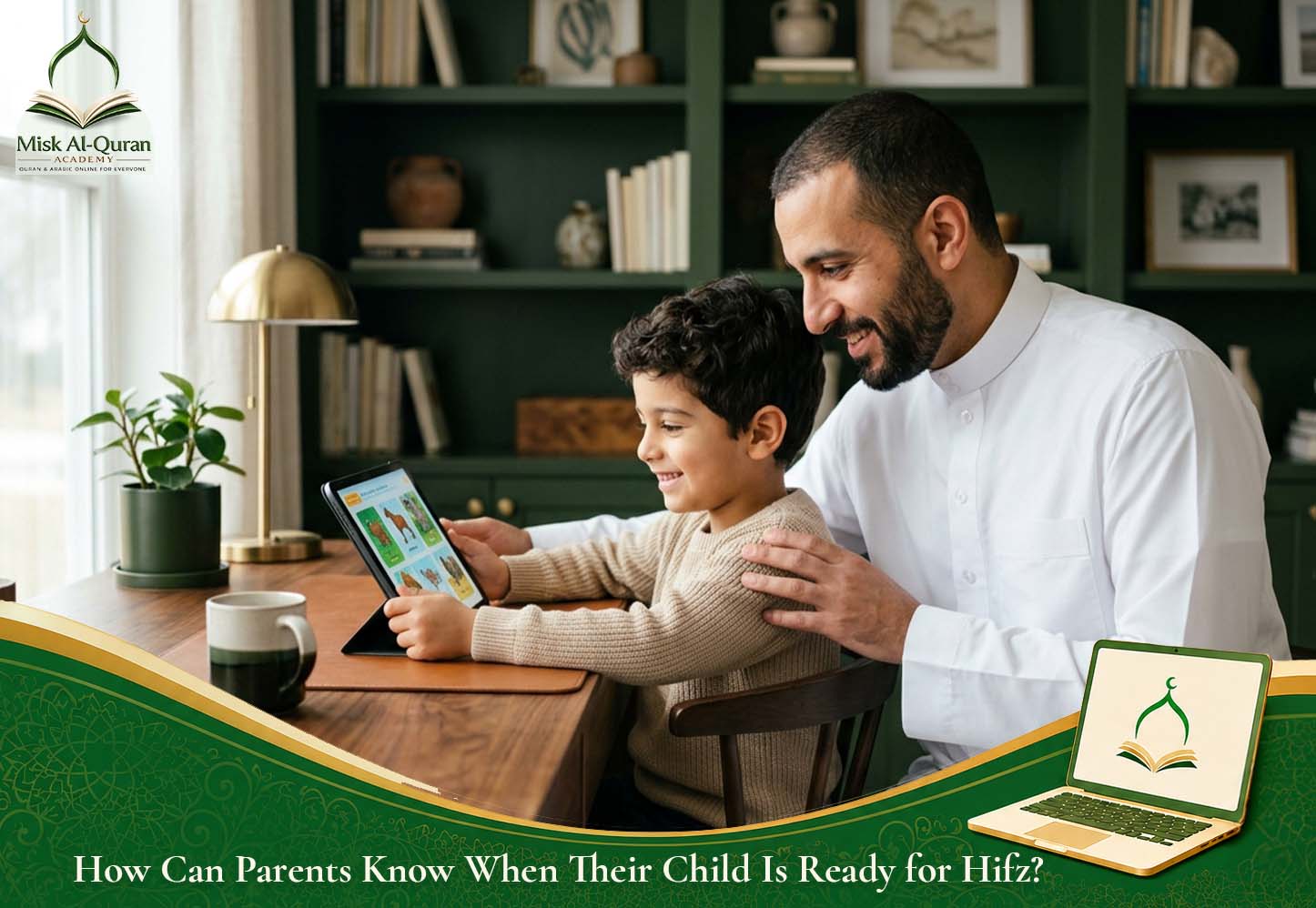
Rather than focusing exclusively on age, parents should look for signs that indicate readiness. A child may be prepared for structured memorization when several of the following qualities are present:
- The child can concentrate for a short lesson.
- Basic Quran reading skills are developing.
- The child can repeat a passage accurately.
- The learner accepts gentle correction.
- A daily routine can be maintained.
- The child shows interest in short surahs.
- Parents can support revision at home.
If most of these signs are present, formal Hifz may be appropriate. Conversely, if the child struggles with basic reading or strongly resists every lesson, additional preparation may be more beneficial.
In this situation, delaying intensive memorization is not a failure. On the contrary, building stronger foundations first can make the later Hifz experience much easier.
What Is the Best Age to Start Quran Memorization for Teenagers?
Teenagers are sometimes overlooked when families discuss the best age to start quran memorization, yet adolescence can be an excellent period for Hifz. Teenagers usually have greater independence than young children, and many can understand the meaning and context of what they memorize.
Because of this, teenage students can combine memorization with Tafsir, vocabulary, and reflection. Understanding the general meaning of an ayah may create mental connections that make recall easier.
A teenager may benefit from:
- A weekly memorization target.
- Daily new lessons.
- Dedicated revision sessions.
- Basic Tafsir and meaning.
- Regular teacher feedback.
- A personal progress record.
At the same time, the plan should respect school responsibilities. An unrealistic schedule can create unnecessary pressure. Therefore, steady progress should take priority over completing large amounts quickly.
Can Adults Memorize the Quran Successfully?
Absolutely. The best age to start quran memorization is not limited to childhood. Adults can begin their Hifz journey at almost any stage of life. Although their learning circumstances may differ from those of children, they can still achieve substantial memorization through consistency and appropriate planning.
Adult learners often have work, family, study, and other responsibilities. Consequently, a short daily session may be more practical than a long lesson that cannot be maintained consistently.
For many beginners, twenty to thirty focused minutes can provide a useful starting point. The exact amount should depend on the learner’s circumstances and previous experience. One person may memorize a few verses, while another may comfortably learn more.
What matters most is returning to the Quran regularly. Small achievements become significant when they are repeated consistently over months and years.
Why Do Adults Need a Different Hifz Strategy?
Adult learners often need a stronger revision system because their schedules can be unpredictable. Instead of relying solely on repetition during one session, they can review newly learned material at carefully planned intervals.
A practical review pattern can include:
- Reviewing the new lesson later on the same day.
- Revisiting it the following day.
- Reviewing it again several days later.
- Including it in weekly revision.
- Returning to it periodically after it becomes established.
This approach reduces the risk of continuously adding new pages while allowing older material to weaken. Moreover, adults can benefit from understanding what they memorize. Meaning can provide mental associations between verses, especially when similar expressions appear in different parts of the Quran.
Regular teacher feedback is also valuable. A qualified teacher can identify pronunciation issues, evaluate fluency, and recommend a slower pace when necessary.
How Long Does Quran Memorization Take at Different Ages?
The time required to memorize the Quran varies considerably. There is no reliable timeline that applies equally to every student because daily study time, revision, reading ability, motivation, and personal circumstances all affect progress.
For example, one learner may memorize a small amount every day for several years. Another may study intensively for a shorter period. Neither approach is automatically better because speed alone does not determine the quality of Hifz.
Instead, students should monitor three areas:
- New memorization: How much material can be learned accurately?
- Retention: Can the learner recite it several days later?
- Maintenance: Can the learner preserve it after several months?
A slower pace with strong retention can therefore be more successful than rapid memorization followed by repeated forgetting.
What Role Does Revision Play in Quran Memorization?
Revision is one of the foundations of successful Hifz. Memorizing a new page does not mean the work is finished. The learner must continue reviewing that page so it remains accessible in long-term memory.
Children may need frequent short reviews because their attention can shift quickly. Adults, meanwhile, often need a planned revision schedule because their available time changes from day to day.
A balanced session can include:
- New memorization.
- Recent lesson revision.
- Older memorization.
- Teacher correction.
As the amount of memorized Quran increases, the revision component should also grow. In some cases, students may temporarily reduce new memorization to strengthen older portions.
Consequently, the best age to start quran memorization becomes less important when the learner follows a strong long-term revision system.
How Can Misk Online Quran Academy Support Quran Memorization?
A structured learning environment can make the Hifz process easier to organize. Misk Online Quran Academy can be an option for families and individual learners looking for online Quran education with a planned approach to memorization.
Online learning can also remove practical barriers. Students can study from home without traveling to a physical classroom, while lesson times can be arranged around school, work, or family responsibilities.
For children, regular online lessons can provide teacher guidance while allowing parents to participate in revision. Adults can similarly benefit from a flexible structure that fits their existing routine.
Before choosing any Hifz program, learners should consider several factors:
- Teacher qualifications and Quran expertise.
- Tajweed and pronunciation correction.
- Lesson duration and frequency.
- Revision methodology.
- Schedule flexibility.
- Student progress monitoring.
- Communication between teacher, learner, and parents.
The purpose should be to create sustainable progress rather than simply maximize the amount memorized each week.
How Can Families Choose the Best Age to Start Quran Memorization?
Families should consider the learner as a whole rather than focusing on age alone. A useful decision should take reading ability, concentration, motivation, schedule, and support into account.
Ask the following questions before beginning:
- Can the learner read basic Quranic Arabic?
- Can the student concentrate during a short lesson?
- Does the learner show interest in memorizing?
- Can the family maintain a routine?
- Is a qualified teacher available?
- Can enough time be reserved for revision?
- Will school or work responsibilities remain manageable?
- Is the learning environment positive?
If most answers are positive, the learner may be ready to begin. However, if several answers are negative, preparation may be the better option. Spending additional time on reading, pronunciation, and listening can create a much stronger foundation for future memorization.
What Does Islamic Guidance Teach About Quran Memorization?
Islam encourages Muslims to learn, recite, and teach the Quran throughout their lives. Therefore, Quran memorization should not be viewed as an opportunity available only to children.
The well-known hadith recorded in Sahih al-Bukhari praises those who learn the Quran and teach it. It does not establish an age limit for Quran learning. Instead, it highlights the lasting value of engaging with the Quran.
Childhood can certainly provide a valuable opportunity to establish strong habits. Nevertheless, adults who begin later should not believe that they have lost their opportunity. For families planning their Quran learning during Ramadan, following practical advice on how to prepare for Ramadan with quran can help create a consistent routine.
For parents, this principle is equally important. Children should be encouraged rather than harshly compared with other learners. Every student develops at a different pace, and the ultimate purpose of Hifz is not simply to finish as quickly as possible.
Is It Ever Too Late to Start Quran Memorization?
It is never too late to begin learning the Quran. An older learner may need more repetition, shorter sessions, or additional revision. Even so, these adjustments do not prevent meaningful progress.
Someone starting later in life may begin with Juz Amma or selected surahs before expanding the goal. Another learner may want to memorize only the portions needed for regular Salah. Meanwhile, a highly committed student may choose to work toward memorizing the entire Quran over several years.
Each path can be meaningful.
The best age to start quran memorization can therefore be discussed in terms of childhood advantages, but the most practical starting point for an individual is often the moment when that person can establish a sustainable commitment. Parents may also compare online quran classes vs local madrasa when deciding which learning environment can provide the consistency their child needs.
Practical Tips for Starting Quran Memorization at Any Age
Regardless of age, several habits can make memorization more effective.
Set a Realistic Daily Target
A small amount completed consistently is usually more sustainable than a large target that becomes impossible after a few weeks.
Use the Same Mushaf
Using one Mushaf can help learners become familiar with the visual position of verses and pages.
Listen Before Memorizing
Listening to accurate recitation allows students to become familiar with pronunciation and verse rhythm before reciting independently.
Revise Before Adding More
When previous memorization becomes weak, reduce the amount of new material temporarily. Strengthening old portions protects long-term progress.
Work With a Qualified Teacher
Teacher feedback helps identify pronunciation and Tajweed mistakes before they become difficult habits to change. For parents choosing a teacher for a young learner, knowing how to choose an online quran teacher for your child can make the selection process easier.
Track Your Progress
A simple record can show how much has been memorized and which portions need additional revision.
Keep the Learning Experience Positive
Motivation naturally changes over time. Encouragement, patience, and realistic expectations can help learners continue during difficult periods.
A Simple Quran Memorization Routine for Beginners
Beginners do not need an overly complicated system. Instead, a clear routine can establish the habits required for long-term Hifz.
- Start with listening: Spend several minutes listening carefully to the selected passage.
- Read the verses: Look at the Mushaf and identify unfamiliar words or pronunciation challenges.
- Memorize a small section: Repeat one verse or a short group of verses until you can recite them without looking.
- Connect the verses: Once each section becomes familiar, join the verses together.
- Review previous material: Spend part of every session reviewing older memorization.
- Recite to a teacher: Receive correction before treating the lesson as complete.
This structure can be adapted according to age. Young children may need shorter sessions, while adults may devote more time to revision.
How Misk Online Quran Academy Can Help Learners Stay Consistent
Consistency becomes easier when learners know exactly what to memorize and revise before every lesson. Misk Online Quran Academy can support this process through a structured online learning environment designed around regular lessons and continued practice.
For parents, organized lessons can also make progress easier to monitor. Instead of guessing whether a child is ready for more material, families can use teacher feedback to adjust the pace.
Adults can benefit from the same structure while maintaining greater flexibility around work and family commitments. This flexibility is particularly useful for learners who cannot attend traditional classroom sessions.
Ultimately, an online Quran program should make Hifz clearer and more manageable. The goal is not simply to add lessons to a busy schedule but to establish a routine that can continue for the long term.
The Real Answer to the Best Age to Start Quran Memorization
When people search for the best age to start quran memorization, they often expect a single number. In practice, children may be ready for structured memorization at different ages depending on their attention, reading ability, and readiness.
Age provides certain advantages, but it does not determine the final outcome. A motivated teenager can make excellent progress with an organized plan. Likewise, an adult with limited free time can memorize steadily by dedicating a short period to the Quran each day.
The most important factors are readiness, consistency, accurate recitation, effective revision, and qualified guidance.
If a child is ready, beginning early can help establish lifelong habits. If additional preparation is needed, reading and listening can come first. Similarly, adults who have delayed their Hifz should not allow their age to become an excuse for never starting.
With sincere intention and a sustainable routine, Quran memorization can become a meaningful lifelong journey. Understanding how long does it take to memorize the quran can also help learners set realistic expectations instead of focusing only on speed.
Finally, it is useful to remember that Hifz and Quranic understanding are connected but distinct areas of learning. Exploring the difference between hifz and tafseer can help learners and parents understand the different goals involved in memorization and interpretation.
Start Your Quran Memorization Journey With Misk Online Quran Academy

Choosing the best age to start quran memorization is only the first decision. The next step is developing a plan that reflects the learner’s actual needs, available time, and long-term objectives.
Misk Online Quran Academy can provide a structured online environment for students who want to develop their Quran memorization skills from home. A personalized approach can help learners establish realistic targets while maintaining attention to recitation and revision.
For children, the focus can remain on building strong foundations and positive learning habits. Teenagers can combine memorization with understanding, while adults can follow flexible routines that accommodate professional and family responsibilities.
Most importantly, Hifz should be viewed as a long-term commitment rather than a race. Memorizing a smaller amount accurately and retaining it is far more valuable than rushing through large portions and forgetting them later.
Whether a learner begins at six, sixteen, thirty-six, or later, every accurately memorized verse is meaningful progress. The right time to begin is therefore not determined by age alone. It is determined by readiness, commitment, and the ability to maintain a consistent relationship with the Quran.
Frequently Asked Questions About the Best Age to Start Quran Memorization
Help parents understand the ideal age, learning readiness, effective methods, and ways to support children throughout their memorization journey.
What if a child has difficulty sitting still during Quran lessons?
Shorter sessions can be more suitable for children with limited attention spans. Parents can also discuss the issue with the teacher and use brief activities, movement breaks, and smaller memorization targets to make lessons easier to manage.
Is memorizing fewer verses better if the child remembers them longer?
Yes. Long-term retention is an essential part of Hifz. A smaller amount that remains accurate after several weeks can be more valuable than a large amount that disappears quickly. For that reason, memorization targets should always account for revision.
Should parents memorize Quran alongside their children?
Parents do not have to follow the exact same memorization plan, but learning alongside a child can create valuable encouragement and accountability. When children see Quran study becoming part of family life, they may feel more motivated to continue.
What should a learner do after completing a major portion of Hifz?
The learner should continue reviewing the memorized portions rather than immediately focusing only on new material. Regular recitation, teacher assessment, and a long-term revision plan can help protect what has already been memorized.
In conclusion, the best age to start Quran memorization depends on each child’s readiness, attention span, learning ability, and interest rather than a specific age. Some children may begin memorizing short Surahs at a young age, while others may benefit from starting later when they can focus for longer periods. Therefore, parents should create a supportive and encouraging environment without placing excessive pressure on the child.
A gradual approach can make memorization easier and more enjoyable. Children can start with short Surahs, repeat verses regularly, and gradually increase the amount they memorize as their confidence grows. Consistent revision is also essential because it helps strengthen previously memorized verses and prevents them from being forgotten.
With patience, encouragement, suitable teaching methods, and regular practice, Quran memorization can become a positive part of a child’s daily routine. Most importantly, the goal should be to develop both accurate memorization and a sincere love for the Quran that continues throughout the child’s life.