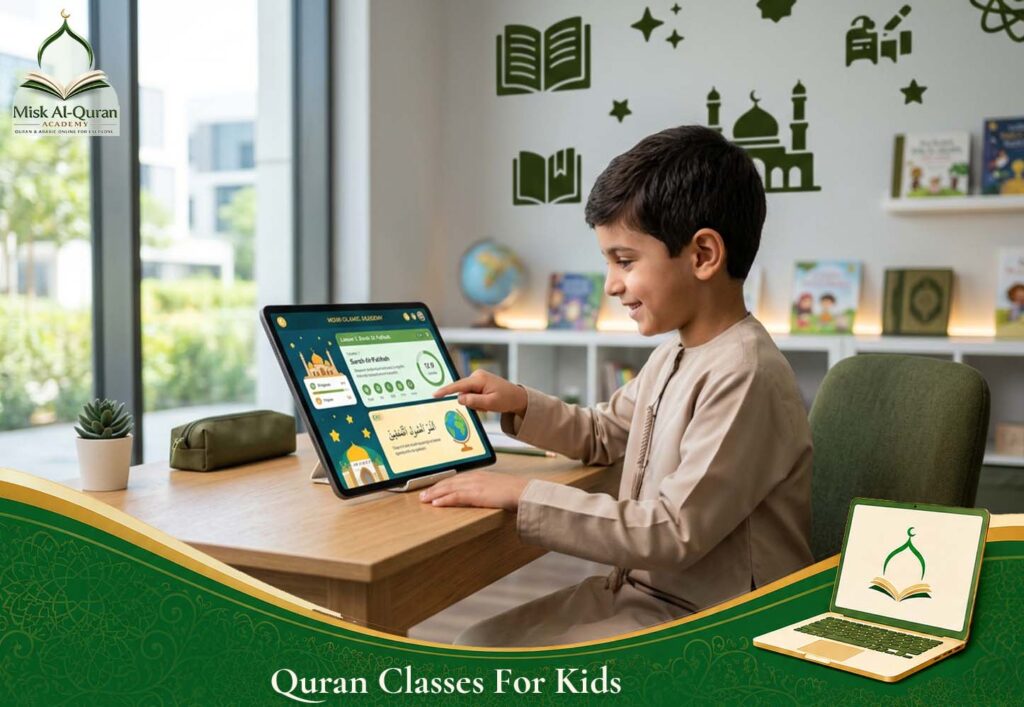
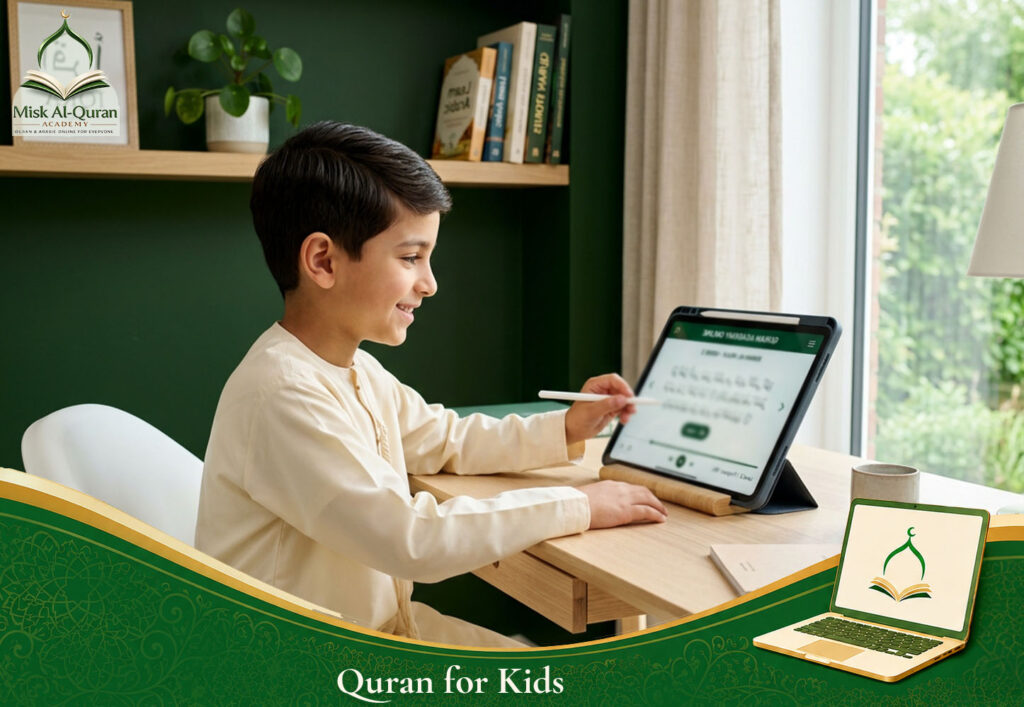
zoom quran classes give students a convenient way to study the Quran with a teacher through live online lessons. Instead of traveling to a physical classroom, learners can join their lessons from home and communicate with a tutor in real time. This format suits children, adults, beginners, and students with experience in Quran reading or Tajweed.
For many learners, the main advantage is not simply studying through a video call. The real value comes from having a structured lesson, direct interaction with a teacher, regular practice, and immediate feedback. When these elements are organized well, online Quran learning can become a practical part of a student’s weekly routine.
At Misk Online Quran Academy, students can explore a structured online Quran learning environment based on live instruction and individual learning needs. However, before joining any program, it is important to understand what online Quran classes involve, what students can learn, and which factors should be considered before choosing a course.
What to Expect From Live Quran Lessons?
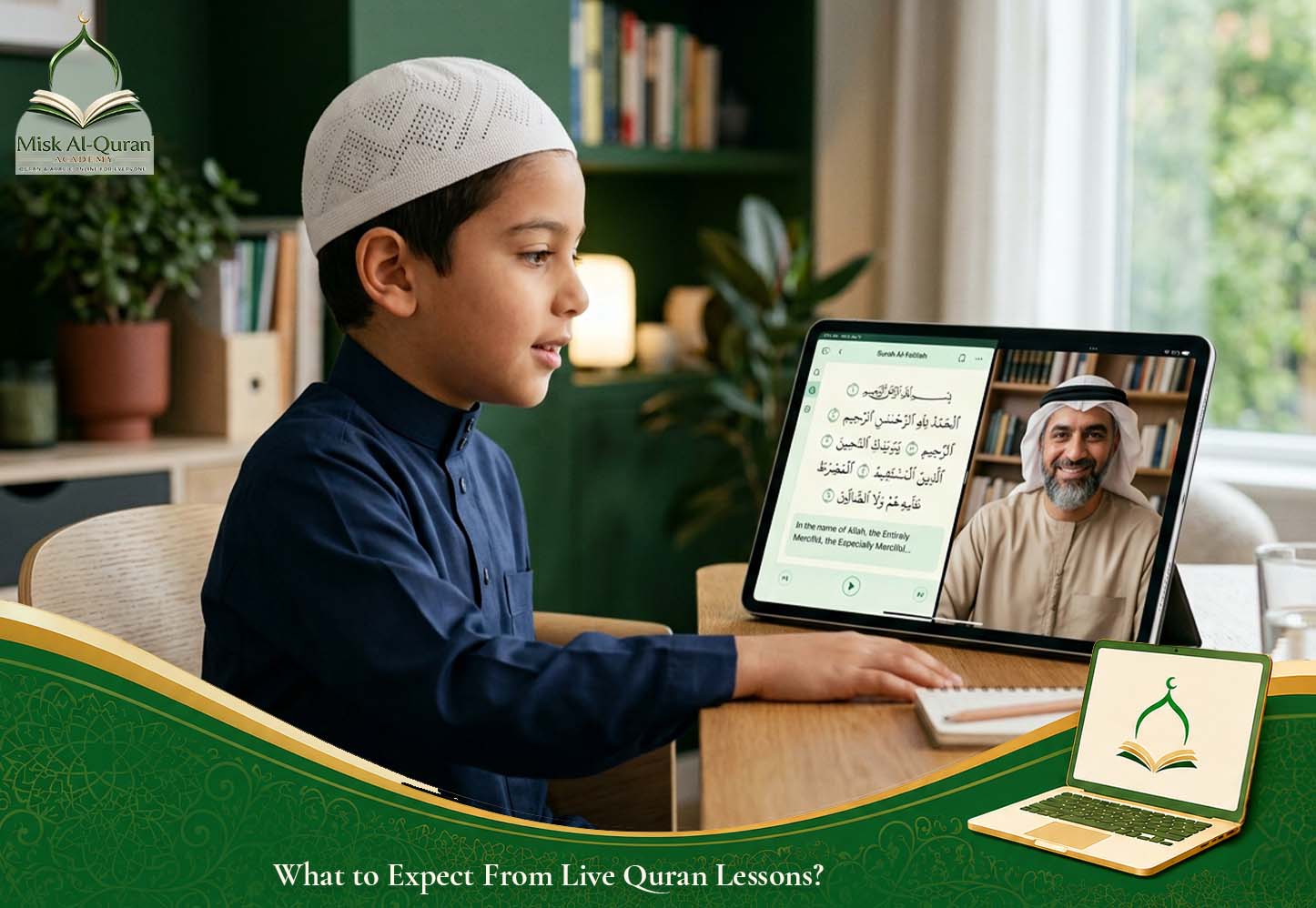
zoom quran classes are live Quran lessons delivered through Zoom or a similar video-conferencing platform. The student and teacher communicate during the lesson, allowing the teacher to listen to recitation, explain Quranic concepts, correct mistakes, and guide the learner through exercises.
Unlike recorded lessons, live classes allow students to ask questions while learning. Therefore, a learner does not have to wait until another lesson to clarify a pronunciation problem or Quran reading rule.
The exact structure can vary between programs. Some courses may focus primarily on Quran reading, while others may combine reading, Tajweed, memorization, or Islamic studies. The appropriate structure usually depends on the student’s age, current ability, learning goals, and available study time.
For beginners, the first lessons may concentrate on recognizing Arabic letters and reading simple combinations. More advanced learners can instead work on pronunciation, Tajweed application, memorization, or improving fluency.
Start Your Quran Learning Journey with Misk Online Quran Academy
Begin your Quran learning journey with Misk Online Quran Academy, where students of all ages benefit from structured online Quran classes tailored to their individual level and learning needs.
Whether your goal is to improve Quran recitation, master Tajweed rules, or begin memorizing the Holy Quran, our experienced and qualified teachers provide clear step-by-step guidance through personalized one-to-one lessons. Each session is designed to help learners understand, practice, and improve with confidence and consistency.
With flexible scheduling, interactive teaching methods, and a supportive online environment, Misk Online Quran Academy makes it easier to stay committed and motivated. Students can learn comfortably from home while making steady progress in their Quran studies at their own pace.

How Do Zoom Quran Classes Work?
The basic process is straightforward. Students usually need a stable internet connection, a suitable device, the required video-conferencing application, and a quiet place where they can concentrate.
A typical lesson may follow several stages:
- The teacher reviews material from the previous lesson.
- The student reads or recites selected verses.
- The teacher identifies pronunciation or Tajweed issues.
- New material is introduced according to the student’s level.
- The learner practices under the teacher’s supervision.
- The teacher assigns material for review or practice.
This structure helps turn online learning into an active lesson rather than passive screen time.
In addition, one-to-one instruction can make it easier to adapt the pace. A student who needs more practice with Arabic letters can spend additional time on foundational skills, while an experienced reader can move toward more advanced Quranic objectives.
What Can You Learn in Zoom Quran Classes?
The content of zoom quran classes depends on the course and the learner’s starting level. However, several areas are commonly included in a well-organized Quran learning program.
Quran Reading and Letter Recognition
Beginners need to understand the Arabic alphabet before they can read the Quran confidently. Lessons may therefore begin with individual letters, their forms, vowel marks, and combinations.
As the learner progresses, the focus can shift toward reading words, connecting letters, and reading complete verses. Regular practice is important because recognition becomes faster through repetition.
Makharij and Correct Pronunciation
Correct pronunciation is an important part of Quran reading. Arabic contains sounds that may be unfamiliar to learners whose first language is different.
A teacher can listen carefully to the student’s recitation and identify areas that require correction. This direct feedback is particularly useful because pronunciation mistakes can sometimes be difficult for learners to notice by themselves.
Tajweed Rules
Tajweed helps students understand how Quranic letters and words should be pronounced during recitation. Depending on the learner’s level, lessons may introduce rules related to concepts such as Idgham, Ikhfa, Qalqalah, Madd, and Ghunna.
The goal should not be memorizing terminology alone. Instead, students need opportunities to apply the rules while reading actual Quranic verses.
Quran Memorization
Some learners join online classes because they want to memorize selected Surahs or progressively complete a larger memorization plan.
A useful memorization routine normally combines new material with regular revision. Without consistent review, previously memorized verses can become difficult to recall.
Quran Understanding
Some students also want to understand the meanings of the verses they recite. Depending on the course, lessons may include explanations of vocabulary, general meanings, or selected Quranic themes.
Understanding the meaning can help learners engage with the verses rather than treating recitation as a purely mechanical activity.
Why Choose Live Zoom Quran Classes?
One of the main differences between live lessons and self-study is interaction. With zoom quran classes, the learner can recite directly to a teacher instead of relying entirely on recorded material.
Immediate correction can be particularly useful when a student repeatedly makes the same mistake. The teacher can stop the recitation, explain the issue, demonstrate the correct pronunciation, and allow the student to try again.
Another advantage is accountability. Having a scheduled lesson creates a regular learning appointment. For students who struggle to maintain a self-study routine, this structure can make continued learning easier.
Furthermore, online classes remove the need for transportation. Families can attend lessons from home, which may make Quran learning easier to fit around school, work, or other responsibilities.
However, online learning still requires commitment. A student who regularly misses lessons or does not practice between sessions may progress more slowly regardless of the quality of the platform.
Are Zoom Quran Classes Suitable for Beginners?
Yes, live online Quran lessons can support complete beginners when the course starts at an appropriate level. Students who have never studied Arabic can begin with basic letters, sounds, and reading skills before moving to longer Quranic passages.
A beginner does not necessarily need to know Arabic before starting. Instead, the learning process can introduce foundational skills step by step. Students who need additional help with Arabic letters may also benefit from What Are Easy Methods Of Learning Noorani Qaida For Kids? as part of their early Quran reading practice.
For a new learner, the first priority should usually be accurate recognition and pronunciation rather than speed. Trying to read quickly before developing basic accuracy can reinforce mistakes.
As confidence improves, students can gradually move from letters to words, then from words to verses and longer passages.
For this reason, anyone comparing zoom quran classes should ask how the program determines a student’s starting level. A placement process or introductory assessment can help ensure that the lessons match the learner’s current ability.
Zoom Quran Classes for Children
Children often need a different learning approach from adults. Younger students may have shorter attention spans, require more repetition, and respond better to lessons that include clear activities and encouragement.
Parents should therefore consider more than the availability of online lessons. They should also ask whether the teaching approach suits the child’s age and whether the child receives enough direct interaction during the lesson.
A comfortable study environment can make a significant difference. The child should have a suitable device, a stable connection, and a quiet place where distractions remain limited.
Parents can also support their child’s overall Islamic learning routine by teaching practical daily habits alongside Quran study. For example, children can gradually learn How to Make Wudu – A Step-by-Step Guide as they develop other basic Islamic skills.
Even a short period of regular Quran practice can reinforce what the teacher covers during the lesson.
When considering zoom quran classes for children, it is also useful to consider lesson duration, scheduling, teacher communication, progress tracking, and the way teachers correct mistakes.
Zoom Quran Classes for Adults
Adults often have different reasons for learning the Quran. Some may be starting with the alphabet, while others may already read but want to improve Tajweed or pronunciation.
A flexible online format can help adults fit Quran learning around work and family responsibilities. Instead of commuting to a physical classroom, the learner can attend from home.
Some adults may also have a specific memorization goal. In that case, the advantages of taking an online Quran Memorization Course can help learners explore a more focused approach to building and maintaining their memorization.
However, adults should not assume that every course will automatically match their schedule. Before enrolling, they should understand the available lesson times and the expected frequency of classes.
Another important point is learning pace. Adults with little previous experience may need a patient progression through the fundamentals, while experienced readers may prefer to focus on specific Tajweed weaknesses or memorization goals.
How Can a Quran Lesson Be Structured?
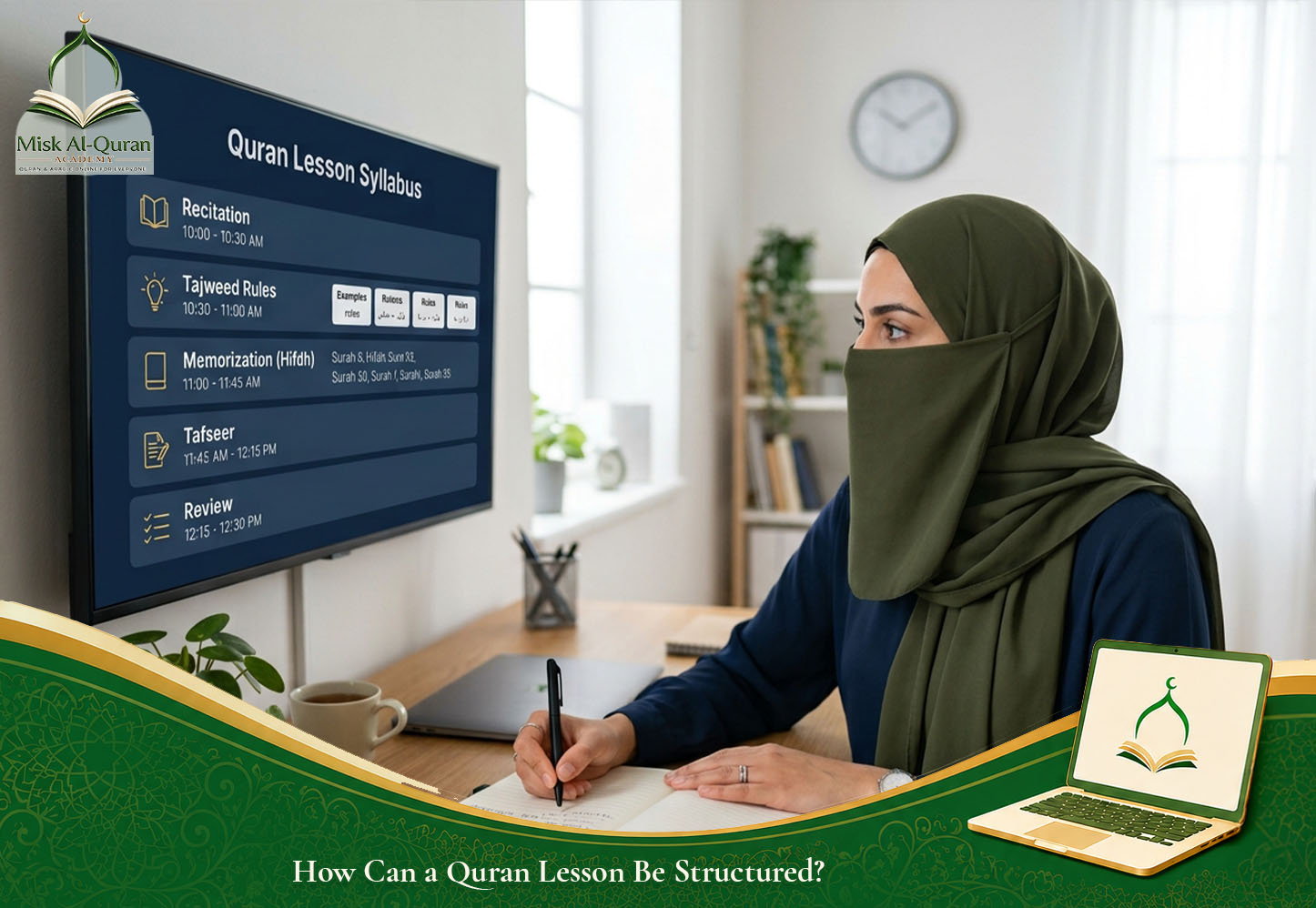
A well-organized online lesson does not need to be complicated. A clear sequence can help students understand what they need to accomplish during each session. A possible lesson structure is:
- Review: The student revisits previously studied material.
- Recitation: The learner reads selected verses to the teacher.
- Correction: The teacher identifies pronunciation and Tajweed mistakes.
- Explanation: The teacher introduces the relevant rule or concept.
- Practice: The student repeats the material with guidance.
- New material: The lesson introduces the next section when appropriate.
- Revision plan: The learner receives clear material to practice afterward.
This approach gives the lesson a beginning, middle, and end. It also makes progress easier to follow because the student can see what they have already covered and what comes next.
At Misk Online Quran Academy, learners can also consider Online Quran Teachers – Learning The Quran Made Easy when evaluating different learning options. A suitable teacher can guide recitation, explain difficult rules, and provide direct feedback during practice.
What Makes an Online Quran Lesson Effective?
Technology alone does not determine whether a Quran lesson is useful. The quality of interaction between teacher and student remains an important part of the learning experience. Several elements can contribute to an effective lesson:
- Clear communication between teacher and learner.
- Regular opportunities for the student to recite aloud.
- Corrections that explain what needs to change.
- A pace that matches the learner’s ability.
- Regular review of previously studied material.
- A clear learning objective for each session.
- A suitable environment with minimal distractions.
The teacher should also allow the student enough time to practice. A lesson in which the teacher does most of the talking may not give the learner enough opportunity to develop recitation skills.
For that reason, students comparing zoom quran classes should pay attention to how much active participation the learner receives during each session.
Choosing the Right Zoom Quran Classes
Choosing an online Quran program should begin with the student’s actual needs rather than promotional language. Start by identifying the main goal. Is the student trying to learn Quran reading from the beginning? Is Tajweed the priority? Does the learner want memorization? Or does the student simply want to improve an existing level of recitation?
Next, consider the teaching format. One-to-one lessons can provide direct attention, while group lessons may create a different learning environment. For families considering online learning for children, it also helps to understand the benefits of taking online Quran Classes For Kids and compare those benefits with the child’s learning needs.
The teacher’s communication style is another important factor. Quran learning requires the student to recite aloud, receive corrections, and repeat difficult passages. Therefore, the learner should feel comfortable asking questions and practicing without unnecessary pressure.
Finally, consider practical issues such as lesson times, technology requirements, lesson frequency, and the process for evaluating progress.
Questions to Ask Before Joining Zoom Quran Classes
Before enrolling, students and parents can prepare a short list of questions.
About the Teacher
Ask about the teacher’s Quran teaching background and the type of students they normally teach. If Tajweed or memorization is the main goal, ask whether the teacher has experience in that specific area.
About the Curriculum
Find out what the student will study first and how the program progresses from one level to another.
About the Lesson Format
Ask whether classes are individual or group-based, how long each lesson lasts, and how much time the student is expected to spend practicing between sessions.
About Progress
A useful program should give students a clear idea of what they are learning and what skills they need to develop next.
At Misk Online Quran Academy, prospective students can consider these questions when deciding whether an online Quran learning format matches their personal objectives.
How to Prepare for a Zoom Quran Lesson?
Good preparation can make an online lesson more productive. Students should test their internet connection and device before the lesson begins. The study area should also be reasonably quiet. Background conversations, television, and notifications can make it harder to hear pronunciation clearly.
It is helpful to keep the Quran or required learning materials ready before the class starts. This prevents unnecessary interruptions and gives more time to actual learning.
Students should also avoid treating the lesson as the only time they study. Reviewing difficult verses after class can strengthen learning and make the next lesson more productive.
For younger learners, parents can help prepare the device and learning materials before the teacher joins. Once the lesson begins, however, children should have enough opportunity to interact directly with their teacher.
Technology Requirements for Zoom Quran Classes
The technical requirements are generally simple. A learner needs a compatible device, internet access, a camera and microphone, and the relevant video-conferencing application.
Audio quality is especially important for Quran lessons. Since the teacher needs to hear pronunciation clearly, a weak microphone or unstable connection can interfere with correction.
Students should therefore test their audio before the lesson. Headphones may also help in environments where background noise is present.
Camera positioning matters as well. The teacher needs a clear view of the student when demonstrating or observing certain pronunciation movements.
Technology should support the lesson rather than become a distraction. Keeping the setup simple and reliable can help the student focus on recitation.
How to Make Progress With Online Quran Learning?

Progress depends on consistency more than on a single long study session. A student who practices regularly can reinforce new material more effectively than someone who studies intensely only occasionally.
After each lesson, review the corrections made by the teacher. If a particular letter or Tajweed rule caused difficulty, repeat it slowly before trying to read it at normal speed. For memorization, combine new verses with older material. This prevents the learning process from becoming focused entirely on adding new content.
For reading improvement, practice aloud rather than reading silently every time. Quran recitation is a practical skill, so the learner needs opportunities to hear their own pronunciation. Over time, these small habits can make lessons more productive and help the student build greater confidence.
Common Challenges With Zoom Quran Classes
Online learning offers convenience, but it also brings a few practical challenges. Technical problems can interrupt a lesson, particularly when the internet connection becomes unstable.
Home distractions can create another difficulty. Family activity, phone notifications, and entertainment may reduce the student’s concentration during the lesson. Therefore, learners should choose a quiet place and remove unnecessary distractions before class.
Children often need extra support when they first start online learning. Parents can prepare a quiet study area, check the device before class, and remind the child to join the lesson on time. With a consistent routine, children can gradually manage their lessons with greater independence.
Self-discipline also plays an important role. The teacher guides the student during the lesson, but the student must continue practicing afterward. Regular review helps reinforce new material and gives the learner more opportunities to improve.
These challenges do not prevent students from benefiting from online Quran learning. Instead, they highlight the importance of a suitable study environment, reliable technology, and a consistent practice routine when choosing zoom quran classes.
How Misk Online Quran Academy Fits Into Online Quran Learning?
Misk Online Quran Academy offers an online environment for learners who want to study the Quran from home. However, students should look beyond the video platform when comparing different programs. The curriculum, teacher interaction, lesson structure, and learning objectives deserve equal attention.
Start by identifying the learner’s current level and main goal. A beginner may need to build basic reading skills, while an experienced reader may want to improve Tajweed or pronunciation.
Students who focus on memorization also need a clear routine that combines new verses with regular revision. Meanwhile, learners who want greater reading fluency may benefit from more guided recitation and direct correction.
For that reason, students should compare each course according to their own learning needs. Reviewing the lesson format, curriculum, schedule, and teaching approach before registration can help families make a more informed choice.
Zoom Quran Classes vs. Self-Study
Self-study helps learners review material and practice independently. However, independent learning does not always reveal pronunciation mistakes. A student may repeat the same error without realizing it.
With zoom quran classes, a teacher listens to the student’s recitation and provides direct feedback. The teacher can identify a pronunciation problem, explain the correction, and allow the student to practice it immediately.
However, live instruction should complement personal practice rather than replace it. Students still need time between lessons to repeat letters, words, verses, and Tajweed rules.
Both approaches can work together effectively. The teacher provides direction and correction during the lesson, while the learner reinforces those skills through independent practice.
This combination gives students regular guidance while encouraging them to take an active role in their own Quran learning.
Zoom Quran Classes and Consistent Quran Practice
Consistency plays a central role in any Quran learning plan. Students do not need to spend several hours studying every day. Instead, they should maintain regular contact with the material and follow a realistic routine.
A weekly lesson schedule creates structure, while short review sessions help students reinforce difficult material between classes.
Memorization requires particular attention to revision. Students should revisit previously memorized verses instead of focusing only on new passages. Likewise, regular recitation helps Tajweed learners turn individual rules into practical habits.
Parents can support children by establishing predictable study times. Adults can follow the same principle by choosing lesson times that fit naturally into their weekly schedules.
As students maintain this routine, Quran learning can become a regular part of their lives rather than an activity they repeatedly postpone.
What Should You Look for in an Online Quran Academy?
When evaluating zoom quran classes, do not focus only on the platform that hosts the lessons. Zoom provides the communication technology, but the educational experience depends on how the academy organizes and delivers its courses.
Consider these areas before making a decision:
- Teacher interaction: Does the student receive enough time to recite and ask questions?
- Curriculum: Does the course follow a clear progression between learning levels?
- Correction: Does the teacher explain pronunciation and Tajweed mistakes clearly?
- Flexibility: Do the available lesson times fit the student’s schedule?
- Learning goals: Does the course support reading, Tajweed, memorization, or other relevant objectives?
- Practice: Does the teacher give students useful material to review between lessons?
- Communication: Can students or parents easily understand the learner’s progress?
These questions help students evaluate the actual learning experience instead of choosing a course based only on its name or platform.
Is Learning the Quran Online Right for You?
Online Quran learning can suit students who value flexibility, direct teacher interaction, and the convenience of studying from home.
Families who live far from suitable local teachers may find online lessons especially convenient. Adults with demanding work or family schedules can also use online learning to fit Quran study into their existing routines.
However, students should consider their own learning habits before choosing this format. A learner who needs frequent supervision may require additional support at home. Likewise, unreliable internet access can interrupt live lessons and make communication difficult.
The most practical approach involves examining the student’s daily routine. If the learner can attend lessons consistently, participate actively, and practice between classes, online Quran study can provide a structured learning experience.
Getting Started With Zoom Quran Classes

Starting zoom quran classes does not require a complicated process. First, identify the learner’s current Quran reading level and define the main learning objective. Then choose a realistic number of lessons per week.
Next, prepare the technical setup and select a quiet study area. Keep the Quran and other learning materials nearby so the student can begin the lesson without unnecessary interruptions.
During the first few lessons, pay attention to the teaching approach. The student should understand what the teacher covers, which mistakes require attention, and what material needs additional practice.
Students interested in Misk Online Quran Academy can review the available learning options and compare them with their goals, schedule, and current Quran level.
A clear starting point makes it easier to establish realistic expectations and build a consistent learning routine from the beginning.
Frequently Asked Questions
Find clear answers to common questions about Zoom Quran classes, lesson formats, learning levels, schedules, technology, practice, and choosing the right online Quran program for your needs.
Can I learn Quran online if I cannot read Arabic at all?
Yes. A beginner-focused Quran program can start with Arabic letters, vowel marks, pronunciation, and basic reading before moving toward complete Quranic verses. The important point is that the course should match the learner’s starting level instead of assuming previous Arabic knowledge.
How long does it take to become comfortable reading the Quran?
There is no single timeframe for every learner. Progress depends on the starting level, lesson frequency, practice outside class, familiarity with Arabic letters, and individual learning pace. Regular practice generally gives the learner more opportunities to reinforce newly acquired reading skills.
Should I use a laptop, tablet, or phone for online Quran lessons?
Any compatible device can work if it provides reliable audio and video. However, the most suitable device depends on the student’s environment and screen needs. A larger screen may be useful when the teacher shares digital Quran pages or learning materials, while portability may make a tablet convenient for some learners.
What should I do if I keep forgetting what I memorized?
Review should be treated as part of the memorization process rather than something added only after forgetting occurs. Divide previously memorized material into manageable sections and revisit it regularly. If particular passages remain difficult, discuss them with the teacher so the revision approach can be adjusted.
In conclusion, zoom quran classes give learners a practical way to study the Quran with live online guidance without traveling to a physical classroom. However, the video platform alone does not determine the quality of the learning experience. The curriculum, teacher interaction, correction process, student participation, and practice routine all matter.
Beginners can use online lessons to develop foundational reading skills. More experienced learners can focus on Tajweed, memorization, pronunciation, or reading fluency. Likewise, children and adults may need different lesson structures according to their ages, goals, and schedules.
Before choosing a program, define the learner’s objective and examine the curriculum, lesson format, schedule, and teaching approach. Students can also consider Misk Online Quran Academy when exploring online Quran learning options that match their individual needs.
Ultimately, students build a stronger Quran learning routine when they combine clear goals with regular lessons, active participation, and consistent practice.