Qalqalah in Tajweed is an important pronunciation rule that helps Muslims recite the Quran correctly and clearly. It refers to a slight bouncing or echoing sound produced when one of five specific Arabic letters carries a sukoon (absence of a vowel). Learning this rule allows Quran learners to pronounce words accurately, avoid common recitation mistakes, and improve the overall quality of their reading.
Whether you are a beginner or someone working to improve Quran recitation, understanding qalqalah is an essential part of learning Tajweed. By recognizing its letters, identifying its different types, and practicing suitable examples, you can gradually develop better pronunciation and greater confidence when reading the Quran.
What Is Qalqalah in Tajweed?
Qalqalah is an Arabic term that describes a slight echo or bouncing sound produced when certain letters are pronounced with sukoon. Instead of allowing the sound to disappear completely, the reader gives the letter a clear, controlled sound.
The purpose of qalqalah is to make these letters audible without adding an extra vowel or changing the original pronunciation of the Quranic word.
For example, when a reader encounters a letter of qalqalah with sukoon, the sound should be released clearly. However, this does not mean adding an additional vowel such as a fatha, kasra, or damma.
This distinction is important because excessive bouncing can change the natural sound of the word. Therefore, learners should focus on producing a clear and balanced pronunciation.
What Are the Five Qalqalah Letters?
There are five letters of qalqalah in Arabic. They are traditionally collected in the phrase:
قُطْبُ جَدٍّ
The five letters are:
- ق (Qaf): Produced from the back of the tongue.
- ط (Ta): A strong, emphatic letter pronounced with the tongue touching the upper area of the mouth.
- ب (Ba): Produced by bringing the two lips together.
- ج (Jeem): Produced from the middle of the tongue.
- د (Dal): Produced when the tongue touches the area behind the upper front teeth.
These letters produce the qalqalah sound when they carry sukoon. Learning their articulation points (Makharij) is equally important because correct pronunciation depends on knowing where each letter originates.
A useful exercise is to pronounce each letter separately while observing its sound. Start slowly, then practice it within Quranic words.
What Are the Types of Qalqalah?
Understanding the types of qalqalah helps learners recognize how the pronunciation changes depending on the position of the letter and whether the reader stops or continues.
The rule is commonly divided into two main types, with some Tajweed teaching traditions explaining the stronger stopping form as a separate level.
1. Qalqalah Sughra (Minor Qalqalah)
Qalqalah Sughra occurs when one of the five qalqalah letters carries an original sukoon in the middle of a word or when reading continuously.
The sound is clear but relatively light. The reader should release the letter naturally without exaggerating its echo.
For example, the letter جْ in the word يَجْعَلُونَ carries sukoon. Therefore, it should be pronounced with a slight bouncing sound.
Beginners should practice this type carefully because they sometimes make the sound too strong or accidentally add a vowel after the letter.
2. Qalqalah Kubra (Major Qalqalah)
Qalqalah Kubra occurs when a reader stops at a word ending with one of the five qalqalah letters. In this situation, the final letter becomes “sakin” because of stopping. The bouncing sound is stronger and more noticeable than in minor qalqalah.
For example, when stopping at a word ending in دْ, the reader should make the final Dal clear without adding another vowel.
This type requires careful practice because stopping can make the final consonant more difficult to pronounce accurately.
3. Qalqalah Akbar (Strongest Qalqalah)
Some Tajweed scholars and teaching traditions identify Qalqalah Akbar as a stronger level of qalqalah.
It occurs when stopping on a doubled (mushaddad) qalqalah letter at the end of a word. Since the letter has additional emphasis due to the shaddah, its sound requires particular attention.
The reader must preserve the strength of the letter while avoiding an exaggerated or unnatural echo.
Examples of Qalqalah in the Quran
Practical examples make it easier to understand how qalqalah works during actual Quran recitation. Here are some examples:
| Quranic word | Qalqalah letter | Application |
|---|---|---|
| يَجْعَلُونَ | جْ | Minor calqalah |
| أَحَدٌ (when stopping) | دْ | Major calqalah |
| الْفَلَقِ (when stopping) | قْ | Major calqalah |
| وَتَبَّ (when stopping) | بّ | Stronger stopping form |
When practicing these examples, pay attention to the letter’s original articulation point. The sound should be clear, but it should not become a separate syllable.
Reading examples repeatedly with a qualified teacher can help learners distinguish between correct bouncing and unnecessary vowel sounds.
How to Practice Qalqalah Correctly?
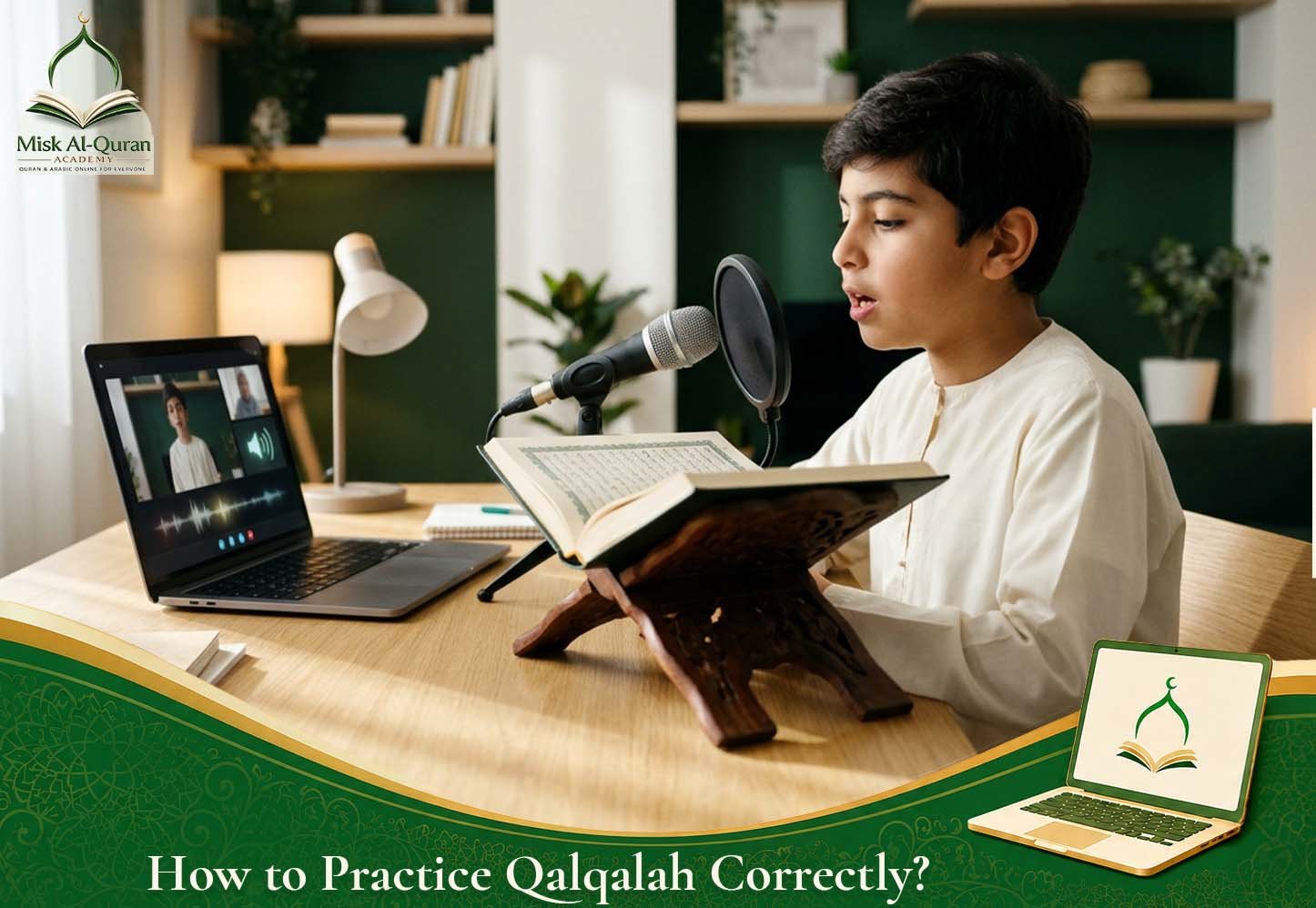
Learning the rule requires more than memorizing the five letters. Regular listening and pronunciation exercises help learners apply it naturally. Consider the following practical steps:
- Memorize the five letters: Begin with the phrase “Qutbu Jaddin” until you can recognize all five letters immediately.
- Learn their articulation points: Understand where each letter is produced to avoid pronunciation errors.
- Practice isolated letters: Pronounce each letter with sukoon and focus on producing a clear sound.
- Read Quranic examples: Identify qalqalah letters in short surahs and practice them in context.
- Listen to qualified reciters: Pay attention to how experienced reciters pronounce the letters when continuing and stopping.
- Ask for feedback: A qualified Quran teacher can identify mistakes that may be difficult to notice independently.
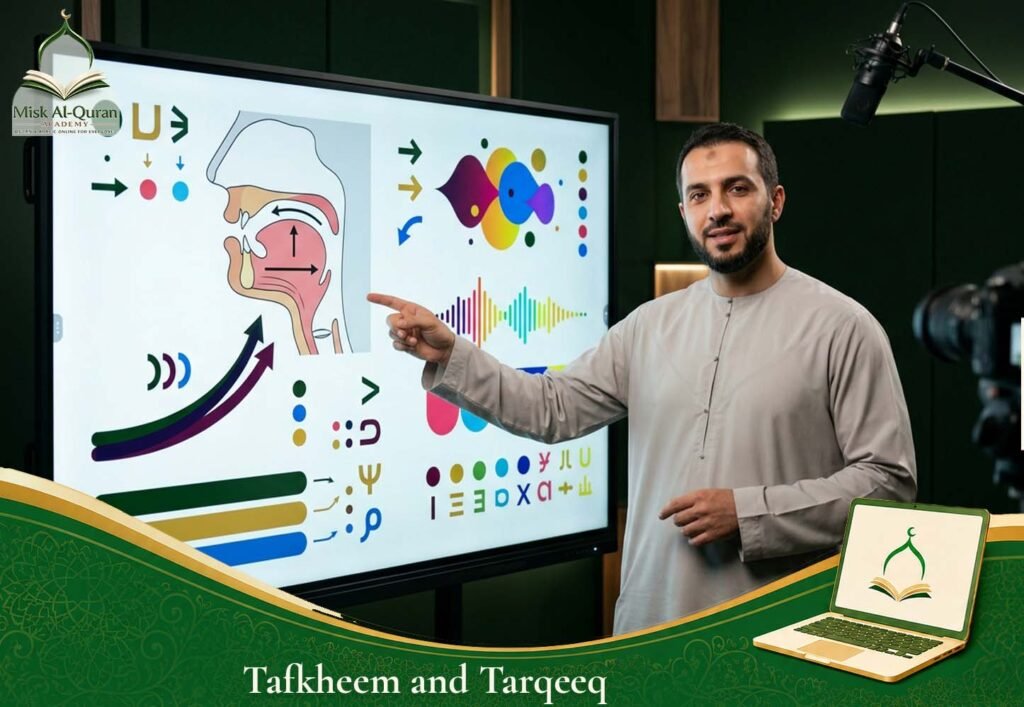
You can also strengthen your overall Quran learning routine by exploring suitable tafkheem and tarqeeq, especially when combining memorization with correct pronunciation.
Additionally, developing a consistent online Quran memorization routine can help learners pay attention to important Tajweed rules while reviewing previously memorized verses.
Common Mistakes When Applying Qalqalah
Although qalqalah may appear simple, learners sometimes make mistakes that affect the accuracy of their recitation. Some common errors include:
- Adding an extra vowel: The bouncing sound should not turn into an additional fatha, kasra, or damma.
- Making the sound too strong: Excessive bouncing can make the pronunciation unnatural.
- Ignoring the sukoon: Learners sometimes pronounce a qalqalah letter as though it carries a vowel.
- Confusing the types: Minor and major qalqalah have different levels of strength.
- Neglecting articulation points: Producing the sound without correct tongue or lip positioning can lead to pronunciation errors.
The best way to overcome these mistakes is to practice slowly, listen carefully, and receive regular correction.
How Misk Online Quran Academy Can Help You Learn Tajweed
Learning Tajweed becomes easier when students receive structured guidance and consistent pronunciation feedback. Misk Online Quran Academy provides an online learning environment where students can work on their Quran reading skills and develop a better understanding of Tajweed principles.
With appropriate instruction and regular practice, learners can study letter articulation, identify pronunciation mistakes, and apply rules during Quran recitation.
Students who are still developing their Quran reading skills may also benefit from understanding the benefits of being a hafiz and how consistent Quran study supports long-term learning.
For parents introducing Quran education at an early age, learning how to teach quran to 3 year old can provide useful ideas for making early learning simple and age-appropriate.
Furthermore, exploring the benefits of one-on-one Quran learning sessions can help families understand the educational and spiritual value of building a regular Quran learning habit.
Frequently Asked Questions About Qalqalah in Tajweed
Find clear answers to common questions about qalqalah in tajweed, including its letters, types, rules, and correct pronunciation.
1. How many letters of qalqalah are there?
There are five letters: Qaf (ق), Ta (ط), Ba (ب), Jeem (ج), and Dal (د). They are collected in the Arabic phrase Qutbu Jaddin.
2. When does qalqalah occur?
It occurs when one of the five designated letters carries sukoon, whether originally or because the reader stops at the word.
3. What is the difference between Qalqalah Sughra and Kubra?
Qalqalah Sughra occurs when a qalqalah letter has an original sukoon, generally within a word. Qalqalah Kubra occurs when stopping on a word ending with a qalqalah letter, making the bouncing sound stronger.
Conclusion
Qalqalah in tajweed is an essential pronunciation rule that helps Quran learners produce the five designated letters clearly when they carry sukoon. By understanding its letters, recognizing its different levels, and practicing Quranic examples, students can improve their recitation and avoid common mistakes.
Consistent practice and guidance from a qualified Quran teacher make learning this rule more manageable. With patience and regular revision, learners can gradually apply qalqalah correctly and develop greater confidence in Quran recitation through their learning journey with Misk Online Quran Academy.